Parc Jean-Jacques-Rousseau Inauguration in Montréal

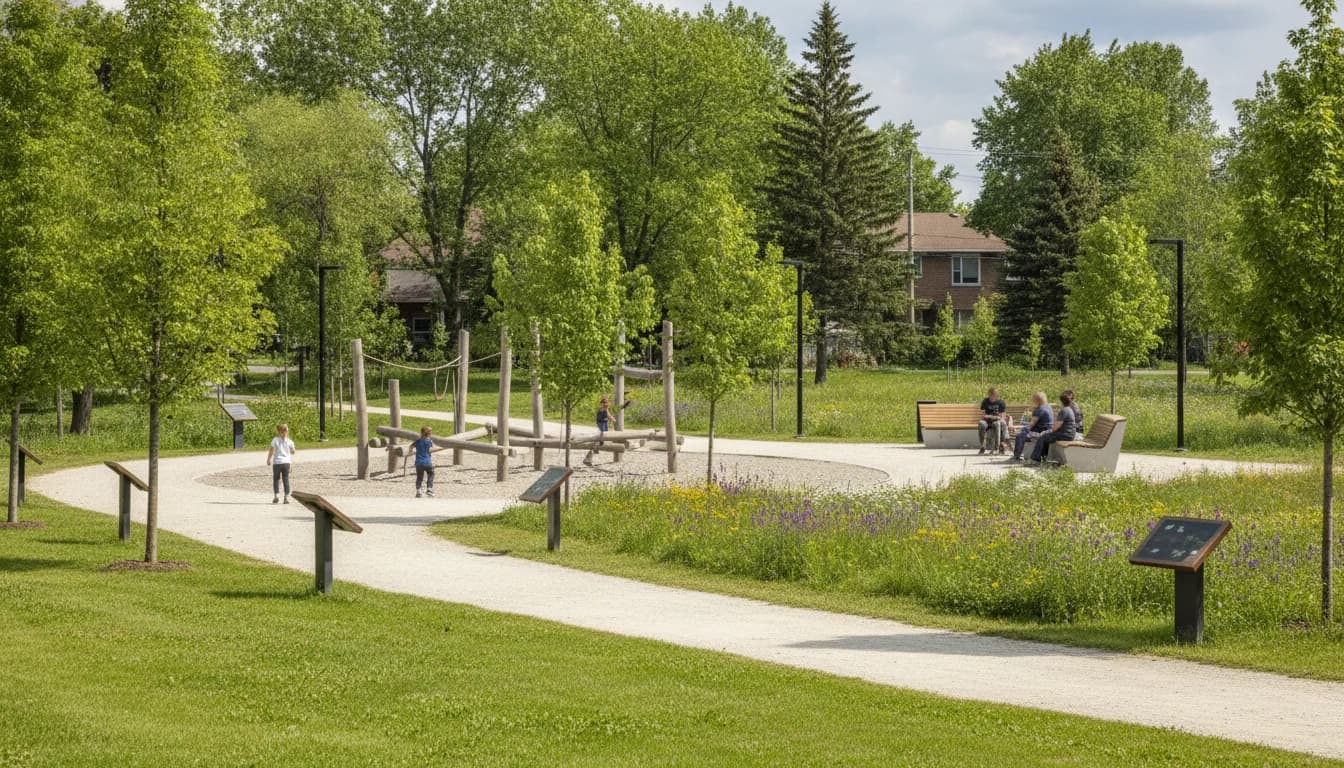
The Parc Jean-Jacques-Rousseau inauguration marks a milestone for Rivière-des-Prairies–Pointe-aux-Trembles, as a long-considered riverfront redevelopment moves from plan to reality. In June 2026, the arrondissement formally opened the new park, offering a green space designed to improve safety, accessibility, and everyday life along the eastern edge of Montréal. This development arrives after years of citizen involvement and city-led planning, signaling a deliberate shift toward more inclusive, environmentally mindful urban spaces. Parc Jean-Jacques-Rousseau inauguration is now a reference point for how Montréal approaches park refurbishments in similarly situated districts, and it matters for residents seeking practical benefits—walkable paths, reasonably lit routes, and spaces that welcome visitors of all ages and abilities. The city’s communication on the project emphasizes a modern vision of public space that prioritizes safety, inclusivity, and nature-preservation in a densely populated urban area. According to Ville de Montréal, Parc Jean-Jacques-Rousseau opened in June 2026, and the city notes that the park’s redevelopment was guided by citizen input and a multi-year process. (montreal.ca)
In this report, Montréal Times provides a data-driven overview of what happened, why it matters for the neighborhood and for Montréal’s urban strategy, and what to watch for next as the park becomes a living part of the Rivière-des-Prairies–Pointe-aux-Trembles community. The June 2026 inauguration is framed here not as a single-day event but as the culmination of a structured, participatory process that linked resident priorities to a concrete public-space outcome. Readers will find a clear timeline, concrete features, and balanced analysis of implications for accessibility, environment, and local vitality. The city’s description of the project highlights universal accessibility in trails, inclusive resting areas, a youth-focused play course, and enhanced lighting to promote safe use after dark. Parc Jean-Jacques-Rousseau’s transformation is presented as a model of urban renewal carried out with community input and environmental consideration. The city page outlining the park’s redevelopment confirms that the site was “entièrement réaménagé en 2024 et 2025,” with the final touches completed in the subsequent year. (montreal.ca)
What Happened
Announcement Details
-
The Rivière-des-Prairies–Pointe-aux-Trembles arrondissement led the Parc Jean-Jacques-Rousseau inauguration, with the City of Montréal publishing a formal note on June 17, 2026, confirming that the new park had been opened the previous week. The release places the park at Rue des Iris, the heart of the Parc Jean-Jacques-Rousseau site, and frames the inauguration as the culmination of a collaborative effort spanning several years. This is not merely a ceremonial opening; the city’s communication emphasizes the structural and design choices that shape how the park will be used by residents day to day. According to Ville de Montréal, the project’s governance and timeline are tied to citizen participation efforts that began in 2018 and continued through 2023, 2024, and 2025, culminating in the public space now available to the community. (montreal.ca)
-
The announcement confirms a clear, documented lineage: a citizen-participation process starting in 2018 identified safety and walkability as priorities; this was reaffirmed in 2023 after broader public engagement. The redevelopment itself began in 2024 with the valorization of the wooded area, and by 2025 the site underwent a complete reorganization to support universal access and modern park amenities. This sequence—participation in 2018, confirmation in 2023, wooded-area valorization in 2024, and full redevelopment in 2025—frames Parc Jean-Jacques-Rousseau as an end-to-end urban-renewal project rather than a simple installation. The same city release notes that the project’s approach emphasizes environmental respect and space differentiation, with a goal of maintaining the site’s natural character while expanding functional uses. (montreal.ca)
Site Features and Design
- The park’s design includes universally accessible trails, inclusive resting areas, a youth-oriented obstacle-course-like play path, and lighting intended to improve nighttime safety. These elements reflect a deliberate focus on accessibility and safety as core park-team commitments, aligning with Montréal’s broader urban-renewal priorities in peripheral districts. The Parc Jean-Jacques-Rousseau page from the City of Montréal also reiterates that the site’s redevelopment emphasizes universal accessibility and scalable public-use zones, confirming the same on-the-ground realities described in the inauguration release. The street address or entrance point is Rue des Iris, placing the park in a clearly defined urban context that connects to nearby residential and commercial corridors. (montreal.ca)
Timeline and Milestones
- 2018: Citizen participation identifies safety and walkability as top priorities for a riverfront park in this area.
- 2023: City outreach confirms the community’s priorities and supports the redevelopment plan.
- 2024: Redevelopment begins with the value-up of the wooded area, forming the basis for later infrastructure and landscape work.
- 2025: Complete site reconfiguration, including trails, seating, and lighting improvements.
- June 2026: Parc Jean-Jacques-Rousseau inauguration is publicly announced by the arrondissement and city authorities as the culmination of the process. The park’s address and features are highlighted in the official materials, situating the project within Montréal’s ongoing district-level park revitalization efforts. (montreal.ca)
Why It Matters
Accessibility and Everyday Use
- A central element of the Parc Jean-Jacques-Rousseau inauguration is the emphasis on accessibility. The park now offers trails described as universally accessible, along with resting areas designed to accommodate a broad range of ages and abilities. This aligns with Montréal’s objective to reduce barriers to urban green space and to support safe, comfortable, and inclusive public experiences for families, seniors, and visitors with mobility needs. The city’s materials explicitly call out universal accessibility and inclusive resting spaces as major project outcomes, which signals a measurable improvement in daily park usability for residents who previously faced barriers to enjoying riverfront greenspace. (montreal.ca)
Environmental Stewardship and Biodiversity
- The Parc Jean-Jacques-Rousseau redevelopment is framed as an environmentally respectful project that preserves the site’s natural character while enabling structured human use. City documents highlight differentiated space management and the emphasis on a diverse arboreal canopy as key design features. This approach speaks to Montreal’s broader sustainability commitments and to the practice of balancing public access with ecological stewardship on urban landscapes. The city release describes the park’s environmental ethic, and the park’s dedicated page reiterates its redevelopment as a long-running, environmentally mindful transformation. (montreal.ca)
Community and Neighborhood Impacts
- Beyond the physical improvements, the Parc Jean-Jacques-Rousseau inauguration is positioned as a community-facing asset. The process leading to the park’s opening—driven by citizen input and iterative planning—suggests a governance model intended to build local buy-in and long-term stewardship. Public spaces of this kind can influence neighborhood cohesion, provide venues for informal social interaction, and support local micro-economies by increasing foot traffic to nearby shops and services. The official narrative emphasizes citizen engagement and the alignment of park features with user needs, which implies anticipated benefits for the Rivière-des-Prairies–Pointe-aux-Trembles community. (montreal.ca)
Broader Context: Montréal’s Park Renewal
- The Parc Jean-Jacques-Rousseau inauguration sits within a wider urban strategy in Montréal that prioritizes revitalizing underused riverside or peripheral parks with accessible designs and sustainable landscaping. While this report concentrates on one park, the city’s approach is emblematic of how municipal authorities are rethinking neighborhood-scale green spaces as essential infrastructure for mobility, health, and social life. The redevelopment’s documented timeline and design choices echo similar municipal projects that aim to harmonize ecological sensitivity with practical, day-to-day usability. The City of Montréal’s Parc Jean-Jacques-Rousseau page provides context for this broader trend, noting the park’s place in a network of riverfront and neighborhood parks that have undergone or are undergoing upgrades. (montreal.ca)
What’s Next
Next Steps and Ongoing Programming
- The Parc Jean-Jacques-Rousseau inauguration marks a transition point from construction to ongoing operation, programming, and maintenance. While the initial release outlines the park’s features and the renewal process, it does not enumerate a full programming calendar. Readers should expect future announcements from the arrondissement and City of Montréal regarding opening hours, programming for families and youth, seasonal activities, and any partner-led events designed to activate the park across different times of the year. The city’s official materials point to continued management of universal access and space differentiation as core operational principles, indicating a stable foundation for ongoing use rather than a one-off installation. For continuous updates, follow the City of Montréal’s parcs pages and the Rivière-des-Prairies–Pointe-aux-Trembles district communications. (montreal.ca)
Next Milestones to Watch
- Public programming developments: Expect announcements about recreation and educational programming that leverage the new park features, including any youth-focused activities or community events.
- Accessibility enhancements: If ongoing accessibility improvements or maintenance is planned, city communications will likely provide details on schedule and scope.
- Environmental monitoring: Given the park’s emphasis on ecological stewardship, there may be future updates about vegetation, tree inventories, or habitat enhancements associated with the park’s ongoing management plan.
Contextual Background: The Path to Redevelopment
- A critical piece of the Parc Jean-Jacques-Rousseau inauguration is the long-standing planning effort that preceded it. The 2018 citizen-participation phase prioritized safe, natural promenades, with a vision reaffirmed in 2023. Construction began in 2024 with the aim of highlighting the wooded area, followed by a comprehensive reorganization in 2025 that produced the current layout. The combination of public involvement and phased execution is central to understanding the park’s current form and the expectations for its function in everyday life. The city’s release underscores this sequence, reinforcing the importance of participatory planning in Montréal’s park-renewal agenda. (montreal.ca)
Riverside Context and Accessibility: Why the Park Matters for Montréal’s Urban Fabric
- Parc Jean-Jacques-Rousseau’s location on Rue des Iris places it within a river-adjacent corridor that Montréal has been actively upgrading to improve pedestrian mobility, environmental health, and quality of life. The park’s design choices—universal access trails, inclusive seating, and a youth-friendly play path with improved lighting—mirror a city-wide emphasis on building inclusive, climate-conscious urban spaces that support healthy, active lifestyles. While the inauguration is a milestone, the enduring impact will hinge on how the park integrates with nearby neighborhoods and how programming sustains usage across seasons and demographics. The official materials from Ville de Montréal identify these design intents clearly, and the Parc Jean-Jacques-Rousseau page provides ongoing confirmation of the park’s role within the broader urban-renewal framework. (montreal.ca)
Closing
- The Parc Jean-Jacques-Rousseau inauguration signals a practical, community-centered approach to park development in Montréal. With universal-access trails, inclusive seating, a youth-focused play path, and enhanced nighttime lighting, the park is positioned as a reliable, long-term asset for residents of Rivière-des-Prairies–Pointe-aux-Trembles and visitors alike. The city’s evidence-based, participatory path—rooted in 2018 citizen input and realized through 2024–2025 redevelopment—illustrates how Montréal translates public input into tangible improvements for daily life. For ongoing updates, keep an eye on official Montréal channels and the Parc Jean-Jacques-Rousseau page, which will outline future programming, maintenance plans, and any further enhancements as the park becomes a living part of the community. (montreal.ca)