Plateau-Mile End Neighbourhood Guide Mile End En Fête Dates

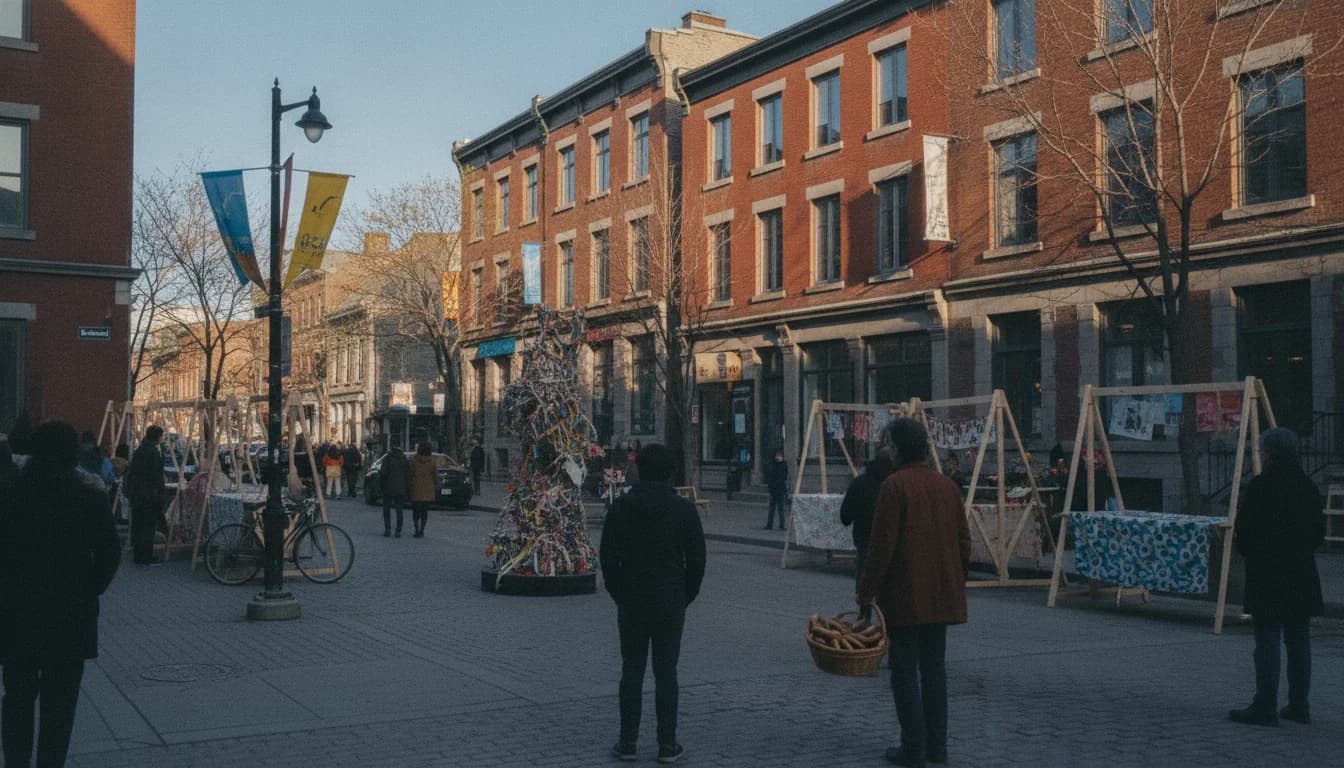
The Plateau–Mile End neighbourhood guide is taking on a timely focus as Mile End en fête returns to the streets of the Plateau-Mont-Royal in late spring 2025. Montreal Times reports that Mile End en fête will run from May 23 through May 25, 2025, a three-day festival that brings residents and visitors together in a neighborhood famed for its blend of indie commerce, arts, and a historically tech- and gaming-conscious ecosystem. The event, organized through a partnership between SDC Laurier Ouest and the Association des Gens d’Affaires du Mile End (AGAME), is being managed under a framework that emphasizes neighborhood vitality, small businesses, and community programming across two primary sites on Laurier West and Bernard Street. The official planning documents, signed in March 2025, map the event footprint and the rules that govern it, underscoring a deliberate coordination between city authorities, local business associations, and community groups. This opening aligns Mile End en fête with the Plateau–Mile End’s ongoing identity as a living laboratory for placemaking, culture, and economic activity. The city’s documentation and local organizers confirm the dates and site allocations, anchoring the event within the broader urban narrative of Mile End’s role as a tech-adjacent, culture-forward district. city decision document approving Mile End en fête (PDF) (ville.montreal.qc.ca) Laurier Ouest: Mile End en fête third edition information (laurierouest.com)
Mile End en fête is a community festival that celebrates the cultural, artistic, and commercial richness of Montreal’s Mile End. — Tourisme Montréal
A detailed look at the 2025 edition and its planning context helps illuminate why this event matters for the Plateau-Mont-Royal and Mile End alike, especially in the current climate where the neighborhood sits at the intersection of placemaking, tech talent ecosystems, and local commerce. The festival’s announced footprint, its organizers, and the schedule offer a microcosm of how Montreal neighborhoods are balancing cultural programming with market realities in 2025. The event is more than a weekend party: it is a test case for how the Mile End corridor can sustain pedestrian-friendly retail, elevate local artists, and sustain small businesses amid broader urban growth and real estate pressures in central Montreal. The Mile End en fête plan reflects a deliberate effort to harness community assets—street spaces, small venues, and a dense, walkable street grid—to create a visiting experience that also benefits nearby commerce and services. The official planning documents and the Laurier Ouest community updates provide a clear record of what is being authorized, when, and under what conditions, enabling journalists and researchers to cite primary materials when reporting on the event. City planning document: Mile End en fête site approvals (ville.montreal.qc.ca) Laurier Ouest community updates on Mile End en fête (laurierouest.com)
Section 1: What Happened
Announcement and approvals
On March 26, 2025, the arrondissement of Plateau-Mont-Royal officially signed off on a second project of construction, modification, or occupation of a building to authorize temporary occupation for Mile End en fête. The approval authorized use of two private sites—the 69, rue Bernard Est (Entrepôt 77) and 85, avenue Laurier Ouest—for festival headquarters and activities during Mile End en fête. This action followed a public consultation held on February 11, 2025, and a formal decision process under the Règlement sur les projets particuliers de construction, de modification ou d’occupation d’un immeuble (2003-08). The decision explicitly states that Mile End en fête will occur from May 23 to May 25, 2025, and sets operational and safety requirements, including sound limits and accessibility provisions for mobility-impaired participants. The signature and the detailed conditions confirm a rigorous permitting framework rather than a loosely organized pop-up event. The planning record also notes that the SDC Laurier Ouest and the AGAME are the principal organizers driving coordination with merchants, residents, and service providers. The exact signatures and the conditions appear in the official addenda to the decision packet. This official documentation anchors the event in a defined regulatory process and provides a precise timeline for coverage and reporting. City planning document: Mile End en fête site approvals
Event footprint and sites
The Mile End en fête footprint centers on two sites, designed to concentrate the event’s core activities while preserving pedestrian ease in the Mile End area. The first site is the 85, avenue Laurier Ouest, which will host the festival’s main operations, including consumer-oriented kiosks and a temporary stage. The second site is the 69, rue Bernard Est (Entrepôt 77), designated as the children’s zone featuring games, activities, and performances. The addenda to the decision document detail the spatial layout, including temporary barricades and measures to minimize noise and disruption, with a daily post-22:00 curfew to maintain residential quiet. This dual-site approach aligns with prior Mile End en fête editions that sought to engage both the Laurier Ouest corridor and adjacent Mile End streetscape while avoiding overload on any single street. The official text underscores that the festival’s operation should be confined to those two sites, ensuring clarity for residents and visitors and enabling targeted traffic management and security planning. City planning document: Mile End en fête site approvals
Organizers and timeline
Organizational leadership for Mile End en fête rests with SDC Laurier Ouest, in partnership with the AGAME (Association des Gens d’Affaires du Mile End). The organizers describe the festival as a community-led event designed to highlight the neighborhood’s retail, arts, and cultural scenes and to strengthen the Mile End identity within the Plateau-Mont-Royal. In the 2025 planning cycle, the organizers announced the event’s third edition and detailed a program aimed at drawing residents and visitors to Laurier Ouest and surrounding streets. These updates are echoed by Laurier Ouest’s 2025 communications, which position Mile End en fête as a flagship event for the avenue and the Mile End neighborhood’s broader cultural economy. The formal approvals and the organizers’ messaging provide a clear record of who is responsible for the event and how it is planned to unfold. City planning document: Mile End en fête site approvals Laurier Ouest confirms 3rd edition and 2025 planning (laurierouest.com)
The festival’s program and rules
City planning materials describe not only where Mile End en fête will take place but also the rules that will govern activities. Among the notable conditions are a daily end time of 22:00 for festival activities and the requirement that organizers manage a secure perimeter, including the installation and removal of temporary fencing to delineate festival zones. The documents also specify accessibility provisions for attendees with mobility impairments and the need for a security plan integrated into the event’s cahier des charges (specifications). Taken together, these details illustrate a disciplined approach to community events in dense urban neighborhoods, balancing cultural vitality with resident quality of life. The regulatory language and the operational constraints reflect a broader municipal preference for well-coordinated, safety-conscious neighborhood events that can scale while maintaining public order. City planning document: Mile End en fête site approvals
Section 2: Why It Matters
Economic and social impact on Plateau-Mont-Royal
Mile End en fête operates at the intersection of culture and local commerce, a dynamic central to the Plateau-Mont-Royal and Mile End’s reputation as a walkable, mixed-use neighborhood with dense foot traffic. The event’s focus on pedestrian streets, festival programming, and neighborhood businesses aligns with the broader strategy of activating commercial corridors while preserving the neighborhood’s distinctive character. The Mile End edition’s footprint—centering on Laurier Ouest and adjacent Mile End streets—actively channels visits through local shops, cafés, galleries, and performance spaces, providing an immediate lift in foot traffic for participating merchants and a longer-term signal of the neighborhood’s cultural economy. Tourisme Montréal describes Mile End as a cluster where minor independents and gaming studios have long thrived, a pattern that helps explain why Mile End en fête resonates beyond simple entertainment, becoming part of a broader narrative around neighborhood-based economic activity. The festival’s ability to attract thousands of attendees is a practical measure of its impact on local trade and hospitality venues. In 2024, Mile End en fête drew thousands of attendees across the neighborhood, underscoring the event’s capacity to generate spillover sales and exposure for local entrepreneurs. Seasonal economy references and context from Tourisme Montréal
Mile End en fête is a community festival that celebrates the cultural, artistic, and commercial richness of Montreal’s Mile End. — Tourisme Montréal
Tech and market context in Plateau–Mile End
The Plateau–Mile End neighborhood sits at a historically significant nexus of culture and technology. The area is widely recognized as a hub for gaming studios and creative tech, anchored in part by Ubisoft Montreal’s longstanding presence in Mile End and the surrounding Plateau corridor. The neighborhood’s built environment—former industrial buildings repurposed as studios and offices—reflects a broader Montreal pattern in which tech and gaming companies increasingly co-locate with artistic and retail activities. A Tourism Montréal profile notes that the area’s eastern section houses a cluster of larger buildings transformed since the 1980s for the tech and gaming industries, highlighting a long-standing alignment between Mile End’s urban fabric and tech-oriented commerce. This backdrop matters for Mile End en fête because the festival serves as a living extension of the neighborhood’s identity, drawing on tech-adjacent businesses and cultural venues that benefit from heightened visibility during the event. Tourisme Montréal profile of Mile End
The Montreal tech landscape in 2026 further reinforces the significance of Mile End’s role as a creative and tech-adjacent neighborhood. Industry analyses emphasize how Montreal’s tech talent market strengthens central neighborhoods—an assertion supported by CBRE’s 2026 Tech Gateway Office Markets report and related coverage, which highlight Montreal as a major AI and tech hub with a growing concentration of startups and tech employers. The Mile End–Plateau corridor benefits from proximity to major players (including Ubisoft Montreal) and a mix of small firms and freelancers who contribute to a dynamic, innovation-friendly ecosystem. This context helps explain how Mile End en fête complements the neighborhood’s economic mix by showcasing local businesses while attracting skilled workers and visitors who may convert into long-term customers or potential employers. CBRE Canada – 2026 Tech Gateway Office Markets CBRE – AI impact on Montreal office leasing
The role of Mile End en fête in placemaking and neighbourhood identity
Mile End en fête is more than a festival: it is a placemaking instrument that helps define how residents and newcomers experience the Mile End and Plateau-Mont-Royal corridor. The event leverages Laurier West’s street-scape and the Bernard Street axis to create a concentrated zone of activity, allowing for a high-quality pedestrian experience while drawing attention to independent retailers and arts organizations. The festival’s organizers emphasize a neighborhood-first approach that prioritizes local business participation and artist showcases, a model that aligns with the broader placemaking literature highlighting how neighborhood festivals contribute to social cohesion and local economic resilience. The Mile End en fête program is a case study in how a neighborhood can coordinate public space use, security, and programming to maximize positive outcomes for residents and visitors, while maintaining a shared sense of place. The festival’s growth trajectory—documented across 2024, 2025, and 2026 editions—offers concrete evidence of community-driven event planning maturing into a standard practice in central Montreal. Community-specific reporting and planning documents provide the backbone for understanding these dynamics and the resulting public sentiment. Laurier Ouest 2025 update on Mile End en fête Official Mile End en fête planning and site approvals
Lessons for the Plateau–Mile End neighbourhood guide
For reporters and researchers, Mile End en fête offers a structured lens on how a neighborhood event integrates with a city’s urban economy, regulatory frameworks, and cultural ecosystem. The event demonstrates that:
- Clear site allocations and formal approvals reduce risk for residents and businesses while enabling a robust public program.
- Collaboration among neighborhood business associations, cultural groups, and the city can generate a widely attended event that benefits small businesses.
- The presence of tech-adjacent businesses in Mile End provides a ready-made audience for a festival that blends culture, retail, and entertainment, reinforcing the neighborhood’s brand as a hub of creativity and innovation.
Section 3: What’s Next
The 2026 edition and ongoing planning
Following the 2025 edition, Mile End en fête entered a fourth edition in 2026. Community organizers and local partners continued to refine the festival model, expanding programming and community outreach while preserving the core elements that define Mile End’s character. The 2026 edition, scheduled for late May, reflects a maturation of the event as a recurring neighborhood festival that attracts both local residents and visitors from across Montreal. Reports and event calendars from Laurier Ouest and local organizers indicate that Mile End en fête 2026 retained the two-site footprint while broadening activities to capitalize on the avenue’s cross-neighborhood appeal. The event’s ongoing evolution will likely reflect the Plateau–Mile End neighborhood’s broader objectives around placemaking, small-business vitality, and cultural programming in a changing urban economy. Laurier Ouest updates on 2026 Mile End en fête (laurierouest.com) Official Mile End en fête event page and schedule (laurierouest.com)
Next steps for residents, businesses, and reporters
For residents and businesses, Mile End en fête represents a predictable annual rhythm that requires proactive planning—business owners can prepare for increased foot traffic and potential changes to operating hours, while residents may expect temporary nocturnal activity to wind down by 22:00 each night in keeping with the festival’s design. Journalists reporting on the event can leverage the official permits and public consultation records to verify dates, site boundaries, and operational rules, ensuring that coverage accurately reflects regulatory processes and community expectations. The Mile End en fête record establishes a clear precedent for how central neighborhood events can be integrated into city planning and community-led development, offering a reproducible template for other districts seeking to activate public space in a way that respects residents and supports local commerce. City planning document: Mile End en fête site approvals Laurier Ouest updates on 2026 Mile End en fête
What to watch for next includes updates about 2026 programming, potential adjustments to site configurations, and new partnerships between merchants, artists, and municipal authorities. The Mile End en fête story continues to unfold as the Plateau–Mile End neighbourhood guide witnesses how a neighborhood’s cultural economy and tech-adjacent industries intersect with city planning, urban design, and community-led economic development. Journalists and local analysts will want to track how festival attendance figures compare year over year, how merchant participation evolves, and how the event informs broader conversations about mobility, public space, and urban resilience in central Montreal.
Closing
As Mile End en fête returns to the Plateau–Mile End landscape, the event stands as a practical demonstration of how a neighborhood can leverage culture, commerce, and community energy to shape its own future. The festival’s dates, sites, and governance are documented in primary planning materials and by Laurier Ouest, providing a transparent blueprint for readers who want to understand not only what happened, but why it matters for the Plateau-Mont-Royal and Mile End’s ongoing evolution. For ongoing updates, readers can follow the official Mile End en fête pages and city public notices as the festival moves toward its next edition.
If you would like deeper, data-driven analysis on the ties between Mile End’s festival activity and local commercial performance, I can compile a side-by-side comparison of foot traffic indicators, merchant closures, and events calendars from 2024–2026 using publicly available sources and city data. The Mile End ecosystem remains a living case study of how technology-adjacent neighborhoods and vibrant arts districts intersect in Montreal’s urban economy.