Montréal's Contrecœur Terminal Expansion Begins Construction

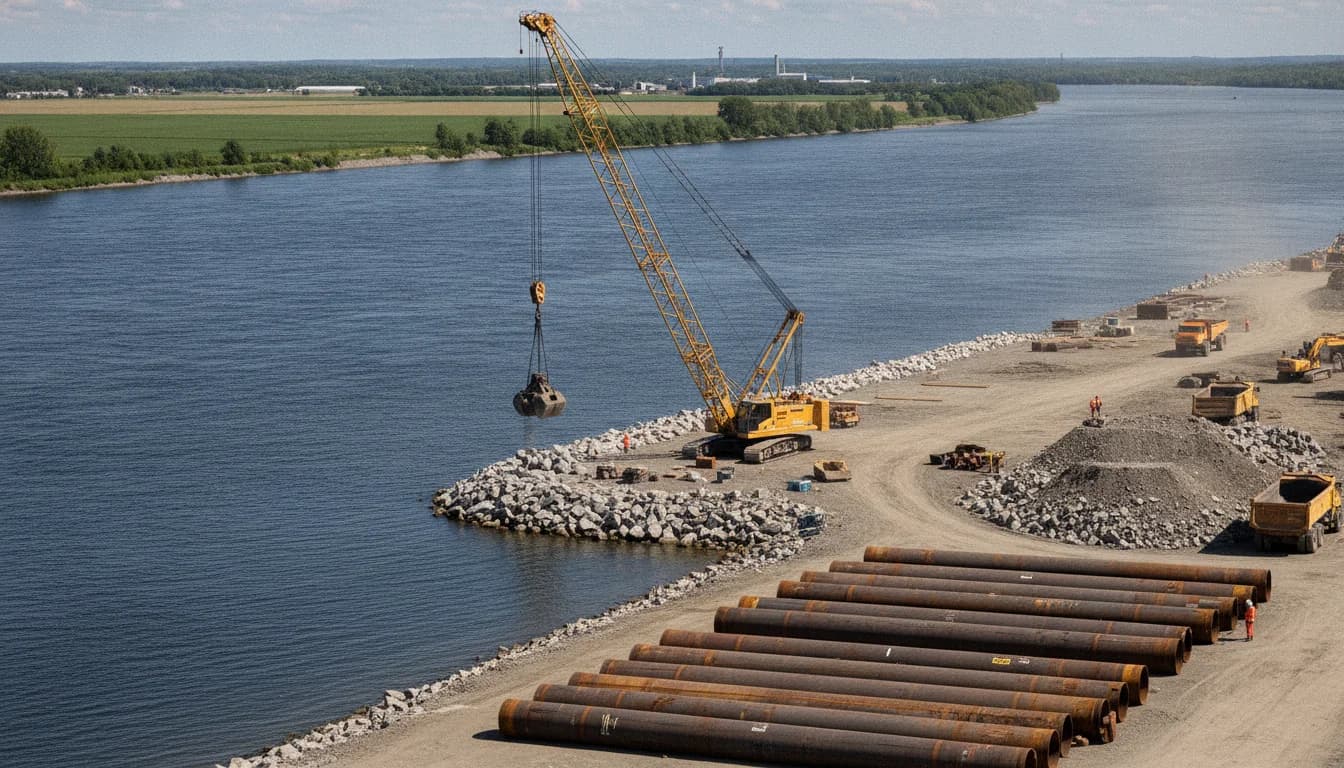
The Port of Montréal Contrecœur terminal expansion is moving from planning to practice as government and industry partners advance a landmark project aimed at reshaping Eastern Canada’s container trade. On April 9, 2026, Prime Minister Mark Carney announced the groundbreaking of the Contrecœur terminal expansion at the Port of Montréal, marking a formal transition from approvals to construction in a project designated to bolster national supply chains and regional economic growth. This milestone follows earlier government actions in 2025 and 2026, including formal referrals to federal oversight and environmental clearances, underscoring the project’s significance to Canada’s trade ambitions. The expansion is designed to increase container-handling capacity and integrate rail and road networks to support demand across Québec and the broader eastern seaboard. The project’s scope and schedule place Contrecœur at the center of a broader push to modernize Canada’s port infrastructure and diversify its logistics capabilities. The Contrecœur expansion is now moving into in-water work, with commissioning anticipated in 2030, a timeline reflected in multiple official documents. (pm.gc.ca)
The central fact guiding today’s coverage is that the Contrecœur container terminal expansion at the Port of Montréal will handle 1.15 million TEUs annually by 2030, according to the Montreal Port Authority’s January 8, 2026 press release. This capacity figure anchors the project’s scale within Canada’s eastern port strategy and helps frame its potential impact on regional supply chains. The January 8 release also confirms a timeline in which 2030 remains the target for full commissioning, aligning with the broader national objectives and the project’s funding and permitting milestones. January 8, 2026 press release. (port-montreal.com)
Section 1: What Happened
Milestones and timeline
- September 2025: The Contrecœur Container Terminal Project was referred to the Major Projects Office (MPO) for fast-tracked review as part of Canada’s push to accelerate critical infrastructure. This referral laid the groundwork for subsequent federal oversight and expedited permitting processes. (pm.gc.ca)
- October 2025 onward: Phase 1 included critical in-water works, as announced by the federal government’s Major Projects Office, with construction activity moving toward dredging and quay wall development as part of the initial marine works. This phase is central to enabling the full terminal’s later construction stages. (pm.gc.ca)
- January 8, 2026: Fisheries and Oceans Canada granted formal authorization for the Contrecœur expansion’s underwater works and related environmental protections, enabling continued site development and the wharf construction plan. The authorization followed the project’s environmental assessment and stakeholder engagement process. This decision is a key regulatory green light for the works to proceed. (port-montreal.com)
- April 9, 2026: Prime Minister Carney announced that the Contrecœur terminal expansion project is breaking ground, signaling a shift from planning to construction and invoking the project’s status as a national priority project with cross-jurisdictional support. The announcement highlighted federal funding and a multi-year path toward a larger port capacity. (pm.gc.ca)
- August 14, 2026: The Port of Montréal confirmed the start of in-water construction work at Contrecœur, marking a formal milestone in the project’s execution phase. The press release details the initial marine works, including the jetty and future wharf infrastructure, and outlines the staged milestones ahead, such as dredging starting in 2027. (port-montreal.com)
Project scope and construction details
- The Contrecœur expansion will comprise two berths and a substantial container handling area, with an intermodal rail yard and a road-facing truck gate to connect to regional transport networks. The plan emphasizes seamless rail, road, and marine integration to support efficient cargo movement. The overall design and facilities are described in official Port of Montréal materials and government announcements. (port-montreal.com)
- The project is being carried out by the Constructeurs Terminal de Contrecœur Grand Projet (CTCGP) consortium, formed by Aecon and Pomerleau. This collaboration is the executing partner for the construction work, reflecting a public-private partnership approach to deliver the terminal at scale. (port-montreal.com)
- Commissioning of the new terminal is targeted for 2030, aligning with the broader vision for a modernized eastern port capable of handling a significantly larger share of North American trade in the St. Lawrence corridor. (port-montreal.com)
- The project’s TEU capacity target is 1.15 million TEUs per year, a figure repeatedly cited in official communications and government briefings tied to Contrecœur’s development. This level of capacity positions the terminal as a major hub for Québec and Eastern Canada. (port-montreal.com)
Funding and governance
- The Contrecœur terminal expansion is supported by multiple government sources as part of Canada’s broader investment in national infrastructure. In the April 9, 2026 announcement, the Prime Minister highlighted a financing framework that includes a substantial federal contribution, the Canada Infrastructure Bank, and provincial support, with a total package designed to de-risk the project and accelerate construction. The financing package is described as a key enabler for timely completion and long-term economic benefits. (pm.gc.ca)
- The January 8, 2026 authorization letter from Fisheries and Oceans Canada confirms that environmental protections and species-at-risk considerations are integrated into the project’s permitting framework, a crucial element for the project’s ongoing execution. This regulatory confirmation complements the MPO’s broader program management and funding commitments. (port-montreal.com)
Key players and partnerships
- The Montreal Port Authority (MPA), as the project owner and operator, leads the expansion at Contrecœur in coordination with federal and provincial partners. The MPA’s leadership is central to the project’s strategic direction, stakeholder engagement, and long-term planning for capacity expansion. (port-montreal.com)
- The project’s construction partner, the CTCGP consortium (Aecon and Pomerleau), is responsible for on-site execution, including in-water works, jetty construction, and wharf development. This collaboration reflects a standard model for large-scale Canadian infrastructure projects, combining public oversight with private-sector execution. (port-montreal.com)
Section 2: Why It Matters
Economic and regional impact
- The Contrecœur expansion is positioned as a major economic lever for Québec and Eastern Canada. When fully operational, the new terminal is expected to support thousands of jobs annually and generate substantial economic activity, reinforcing the region’s role as a strategic logistics corridor for North American trade. The official announcements emphasize a broader economic footprint and the creation of long-term opportunities for exporters, importers, and logistics providers. (port-montreal.com)
- Capacity expansion of this scale—1.15 million TEUs per year—helps alleviate constraints at the Port of Montréal and positions the port to capture a larger share of container flows in a competitive North American market. The TEU target aligns with Canada’s broader port modernization efforts and with public commitments to diversify domestic supply chains beyond reliance on a single gateway. (port-montreal.com)
Strategic significance for Eastern Canada
- The Core objective of the Contrecœur terminal expansion is to create a high-efficiency corridor that improves reliability and predictability for shippers, with integrated rail and road access designed to reduce transit times and logistics costs. The Prime Minister’s remarks underscore the expansion as a nation-building project intended to unlock greater economic resilience by linking Canadian producers to global markets through a robust St. Lawrence gateway. (pm.gc.ca)
- Officials emphasize the expansion’s role in strengthening Canada’s trade resilience, diversifying markets, and expanding access to international shipping lines. The government’s framing of Contrecœur as a “nation-building” project reflects a broader strategy to invest in critical infrastructure that underpins long-term economic competitiveness. (pm.gc.ca)
Environmental and regulatory context
- The authorization from Fisheries and Oceans Canada (DFO) confirms that environmental protections and habitat considerations are integrated into the expansion’s marine works. The DFO authorization covers impacts on fish and fish habitat and sets out conditions to mitigate adverse effects, including measures for aquatic vegetation beds and copper redhorse habitat. This regulatory step is a prerequisite for the in-water works that are now underway, illustrating the balance between infrastructure growth and environmental stewardship. (port-montreal.com)
- The Contrecœur project’s environmental review traces back to an Impact Assessment Agency of Canada decision statement in 2021, underscoring a multi-year, transparent process that engaged public and Indigenous stakeholders. This historical context helps explain the project’s conservative schedule and sustained oversight. (port-montreal.com)
Supply chain and market context
- The expansion’s timing intersects with broader supply chain realignments in North America, including shifts in port capacity, rail interchanges, and cross-border trade dynamics. Analysts and industry observers monitor the Contrecœur project as a bellwether for Eastern Canadian logistics, particularly as demand for containerized goods continues to grow in Québec and neighboring markets. The project’s scale and the port’s strategic location near major rail corridors position it to influence regional trade flows for years to come. (pm.gc.ca)
Public sentiment and local considerations
- Local communities and regional stakeholders have watched the project evolve for years, given Contrecœur’s position as a significant economic engine for the regional economy. The government’s decision to fast-track the project, coupled with the MPO’s involvement, indicates a commitment to balancing economic benefits with environmental responsibilities and community engagement. While the expansion promises durable economic gains, it also requires ongoing coordination with Indigenous communities, environmental groups, and local municipalities to address concerns and maximize positive outcomes. (pm.gc.ca)
Section 3: What’s Next
Construction milestones and near-term schedule
- In-water works commenced as of August 14, 2026, with the first phase focusing on a working jetty, wharf infrastructure, and marine components required to support the terminal’s berths. The project’s early marine activities set the stage for subsequent phases, including dredging and quay wall construction scheduled for later in the 2020s. The immediate next steps involve continuing the jetty works and transitioning into deeper wharf construction as materials and equipment are mobilized. (port-montreal.com)
- The PMO and MPO have detailed phase delineations that include dredging in 2027 and a broader sequence leading to full commissioning in 2030. Observers will be watching for permitting renewals, environmental monitoring updates, and contractor milestones as the work progresses through each phase. (port-montreal.com)
Financing and governance moving forward
- The government’s financing plan, highlighted by the Prime Minister, emphasizes a multi-source approach designed to speed up construction while ensuring long-term financial sustainability of the terminal’s operational phase. The Canada Infrastructure Bank financing, combined with federal and provincial contributions, is intended to reduce market risks and support a stable path to full capacity. As construction advances, budgetary updates and project audits are likely to shape ongoing financing decisions and risk management. (pm.gc.ca)
What to watch for
- Key indicators to monitor include: completion of dredging milestones, the start of quay wall installation, the progress of the intermodal rail yard integration, and the development of the on-site gate and support facilities. Each milestone will be visible in port authority updates and government press releases, with additional briefings to reflect changes in the project’s timeline or scope. The early 2027 dredging start, as noted in official communications, will be a particularly important marker for project momentum. (port-montreal.com)
Closing
As the Contrecœur terminal expansion moves into ongoing construction, the project stands as a defining test case for Canada’s ability to modernize its port infrastructure while maintaining environmental safeguards and community accountability. The 1.15 million TEUs-per-year capacity target by 2030 positions the Port of Montréal as a central node in Eastern Canada’s logistics network, potentially influencing regional trade patterns, investment decisions, and supplier networks for years to come. With a high-profile funding package, a capable consortium at the helm, and a regulatory framework designed to balance growth with ecological protections, observers will be watching not only the milestones but also how the project translates into tangible benefits for shippers, local workers, and the national economy. Readers can stay updated through official port and government channels as new milestones are reached and as commissioning approaches—toward the 2030 target—become clearer.
The Port of Montréal Contrecœur terminal expansion represents more than a single construction project; it signals a strategic shift in how Eastern Canada approaches container trade, regional resilience, and long-term economic planning. As the work continues, Montréal Times will provide ongoing, data-driven coverage that keeps you informed about timelines, budgets, and the real-world impact on trade flows across the region. For ongoing updates, monitor official Port of Montréal communications, the Montreal Port Authority, and federal government announcements from the Major Projects Office.