QPAREB Montreal Home Sales August 2026: Market Rebalance

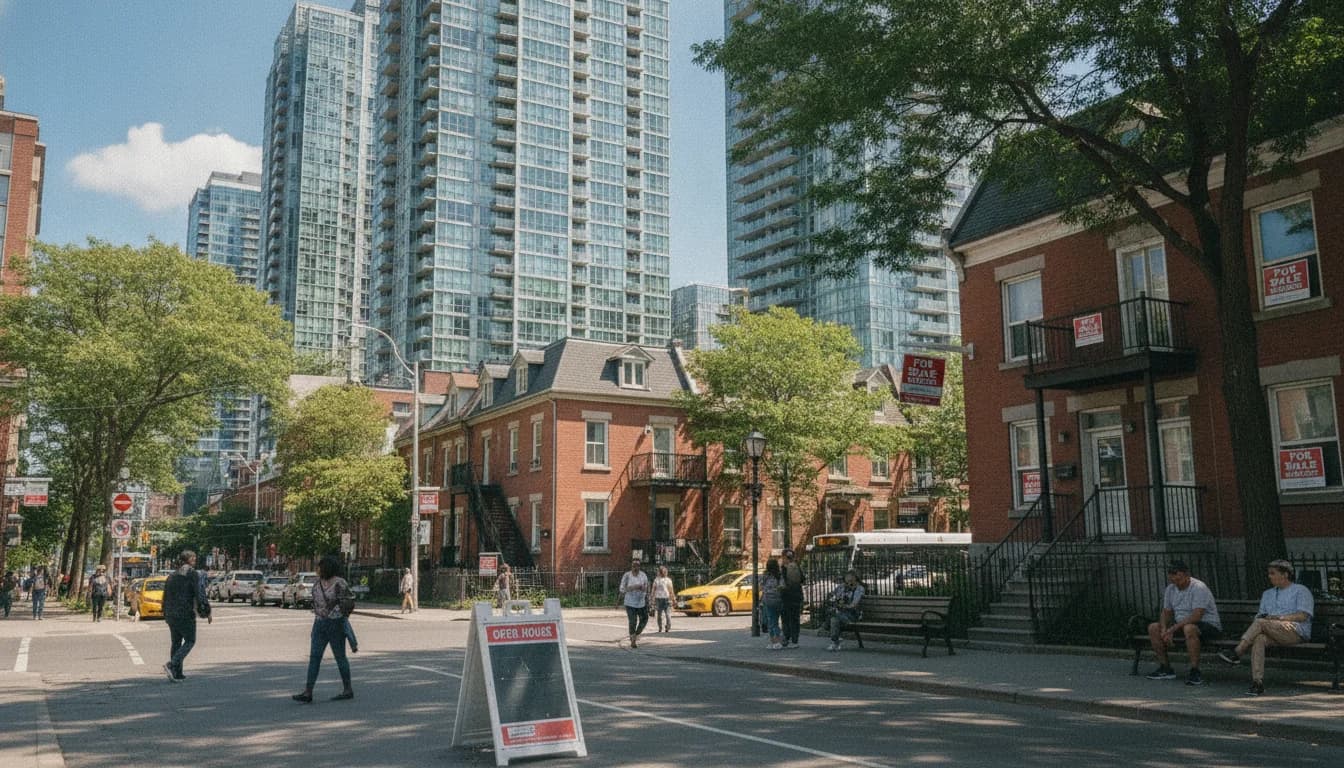
Montreal CMA August 2026 residential activity moved decisively toward balance, according to the Quebec Professional Association of Real Estate Brokers (QPAREB). The August 2026 figures, published on September 4, 2026, draw from Centris data and signal a market that is rebalancing after a period of rapid price moves. Montreal CMA’s August performance is a critical data point for buyers, sellers, and policy observers looking to gauge how supply and demand are matching up across the metropolitan area.
Montreal CMA August 2026 residential sales totaled 2,853 properties, down 13% year over year, according to QPAREB data released September 4, 2026. On a seasonally adjusted basis, sales declined by 2% compared with July 2026, underscoring a cooldown that’s broad-based across geography and property categories. This single line captures the core message of the August release: fewer sales, more homes available, and a market that is shifting toward buyers in many segments. (apciq.ca)
Opening the numbers a bit more, the supply side expanded meaningfully in August. The Centris data show 20,128 active listings across the Montreal CMA, up 18% from the prior year, a sign that inventory is rising as buyers take longer to decide and sellers respond with more choices on the market. The August release stresses that the inventory climb was not isolated to a single neighborhood but was evident across major geographic areas, including the Island of Montreal, the South Shore, and the North Shore. This dynamic—rising supply alongside softer demand—helps explain why the market is moving away from the highs seen in earlier seasons. (apciq.ca)
In terms of timing, the August 2026 release also flagged a seasonally adjusted monthly shift: the market cooled by about 2% relative to July 2026. That month-to-month cadence matters for readers watching the market’s tempo as the calendar shifts from summer to fall. The APCIQ release underscores that buyers gained more room to negotiate in a market where supply is increasingly ample, even as prices stayed on a modest upward trajectory year over year. The August 2026 results reflect a broader pattern of cooling activity that researchers and brokers have begun to label as the “rebalance” phase for Montreal’s housing market. (apciq.ca)
What Happened
Sales Activity in August 2026
- The Montreal CMA registered 2,853 residential sales in August 2026, a 13% decline from August 2025, according to QPAREB’s Centris data released September 4, 2026. This is the central headline that the market is cooling after an earlier sprint in pricing and activity. The figure is tied to the Centris system and published by APCIQ as part of QPAREB’s monthly statistics package. Source: APCIQ press release (Montreal CMA: Adjustment Period Continues, Condominium Market in Balance). (apciq.ca)
- On a seasonally adjusted basis, August sales fell 2% versus July 2026, signaling a softer month-over-month pace even as annual comparisons show a slower but steady rebalancing. This nuance helps explain why analysts emphasize the need to watch the supply side and price momentum rather than only the year-over-year delta. (apciq.ca)
Inventory and Listings
- Active listings rose to 20,128 in August 2026, marking an 18% year-over-year increase and signaling that supply growth remains a defining feature of the Montreal market at mid-late summer. The August release emphasizes that the island’s inventory expansion is now joined by increases on the South Shore and North Shore, suggesting a broader geographic spread of supply growth. (apciq.ca)
- The increase in listings was widespread across property categories: condominiums, single-family homes, and plexes all posted gains year over year. The report notes that listings across the board were rising, with the adjustment more advanced in some segments (notably island condominiums). This pattern aligns with a market recalibrating from previously tight conditions to a more balanced posture for buyers and sellers alike. (apciq.ca)
Market Pace and Time on Market
- Selling times extended in August 2026, signaling longer decision times for buyers in a market with more options. The Montreal CMA saw single-family homes selling in an average of 42 days, up 1 day from the prior period; condominiums averaged 62 days on the market, up 12 days; plexes bucked the trend slightly with an average 52 days on market (down 4 days). These shifts show buyers gaining more negotiating leverage as inventory grows. (apciq.ca)
Neighborhoods and Property-Type Nuances
- The data indicate that while rebalancing is broad-based, some segments are farther along the adjustment curve than others. Condominiums on the Island of Montreal are described as the segment where the rebalancing process is most advanced, with market conditions nearing a balanced or buyer-favorable state in certain central markets. The release highlights that downtown and parts of the Sud-Ouest are now recording the highest listing levels in the system, highlighting the spatial dimension of the market shift. (apciq.ca)
- The press materials note that the timing and depth of the adjustment vary by geography, with suburban areas showing pronounced listing growth as buyers explore options beyond central neighborhoods. This geographic diversification in supply dynamics matters for buyers considering commute times, schools, and neighborhood change over the next several quarters. (apciq.ca)
Price Momentum and Context
- Despite the increase in inventory and slower sales, median prices continued to post modest year-over-year gains: roughly 3% for single-family homes, 4% for condominiums, and 2% for plexes over the prior year. This price resilience—despite a softer sales pace—suggests the market remains anchored by value retention, even as buyers navigate a wider range of available properties. The August release frames this as a balancing act rather than a price collapse or a rapid run-up, underscoring a nuanced price dynamic in Montreal’s market. (apciq.ca)
Why It Matters
Market Balancing Dynamics and Buyer/Seller Impacts
- The Montreal CMA’s August 2026 results reinforce a broader market narrative: activity is cooling after a period of rapid movement and the supply side is expanding. Camille Laberge, QPAREB Assistant Director and Senior Economist, characterizes the period as a rebalance rather than a market reversal. She notes that while new listings are rising and the market is moving toward balance, the central markets on the island are leading the adjustment, with condo segments at a more advanced stage of normalization. This framing matters for buyers who previously faced tight competition and for sellers who must adapt expectations around price trajectories and time on market. The official quotes appear in the press materials accompanying the release. (apciq.ca)
- Helene Bégin, QPAREB Senior Economist, adds that broader macro factors—ongoing geopolitical tensions, economic uncertainty, and concerns about high property prices—continue to weigh on household decisions. The net effect, according to the release, is a market that is moderating activity and moderating price momentum, even as price levels hold relative to the same period a year earlier. These expert perspectives help framing for readers who weigh local market signals against macroeconomic headwinds. (apciq.ca)
Regional Variations and Market Segments
- The data show that the Montreal CMA is not uniform in its adjustment. The island’s central neighborhoods remain a focal point for the pace of rebalancing, while outlying areas are experiencing more pronounced listing growth as buyers search for greater value or more space. The South Shore and North Shore also show distinct inventory dynamics, reflecting differing development patterns, housing stock, and price pressures in those belts. Understanding these regional nuances is critical for readers who are evaluating where to buy or sell within the CMA. (apciq.ca)
What’s Next
Timeline and Forward-Looking Trends
- The August 2026 data set the stage for upcoming September and October updates, where observers will look for whether the seasonally adjusted pace remains soft or shows signs of stabilization as autumn activity typically picks up. The APCIQ press materials emphasize that the market’s path toward balance is ongoing, with inventory growth and a gradual softening in demand feeding that trajectory. Readers should monitor whether the momentum in listings persists, whether price momentum remains resilient, and how local factors such as neighborhoods with high new listings influence the CMA-wide picture. (apciq.ca)
What to Watch by Property Type
- Condominiums: The condo segment is identified as being further along in its adjustment relative to other segments. For readers focusing on condo investments or owner-occupied purchases, August 2026 data suggest continued balancing pressure, with inventory rising and time on market extending in many central markets. The balance between value and liquidity will be a key factor for condo buyers and sellers this fall. (apciq.ca)
- Single-Family Homes: The single-family market continues to show seller-favorable conditions in many CMA areas, even as overall activity softens. Price gains remain modest on a year-over-year basis, and the time-on-market metric suggests a more cautious approach among buyers. The dynamic here underscores the importance of carefully calibrated pricing and marketing strategies for home sellers. (apciq.ca)
- Plexes: Plex properties show a slightly different trajectory, with time-on-market down by 4 days in August. This nuance adds texture to the broader narrative and points to the complexity of demand across multi-family assets within Montreal’s CMA. (apciq.ca)
What the Release Says About Neighborhoods
- Downtown and the Sud-Ouest boroughs are highlighted as areas with the highest levels of listings in the system, a sign that urban cores may be experiencing a more pronounced rebalancing than some suburban pockets. For buyers attracted to urban neighborhoods and for sellers targeting those same markets, August 2026 numbers provide a cue to adjust expectations around competition and pricing. The official language in the release backs this interpretation and provides a framework for readers to gauge where relative supply pressure resides in the CMA. (apciq.ca)
What’s Next (Continued)
- The September 2026 release from QPAREB and APCIQ will be the next milestone in tracking the rebalancing arc. Market observers will look for whether the month-over-month pace continues to cool, or if inventory levels begin to plateau as demand responds to the higher listing presence. The press materials for August emphasize that the path to balance is ongoing, with a broad-based increase in listings across the CMA and a continued but measured easing of activity. Readers and market participants should treat the August 2026 data as a data point in a broader trend toward balance, not a stand-alone sign of sudden market shift. (apciq.ca)
Closing
As Montréal Times continues to report on technology and market trends with a data-driven lens, the August 2026 QPAREB data set will be a reference point for readers tracking how Montreal’s housing market navigates the transition from a seller-driven surge to a more balanced environment. For participants across the market—buyers, sellers, brokers, and lenders—the August 2026 results emphasize the importance of rigorous pricing, patient decision-making, and close attention to neighborhood-level dynamics as the CMA moves further into a post-peak period.
Staying updated will require following QPAREB’s Centris-based releases and APCIQ’s newsroom updates. The August 2026 Montreal CMA statistics underline a market that is cooling in activity while gradually absorbing higher inventory levels, with price momentum remaining modestly positive and time on market extending for most property types. Montreal’s housing market is in transition, and the data released on September 4, 2026, provides a road map for readers seeking to understand the evolving balance between buyers and sellers in the years ahead. Want to dive deeper? Refer to the official Montreal CMA August 2026 release and the associated APCIQ PDF for the primary figures and the detailed tables that accompany the narrative. (apciq.ca)
Key sources for this report:
- QPAREB / APCIQ Montreal CMA: Adjustment Period Continues, Condominium Market in Balance (English release, September 4, 2026). Includes the August 2026 highlights and main figures. Link: Montreal CMA press release. (apciq.ca)
- APCIQ Montreal CMA: Highlights and Full Press Release PDF (English PDF version of the August 2026 release; includes detailed figures and time-on-market data). Link: English press release PDF. (apciqca-152af.kxcdn.com)
Note: This article relies on primary sources from APCIQ and QPAREB for August 2026 Montreal CMA data. It presents a data-driven narrative of the market’s August 2026 performance and outlines the implications for buyers and sellers, anchored by the official August 2026 release date of September 4, 2026.