Quartier Molson Development Kicks Off in Montréal

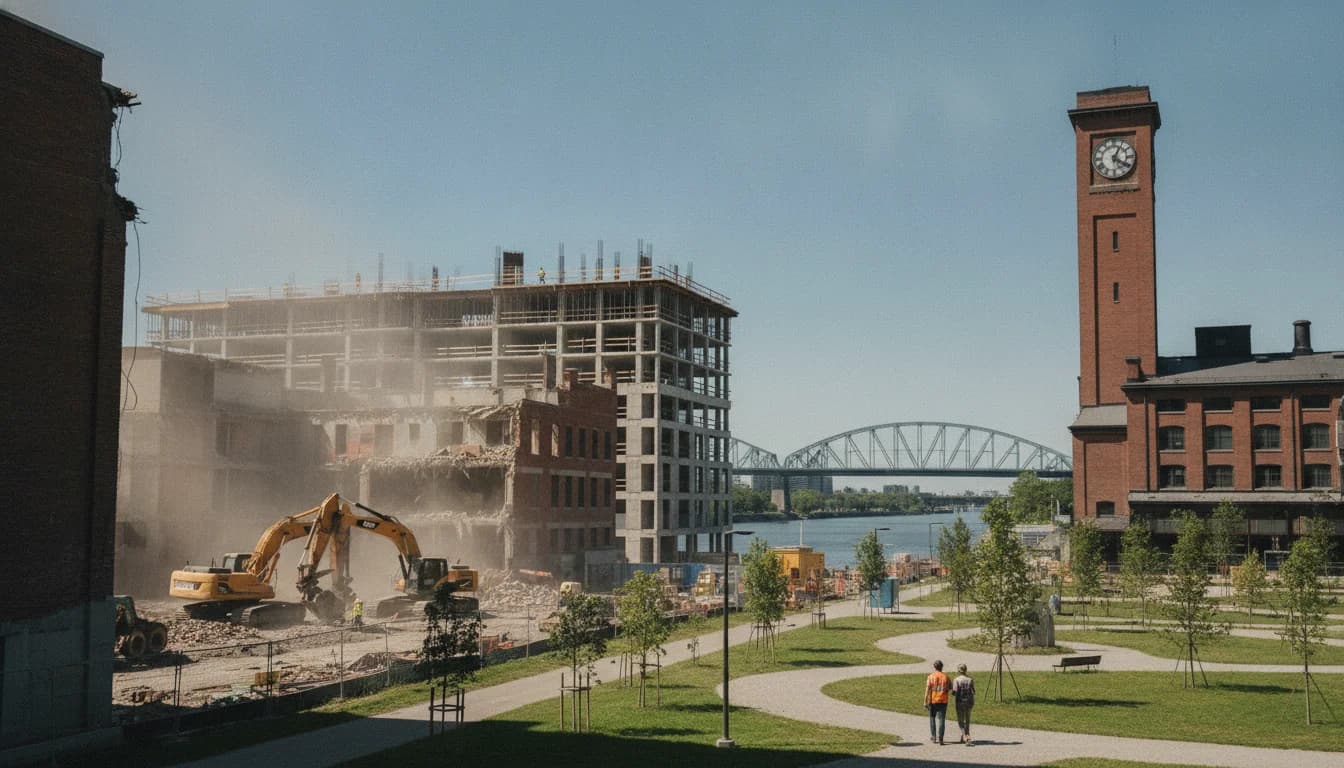
Montréal Times reports on a major milestone for the city’s waterfront and urban core. On October 14, 2026, Montoni and the Fonds immobilier de solidarité FTQ staged a ground-breaking ceremony at the former Molson brewery site, signaling the formal start of the Quartier Molson development. This event marks the transition from planning to physical construction on a site that has long been central to Montreal’s industrial heritage and to residents’ expectations for a riverfront mixed-use district. Quartier Molson development was born out of a collaboration that aims to blend housing, retail, workplaces and public space along more than half a kilometer of Saint-Lawrence River frontage. Quartier Molson construction began on October 14, 2026, with CHAPITRE Quartier Molson featuring 383 rental units and a 22,000-square-foot supermarket, according to a Newswire CNW release. This initial phase confirms the project’s practical shift from concept to concrete work. > “Today begins a new chapter in Montréal's history and we are honoured to help write it,” stated Dario Montoni, President of Montoni, at the ceremony. This quote anchors the event in the leadership and vision driving the development. The CNW release also notes that the overall timeline envisions a 7-to-10-year build-out, with the neighborhood eventually totaling close to 5,000 housing units and a broader mix of amenities. These immediate details—383 residential units in CHAPITRE Quartier Molson, the planned 22,000 sq ft supermarket, and the broader scope—frame the project’s early impact on housing supply and urban form in Montreal’s east-end waterfront corridor. The press materials were issued in conjunction with the city’s partners and were echoed by public officials at the ceremony, including leaders from Montoni and the Fonds immobilier de solidarité FTQ. For readers seeking primary sources, the CNW release provides the official, contemporaneous account of the ground-breaking event and the initial phase scope. CNW press release: Quartier Molson construction has officially begun. Citations: (newswire.ca)
A separate, contemporaneous account from La Presse highlights the same milestone from a journalist’s perspective on the ground in Montréal. The October 14, 2026 La Presse piece confirms the first residential tower—a 27-story building that will anchor the project’s initial phase—and provides detail on the project’s public and political reception. La Presse notes that the first tower will absorb a significant portion of the 383 units planned for this phase and points to the project’s broader ambition to reshape the city’s waterfront edge with a mixed-use fabric. The La Presse report situates Quartier Molson within a broader urban context, noting the leadership and public commitments behind the plan, the expected delivery window for early units, and the project’s emphasis on growing a durable, walkable riverfront neighborhood. Readers can consult the La Presse article for additional color on early reactions from city leaders and industry partners. [La Presse coverage: Montreal’s Quartier Molson begins with first tower] (https://www.lapresse.ca/affaires/marche-immobilier/2026-10-14/montreal/le-quartier-molson-erige-sa-premiere-tour.php). Citations: (philippelapointe.ca)
Section 1: What Happened
Ground-breaking marks start of Quartier Molson development
The October 14, 2026 ground-breaking ceremony or “pelletée de terre” formally initiated construction on Quartier Molson, the historic Molson brewery site’s transformation into a new mixed-use neighborhood. The event featured Montoni executives, representatives from the Fonds immobilier de solidarité FTQ, municipal leaders, and heritage advocates who will monitor the project’s integration of memory with modern urban form. The initial work centers on the CHAPITRE Quartier Molson rental block, a cornerstone of the plan, designed by Sid Lee Architecture, and the first step toward the broader master plan. The CNW release frames this moment as a “new chapter unfolding on the shore of the St. Lawrence River,” underscoring the project’s long-term significance for Montreal’s urban fabric. While the public ceremony highlighted heritage preservation and the riverfront’s revitalization, the release also provided concrete, near-term scope: 383 rental units within CHAPITRE Quartier Molson, plus a 22,000 sq ft supermarket to serve residents and the wider neighborhood. The first phase also includes the heritage-facing Îlot des Voltigeurs, a re-imagined Sohmer Park, and the early-off-market housing components scheduled to begin in 2027. The initial phase’s cost and design are anchored by a collaboration among Montoni (the lead developer), the Fonds immobilier de solidarité FTQ (the equity partner), and Sid Lee Architecture, with the city of Montréal playing a coordinating role in transportation, public space, and heritage considerations. The initial investment for the CHAPITRE Quartier Molson block is reported at more than $190 million, illustrating the scale of the first phase and signaling the capital intensity required to realize the master plan. The press materials emphasize sustainability and urban mobility as guiding principles for the master plan, including the potential for an energy loop and LEED/ZCB certification pathways. Sources for these facts include the CNW release and the project’s official materials. Citations: CNW release; Quartier Molson project site and press materials. (newswire.ca)
What exactly is being built in Phase One
Phase One centers on creating a living-and-working block that anchors the Quartier Molson neighborhood along Notre-Dame Street East and adjacent waterfront corridors. The CHAPITRE Quartier Molson block comprises 383 rental units, designed to balance unit mix and affordability within a market-rate framework, and it includes the supermarket anchoring a pedestrian-oriented retail podium. The supermarket is planned to span roughly 22,000 square feet, reinforcing the neighborhood’s self-sufficiency by providing a critical daily amenity to residents and nearby workers. The plan also includes 1,000 off-market housing units across the site as part of the broader housing strategy, plus about 370 social and affordable units with SHDM contributions, reflecting a deliberate social mix approach. The SHDM project footprint will be in the western portion of the Quartier Molson site, at the intersection of Atateken and de la Commune streets. The initial public spaces will include Sohmer Park and the Craig Linear Park, totaling roughly 161,000 square feet of public space, a sizable commitment to green space amid dense urban development. These elements collectively illustrate how Quartier Molson positions itself as a riverfront destination that blends memory with modern urbanism. Citations: CNW release; SHDM project notes; Quartier Molson materials. (newswire.ca)
The project’s heritage and design ambitions
Heritage is front and center in Quartier Molson, with iconic elements like the Molson tower, the historic chimney stack, the clock, and the Molson sign to be preserved as identity markers for the new neighborhood. The design partners include Sid Lee Architecture and CCxA Architectes paysagistes, with ongoing heritage consultations guiding how the site’s industrial past informs contemporary urban form. The master plan stresses a pedestrian-first urban fabric, with a network of courtyards, pocket parks, and landscaped lanes designed to invite walking, cycling, and casual gathering. The emphasis on public realm is paired with a sustainability framework that has the energy loop under study and a target to achieve LEED and Zero-Carbon Building certifications. The CNW release and Quartier Molson’s own materials articulate these goals, confirming that the project is intended to be both a catalyst for economic activity and a model of sustainable development on a historic waterfront site. Citations: CNW release; Quartier Molson materials. (newswire.ca)
Section 2: Why It Matters
Housing supply and urban resilience
Montreal’s housing supply is a priority for city planners and policymakers, and Quartier Molson adds a substantial new source in a historically challenged corridor. The development’s initial phase alone contemplates 383 rental units, a figure that matters for the city’s overall housing inventory. When viewed within the broader plan that envisions nearly 5,000 housing units across the full build-out, Quartier Molson stands as one of the city’s most ambitious riverfront housing initiatives in the past decade. The project’s blend of market-rate off-market units, social housing units via SHDM, and affordable housing components aligns with public policy objectives for inclusive growth and vibrant neighborhoods. Analysts will watch how this housing cadence interacts with transportation, services, and public spaces in the surrounding districts, including the potential for new transit-linked connections to Champ-de-Mars, Beaudry, and Papineau stations. Citations: CNW release; La Presse coverage. (newswire.ca)
Economic and cultural impact on Centre-Sud and beyond
Quartier Molson’s harborfront location makes it a potential economic engine for Montréal’s east-end and the broader downtown-adjacent districts. The initial phase’s $190 million investment in CHAPITRE Quartier Molson signals a significant capital commitment that should ripple through local construction supply chains, retail, and services. The project’s emphasis on public spaces—Sohmer Park, Craig Linear Park, and other green corridors—also promises to broaden tourism appeal and provide quality of life improvements that could attract new residents and visitors. In addition to housing, the plan includes office and hospitality components that will diversify the district’s employment base, offering a more balanced urban ecosystem. While the public discourse around height, density, and traffic remains nuanced, the integration of heritage elements with modern amenities aims to create a distinctive neighborhood identity that resonates with Montrealers across generations. Citations: CNW release; Journal Métro coverage; La Presse piece. (newswire.ca)
Public space and sustainability as differentiators
Quartier Molson’s public realm strategy seeks to elevate the riverfront experience through Sohmer Park and the Craig Linear Park, two major landscape commitments that translate into roughly 161,000 square feet of public spaces—a scale often associated with major urban renewal projects. The plan’s ambition to pursue LEED and Zero-Carbon Building targets underscores a broader, climate-conscious orientation for the neighborhood. The “energy loop” concept, while still under study, signals a commitment to energy efficiency and resilience in a city already navigating cold winters, high energy costs, and evolving grid dynamics. The combination of public space, sustainability goals, and historic preservation positions Quartier Molson as a potential template for how post-industrial waterfronts can be repurposed for sustainable, inclusive growth. Citations: CNW release; Quartier Molson materials. (newswire.ca)
Section 3: What’s Next
Timeline and next steps for Phase One
Phase One’s core deliverables include 383 CHAPITRE Quartier Molson rental units and the 22,000-square-foot supermarket, with an estimated completion and delivery window in the 2028 timeframe for the initial residential block, followed by 2027 construction on the off-market housing components and the SHDM elements in the western portion. The Ground-breaking ceremony itself marks a point in time, but the real test will be the coordination of construction across the site’s multiple parcels, the management of heritage restoration, and the integration of new infrastructure to support mobility, transit access, and the district’s public spaces. The press materials emphasize a 7-to-10-year master plan horizon, underscoring that the project’s long-term evolution spans many municipal cycles and economic conditions. Citations: CNW release; La Presse coverage. (newswire.ca)
What to watch for in the months ahead
- Construction milestones and schedule announcements for CHAPITRE Quartier Molson, including structural completion milestones, envelope work, and retail fit-out timelines.
- SHDM housing units development and allocations, as well as how the off-market and social housing components align with city policy and affordable housing targets.
- Public space completion timelines for Sohmer Park and Craig Linear Park, and how these spaces connect to surrounding neighborhoods and future transit improvements.
- Heritage preservation milestones, including the treatment and display of Molson-era structures, signage, and interpretive installations that anchor the neighborhood’s identity.
- Transportation and mobility initiatives, including pedestrian-oriented streets, potential shuttle services to metro stations, and any new cycling corridors or traffic-management measures integrated into the master plan.
Policy and governance context
Quartier Molson’s development sits at the intersection of municipal planning, heritage conservation, housing policy, and waterfront revitalization strategies. Public notices and planning documents from the City of Montréal and the Office de consultation publique de Montréal (OCPM) frame the broader governance environment, including zoning, density allowances, and design review processes. The City’s public notices and planning reports acknowledge the project’s significance while balancing heritage preservation with contemporary urban requirements. These documents help readers understand why the project has attracted attention from a wide spectrum of stakeholders—from neighborhood associations to housing advocates and infrastructure planners. Citations: Ville de Montréal public notices; OCPM planning documents. (applicatif.ville.montreal.qc.ca)
The role of primary sources and transparency
As Quartier Molson advances, readers will want to track the project through primary documents and official communications. The official Quartier Molson site hosts press releases and project updates that provide the developer’s perspective and timeline markers. The CNW press release, issued by Montoni and the Fonds immobilier de solidarité FTQ on October 14, 2026, offers a contemporaneous account of the ground-breaking and the first-phase scope. Journal Métro and La Presse provide independent reporting that supplements the primary materials with on-the-ground reporting and community perspectives. Citations: CNW press release; Quartier Molson press releases; La Presse coverage; Journal Métro. (newswire.ca)
What sets Quartier Molson apart is its explicit emphasis on a riverfront urban fabric that integrates living, working, and leisure with heritage preservation and sustainability at scale. The early milestones, including CHAPITRE Quartier Molson’s 383 rental units and a substantial retail anchor, provide tangible benchmarks for monitoring progress and evaluating the project’s impact on housing supply in Montreal. The development’s long horizon—7 to 10 years for the full master plan—implies a staged ramp of construction activity and incremental community benefits over time, rather than a single event with a fixed payoff. The project also raises questions about transit integration, pedestrian-first design, and how the neighborhood will relate to surrounding districts as new housing, commerce, and public spaces materialize. Citations: CNW release; La Presse; Journal Métro. (newswire.ca)
Closing
The Quartier Molson development represents a concerted effort to reimagine a landmark site along Montréal’s riverfront, balancing preservation with bold, forward-looking urban design. The ground-breaking on October 14, 2026, confirms that the project has moved from concept to construction, with a phase-one program that could reshape housing supply, retail options, and public space in the Centre-Sud area for years to come. Readers who want to stay informed can follow the project’s official communications and major city-facing planning updates, as well as independent reporting from Montreal’s trusted news outlets. The milestone is not only a construction kickoff; it is a signal of Montreal’s continued willingness to invest in large-scale, mixed-use redevelopment that honors history while pursuing modern living and sustainable urban growth. Citations: CNW release; La Presse; Journal Métro.
For ongoing developments, look to the project’s primary sources and timely local reporting, which together provide a clearer view of the Quartier Molson development’s trajectory as it unfolds over the coming years. The city’s broader waterfront strategy and housing policy framework will also shape how Quartier Molson integrates with Montreal’s evolving urban landscape, so readers should expect periodic updates, adjustments to timelines, and new data points as the master plan progresses.