Québec 2026-2027 Budget: Targeted Measures and Outlook

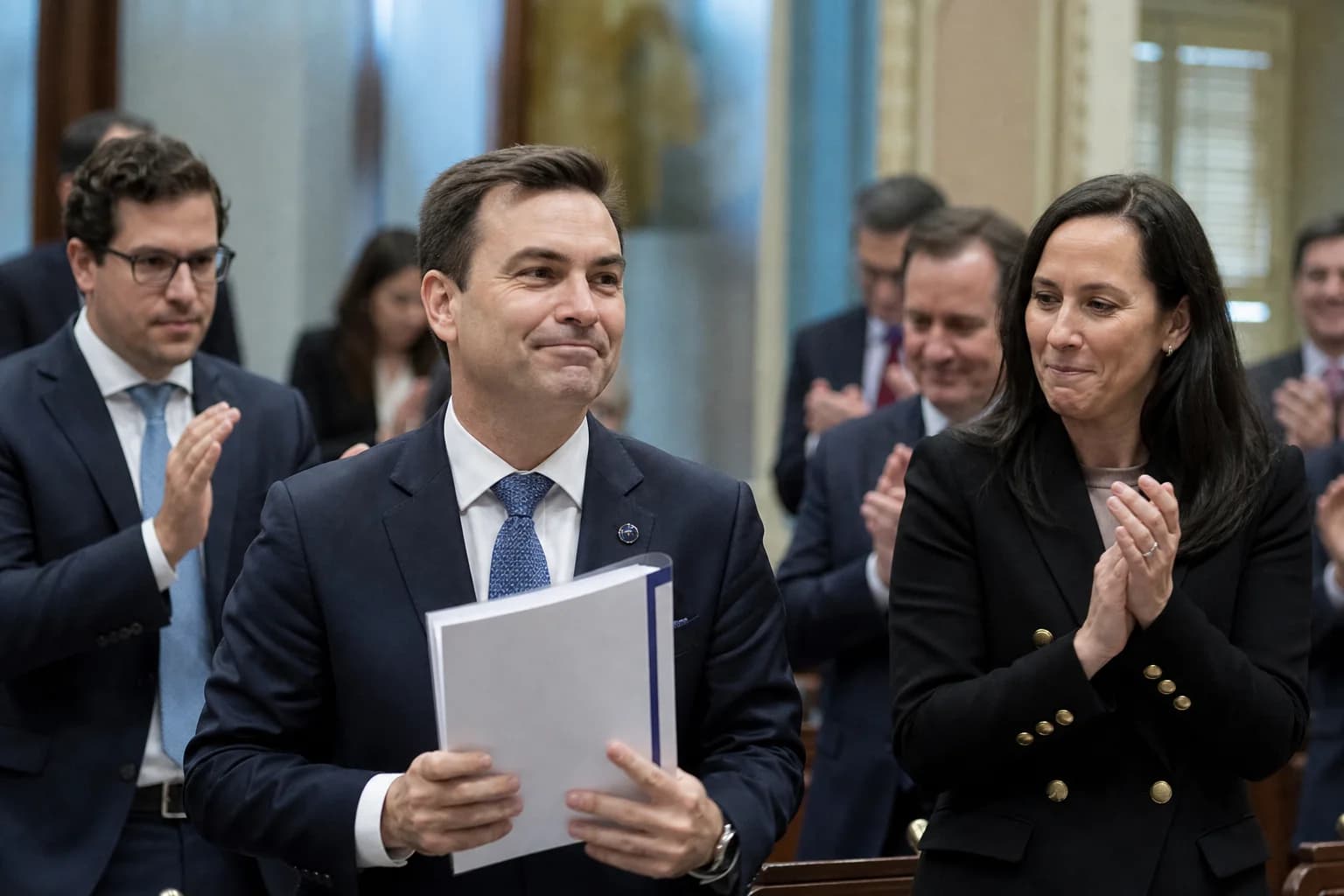
The Québec 2026-2027 budget was tabled on March 18, 2026, signaling the province’s plan to steer public finances through a period of economic uncertainty while continuing to invest in core services. Finance Minister Eric Girard framed the document as a “Responsible Budget with Targeted Measures for Quebecers,” designed to support businesses, accelerate infrastructure projects, and strengthen health care, housing, and education. The budget arrives at a pivotal moment, with the government aiming to return to a balanced budget by 2029-2030 and to bridge the gap between current needs and long-term fiscal sustainability. The plan also emphasizes targeted actions to help households and communities navigate rising costs and demographic pressures. This article provides a data-driven look at what happened, why it matters, and what comes next for Québec in the wake of the 2026-2027 budget. (finances.gouv.qc.ca)
Section 1: What Happened
Announcement and context
- Date and setting: Budget 2026-2027 was tabled on March 18, 2026, before the National Assembly, with a formal Budget Speech delivered by Eric Girard, the Minister of Finance. The speech emphasizes a sober, disciplined budgeting approach in a volatile global economy and frames the plan as a continuation of Quebec’s long-term fiscal strategy. This is the government’s eighth budget, and the Premier’s last, according to the speech. (finances.gouv.qc.ca)
- Framing and priorities: The government identifies four priorities to guide the budget: supporting businesses in adapting to the new economic climate, accelerating infrastructure investments, ensuring robust funding for the government’s main missions, and taking targeted action to support Quebecers and their communities. The emphasis is on balancing fiscal prudence with strategic investments that can stimulate growth and address urgent social needs. (finances.gouv.qc.ca)
- Total targeted measures: The budget announces initiatives totaling nearly $9.6 billion over six years, underscoring the government’s plan to couple macroeconomic discipline with targeted assistance in key areas. This figure appears repeatedly in the Budget Speech as the aggregate amount directed toward prioritized programs and investments. (finances.gouv.qc.ca)
Key structural and fiscal numbers
- Deficit and balance trajectory: The Budget Speech sets out a path back to a balanced budget by 2029-2030, noting that deficits for the near term are being managed downward. In 2026-2027, the budget projects a deficit, with the overall financial framework showing a continued effort to reduce the gap over time. The rapid downward revision in deficits compared with earlier projections is highlighted in the speech. As per the accompanying materials, the budgetary balance for 2026-2027 stands at a deficit of about $8.6 billion (after accounting for deposits in the Generations Fund). The plan envisions deficits gradually shrinking in the subsequent years as the economy recovers and investments yield returns. (finances.gouv.qc.ca)
- The Generations Fund and debt trajectory: The budget documents show deposits of dedicated revenues into the Generations Fund in order to support debt reduction and intergenerational equity. The March 2026 plan shows a deposit figure that reduces the bottom-line deficit and signals a disciplined approach to debt management, aligning with a longer-term goal of fiscal balance. (finances.gouv.qc.ca)
- Revenue and fiscal framework: The Budget Plan and Budget Speech lay out a consolidated view of revenue and expenses, including a focus on maintaining sound public finances while delivering targeted measures. The plan highlights a gradual reduction in the share of public expenditure relative to GDP back toward pre-pandemic levels as part of restoring fiscal balance. The figures reflect the government’s adherence to the Balanced Budget Act and the requirement to deposit revenues in the Generations Fund in order to support balance progression. (finances.gouv.qc.ca)
Targeted measures and key investments
- Health care and social services: Québec’s budget includes nearly $2.2 billion to facilitate access to health care and social services, with emphasized actions to improve access to medications, reduce wait times for surgeries, strengthen front-line care, and support caregivers. The plan also mentions a new framework agreement with general practitioners intended to cover up to 500,000 Quebecers who currently lack a family doctor by mid-2026. These measures reflect a direct commitment to reducing service delays and improving patient outcomes. (finances.gouv.qc.ca)
- Housing and affordability: The housing section translates into a dedicated $741 million package aimed at building 1,000 new affordable housing units, ensuring vulnerable households remain housed, and adapting and renovating the existing housing stock. The intent is to expand affordable housing supply and stabilize rents for vulnerable populations, addressing a recognized affordability gap in major urban areas. (finances.gouv.qc.ca)
- Education and research: The budget designates nearly $640 million to support students’ educational success, address urgent space needs in schools, and attract workers to the education system. An additional nearly $400 million is earmarked to support higher education training and research, with emphasis on engineering and information technology, continuing to promote innovation and workforce development. These investments aim to strengthen the province’s knowledge economy and help fill talent pipelines in strategic sectors. (finances.gouv.qc.ca)
- Infrastructure and public works: The infrastructure agenda is a core plank of the budget. Québec Infrastructure Plan investments are highlighted, with the plan continuing to expand to $167 billion for 2026-2036. The government projects that over time, the incremental investments will sustain thousands of jobs and lift GDP, with a 71% share of investments directed toward maintenance, as requested by municipalities and partners. The plan explicitly frames infrastructure as a lever for productivity and resilience in the face of climate and economic risks. (finances.gouv.qc.ca)
- Digital economy and industry: The budget makes targeted adjustments to tax credits for the development of electronic business activities incorporating artificial intelligence, including updates to eligible activities and salary thresholds, and it extends certain tax incentives for the press to support media and information sectors. These measures underscore Québec’s intent to align tax policy with digital transformation and AI-driven productivity gains. (assets.kpmg.com)
- Climate and green transition: The budget allocates funds to climate-related initiatives and investments consistent with the province’s longer-term environmental goals. The Budget Speech notes ongoing and newly funded climate programs, including the expansion of the 2030 Plan for a Green Economy and related measures, funded by climate-related revenue streams and other budgetary anchors. The exact allocations are itemized in the plan’s detailed tables, with a focus on practical actions that households and businesses can take to adapt to a changing climate. (finances.gouv.qc.ca)
Timeline and key milestones in Section 1
- Immediate effect: The budget takes effect in the fiscal framework beginning with 2026-2027, setting the stage for a six-year horizon of targeted measures and infrastructure investments. The Budget Speech emphasizes the need for prudent implementation and monitoring as the plan unfolds, aligning with the objective of a balanced budget by 2029-2030. (finances.gouv.qc.ca)
- Implementation plan and follow-up: The government signals that the 2026-2031 Implementation Plan will be announced in the coming weeks, providing a concrete schedule for project rollouts and program launches. This is a critical step for market participants and local governments seeking clarity on timing and matchups with project pipelines. (finances.gouv.qc.ca)
- Timing around leadership and governance: The budget is presented in a period of political transition, with the Premier’s leadership set to continue in the near term but with the government acknowledging the need for stable policy execution in the face of evolving governance dynamics. The Budget Speech explicitly notes the Premier’s last year in office, signaling a transition that could influence subsequent budget initiatives and oversight. (finances.gouv.qc.ca)
Section 2: Why It Matters
Economic and fiscal implications
- Balance and debt trajectory: The Québec 2026-2027 budget reinforces a path toward deficit reduction and eventual balance by 2029-2030, supported by deposits into the Generations Fund and a disciplined approach to spending. The official materials show a deficits-laden near term that gradually narrows as economic conditions stabilize and investments yield returns. The plan’s emphasis on debt containment and structural reforms aims to protect creditworthiness and long-term public service sustainability. (finances.gouv.qc.ca)
- Infrastructure as a growth lever: With the Québec Infrastructure Plan expanded to $167 billion, the budget frames infrastructure as a central engine of growth and productivity. The plan’s scheduled maintenance share (71%) reaffirms a focus on preserving the existing stock while pursuing strategic capacity expansions in health networks, schools, transit, water systems, and digital infrastructure. This approach is designed to reduce backlog and unlock multiplier effects across industries, from construction and engineering to manufacturing and software. (finances.gouv.qc.ca)
- Targeted measures and social outcomes: The nearly $9.6 billion in targeted measures over six years signals a deliberate strategy to translate fiscal prudence into tangible benefits for households and communities. Investments in health care access, housing supply, and education are positioned as direct channels to improve living standards, reduce service wait times, and support workforce development. Analysts and market observers view this as a pragmatic approach to address urgent social needs while maintaining economic resilience. (finances.gouv.qc.ca)
Who gains and who might feel the impact
- Households and individuals: Targeted actions across health, housing, and education directly impact households, particularly vulnerable populations. The health care investments, faster access to medications, and family doctor expansion aim to reduce out-of-pocket costs and improve patient experiences, while housing initiatives address affordability and stability. The budget’s alignment with social policy objectives indicates a broad-based benefit to residents, though the scale and speed of delivery will determine the degree of immediate relief. (finances.gouv.qc.ca)
- Businesses and the innovation ecosystem: The budget’s emphasis on infrastructure, digital transformation, and AI-related tax credits indicates a supportive stance for manufacturers, tech firms, and service providers seeking to modernize operations. The policy adjustments to CDAEIA credits and related incentives reflect a calibrated attempt to balance tax relief with long-term investment in Québec’s competitive position in the digital economy. (assets.kpmg.com)
- Regions and municipalities: With 71% of infrastructure investments directed toward maintenance, local partners—municipalities and regional authorities—receive funding to maintain and upgrade essential services. This distribution is likely to influence regional growth patterns, improve resilience, and support public service delivery in urban and rural communities alike. (finances.gouv.qc.ca)
Broader context and comparison
- Provincial context: Québec’s plan sits within a broader Canadian fiscal landscape where several provinces face deficits but maintain different trajectories for balancing budgets. The Quebec plan’s emphasis on a targeted, six-year mix of investments and measures stands out for its explicit integration of social priorities with infrastructure and economic competitiveness. External analyses and consultancy reports have highlighted the budget’s mix of austerity-tested discipline with forward-looking growth initiatives. (finances.gouv.qc.ca)
- Historical alignment: The 2026-2027 budget continues a multi-year strategy that began in prior budgets, including a push to align expenditures with long-run debt reduction and revenue stabilization. In this sense, the plan extends a narrative of gradual fiscal consolidation paired with selective public investment, consistent with the province’s policy framework and constitutional budgeting mandates. (finances.gouv.qc.ca)
Section 3: What’s Next
Implementation and monitoring
- Next steps in execution: The government has signaled that the 2026-2031 Implementation Plan will be laid out soon, detailing project pipelines, funding timelines, and performance metrics for the six-year targeted program. Stakeholders will be watching how quickly shovel-ready projects move from planning to procurement to execution, and how the province maintains cost control while expanding capacity. (finances.gouv.qc.ca)
- Monitoring and accountability: As with any large-scale plan, the province will be evaluated on the accuracy of revenue forecasts, the pace of project delivery, and the effectiveness of targeted measures in closing gaps in health, housing, and education. The Budget Speech frames accountability within the Balanced Budget Act, emphasizing the need to stay on track toward balance while delivering promised results. (finances.gouv.qc.ca)
What watchers should watch for
- Health care wait times and access metrics: The health care commitments, including front-line access improvements and medication coverage, will be measured by wait times, access rates, and patient outcomes. The June 30, 2026 family doctor coverage target will be a key milestone to gauge policy effectiveness. (finances.gouv.qc.ca)
- Housing production and stock conditions: The construction of 1,000 affordable housing units, alongside the maintenance and renovation of existing stock, will be tracked by housing starts, occupancy rates, and rental market indicators. The financing and regulatory steps to accelerate housing supply will be of particular interest to developers and municipal authorities. (finances.gouv.qc.ca)
- Infrastructure project delivery and maintenance: With the PQI expansion to $167 billion and a larger emphasis on maintenance, observers will monitor project timelines, cost overruns, and the extent to which ongoing maintenance reduces the risk of asset degradation in the medium term. The share of funds allocated to maintenance vs. new construction will be a key indicator of the plan’s sustainability. (finances.gouv.qc.ca)
Closing: The takeaway for Montréal Times readers Québec’s 2026-2027 budget presents a measured but ambitious framework that seeks to balance immediate social needs with longer-run fiscal discipline. By declaring a plan to return to balance by 2029-2030, the government acknowledges the importance of debt and obligations to future generations while actively investing in health care access, affordable housing, education, and infrastructure. For readers in Montréal and across Québec, the budget’s emphasis on targeted measures—especially in health care, housing, and IT-enabled innovation—offers a clear signal about the government’s priorities in a time of economic uncertainty. As implementation unfolds, the coming weeks and months will reveal how quickly and effectively these measures translate into tangible improvements in daily life, job creation, and public service quality.
Stay tuned for updated analyses as the implementation plan is released and first-year performance data become available. Québec’s path toward a more productive, inclusive, and fiscally sustainable future will depend on precise execution, ongoing transparency, and a readiness to adjust in response to evolving economic conditions. Observers will especially watch the 2026-2031 timeline for evidence that the targeted measures are delivering the intended social and economic returns, while the broader fiscal framework maintains its commitment to balance and debt management.
Appendix: Key numbers at a glance
- Budget date: March 18, 2026; Budget Speech delivered in March 2026. (finances.gouv.qc.ca)
- Total targeted measures: Nearly $9.6 billion over six years. (finances.gouv.qc.ca)
- 2026-2027 budget deficit: $8.6 billion (after deposits to the Generations Fund). (assets.kpmg.com)
- 2027-2028 deficit (projected): $5.7 billion. (assets.kpmg.com)
- 2028-2029 deficit (projected): $1.5 billion. (assets.kpmg.com)
- Infrastructure: Québec Infrastructure Plan expanded to $167 billion (2026-2036). 71% of investments directed to maintenance. (finances.gouv.qc.ca)
- Health care and social services funding: Nearly $2.2 billion to improve access and services; family doctor coverage target by June 30, 2026. (finances.gouv.qc.ca)
- Housing: $741 million to build 1,000 affordable housing units, preserve stock, and renovate as needed. (finances.gouv.qc.ca)
- Education and research: Nearly $640 million for student success; nearly $400 million for higher education training and research. (finances.gouv.qc.ca)
- Implementation plan: 2026-2031 Implementation Plan to be announced in coming weeks. (finances.gouv.qc.ca)