Québec Infrastructure Plan 2026-2036: Transit Upgrades

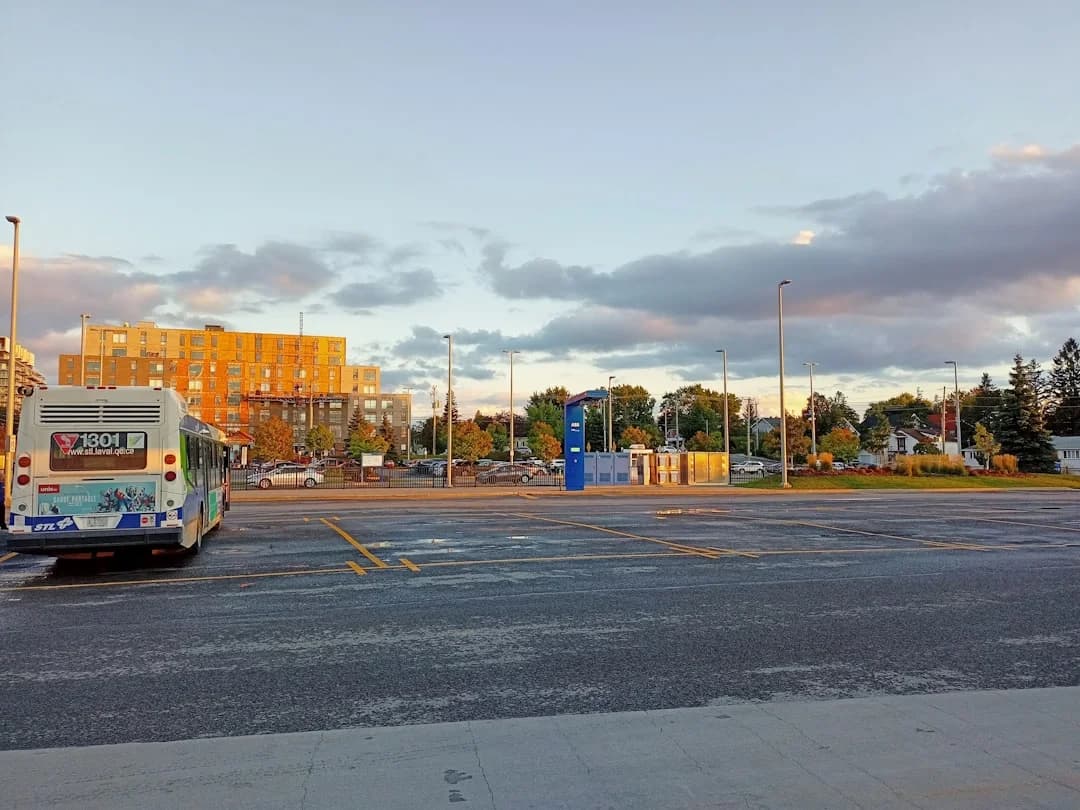
Photo by Nathan Marko Markarian on Unsplash
The Government of Québec unveiled the Québec Infrastructure Plan 2026-2036, a bold, data-driven framework designed to sustain and upgrade public assets across the province. Announced publicly on March 18, 2026, by Benoit Charette, the Minister Responsible for Infrastructure and Minister of the Environment, the plan carries a cumulative envelope of 167.0 billion dollars over the next decade. This decisive move comes as Québec confronts ongoing economic uncertainty but seeks to accelerate infrastructure delivery to shield jobs, stimulate growth, and safeguard essential public services. The announcement explicitly frames the PQI 2026-2036 as a strategic effort to maintain government assets while expanding priority networks, including health facilities, higher education spaces, and public transit. The scale and timing of this initiative signal a concerted effort to translate fiscal commitments into tangible projects across rural and urban Québec alike. (quebec.ca)
At its core, the plan positions maintenance as a dominant driver of investment—105.8 billion dollars, or roughly 71 percent of the total, is earmarked to maintain and extend the life of existing infrastructure. The government asserts that the acceleration of investments can deliver economic benefits earlier, protecting thousands of jobs and contributing hundreds of millions annually to the province’s GDP by 2030-2031. The emphasis on maintenance reflects a shifting policy priority: while growth and expansion remain essential, the public asset base must be kept in good condition to deliver reliable health, education, and transit services. The 2026-2036 PQI represents the eighth consecutive increase in Québec’s infrastructure program since the 2018-2028 edition, illustrating a long-running effort to catch up on underinvestment and build resilience against future shocks. (quebec.ca)
Beyond maintenance, the PQI 2026-2036 carves out new funds for priority infrastructure, totaling 12.6 billion dollars. These funds are aimed at projects that the government has identified as high-impact for health, education, and transit, among other sectors. The plan sets aside 3.6 billion for hospital construction, reconstruction, and equipment replacement; 631.1 million for higher education infrastructure maintenance and expansion; and 1.2 billion dedicated to structuring public transit networks and refurbishing existing networks. The combination of maintenance and targeted investments is designed to deliver a more reliable health system, better learning environments, and more robust mobility options for Québec residents. The funding mix also includes strategic support for public transit expansion, including significant, near-term steps that will affect Montreal and other metropolitan areas. (quebec.ca)
In a coordinated effort with the public budget, the PQI 2026-2036 includes a clear acceleration of project delivery. The plan forecasts an additional 5.2 billion dollars in infrastructure investment by 2030-2031, compared with the previous QIP, as well as a shift to bring projects forward to capitalize on current economic conditions. This acceleration is estimated to preserve more than 4,400 jobs and contribute over 630 million dollars per year to Québec’s GDP on average by 2030-2031. The approach emphasizes a faster ignition of major works while maintaining a steady cadence of ongoing maintenance—an approach designed to maximize job creation and market activity in the near term while safeguarding long-term asset quality. (quebec.ca)
What Happened: The Announcement, Timeline, and Key Facts
Announcement details and leadership
- The March 18, 2026, press release formally introduced the Québec Infrastructure Plan 2026-2036 (QIP 2026-2036). The release highlights that the plan amounts to 167.0 billion dollars over ten years, with a pronounced emphasis on maintaining public assets, strengthening services, and supporting economic activity in a climate of global uncertainty. Benoit Charette, the Minister Responsible for Infrastructure and Minister of the Environment, framed the plan as a necessary balance between asset maintenance and public service expansion. The release also emphasizes the eight successive increases to the QIP since 2018-2028, underscoring a sustained policy priority. (quebec.ca)
Total size and maintenance emphasis
- The plan designates 105.8 billion dollars for maintenance over the decade, representing 71 percent of total planned investments. This focus on asset upkeep is presented as essential to ensure the durability and reliability of health facilities, schools, transit networks, and other critical assets. The press materials frame maintenance as a core function of the plan, intended to protect public investments and extend the lifespan of key infrastructure. The 105.8 billion maintenance envelope is described as a record level within the PQI’s history, reflecting a deliberate shift toward sustainability and long-term resilience. (cdn-contenu.quebec.ca)
New investments for priority infrastructure
- In addition to maintenance, the PQI 2026-2036 designates 12.6 billion dollars in new available funds to be allocated to priority infrastructure. This tranche is designed to deliver high-impact outcomes in health, education, and transit, among other sectors. Within this allocation, specific lines include:
- 3.6 billion for health infrastructure—construction, expansion, replacement, renovations, and equipment upgrades;
- 631.1 million for higher education infrastructure in colleges and universities;
- 1.2 billion for public transit network development and refurbishment. The plan notes that these new funds are intended to accelerate improvements in essential public services and mobility networks, with the transit component explicitly linked to the broader goal of reinforcing regional connectivity. (quebec.ca)
Economic implications and job impact
- The accelerated delivery of PQI projects is projected to support significant near-term economic activity. The plan estimates that the accelerated investments will protect more than 4,400 jobs and contribute over 630 million dollars in Québec’s GDP annually by 2030-2031. These figures are part of the plan’s rationale for speeding up project timelines and maximizing the multiplier effects of public investment during a period of global economic uncertainty. The numbers are presented in the PQI release as a central rationale for the acceleration strategy. (quebec.ca)
Catalogue of specific projects and transit focus
- The PQI 2026-2036 includes explicit mentions of major transit investments and urban mobility initiatives. In particular, the plan earmarks 1.2 billion for the development or refurbishment of structure public transit networks, and it includes high-profile, near-term actions such as the Montréal Métro Blue Line extension. The plan notes that advance financial assistance payments made in 2025-2026 total 1.8 billion, with 1.4 billion of that sum allocated specifically to the Montréal Métro Blue Line extension from Saint-Michel to Anjou, and 0.3 billion reserved for preparatory work related to the Québec tramway project. The balance of funds supports other transit-related priorities across the province. The Montréal Blue Line extension and Québec tramway prep work are cited as core elements of Québec’s transit modernization efforts under the PQI 2026-2036. (cdn-contenu.quebec.ca)
A detailed financing framework and governance
-
The PQI 2026-2036 documents provide a comprehensive framework for how funds are allocated and managed. The plan shows that total investments over the ten-year horizon amount to 164.0 billion in sector envelopes plus central envelope transfers, culminating in 167.0 billion once all adjustments are included. The plan emphasizes the use of sector envelopes and central envelopes to distribute funds, while highlighting that the 2035-2036 year is added to the plan to maintain a constant ten-year investment level, reflecting a careful, long-range governance approach. The governance framework is designed to ensure that projects receive timely approvals and funding, with a clear mechanism for advances in 2025-2026 to support near-term priorities. (cdn-contenu.quebec.ca)
-
The plan’s Appendix 1 provides methodological notes on project preparation and adjustments, detailing how the plan accounts for changes in cabinet decisions, project costs, and advance payments. It also describes the process for reallocating funds between sector envelopes and the central envelope as projects progress. This governance detail helps explain how the province aims to maintain agility in funding while sustaining long-term investment levels. (cdn-contenu.quebec.ca)
-
The plan also explicitly notes the distribution of investments across sectors, including a focus on public transit, education, and health, with specific envelopes allocated to maintenance and modernization. The final consolidated numbers show the distribution of funds across maintenance versus enhancement and across sector envelopes, illustrating a balanced approach to asset stewardship and capital projects. The public transit sector, in particular, receives a substantial allocation for both maintenance and new initiatives, reinforcing the plan’s emphasis on mobility and urban systems. (cdn-contenu.quebec.ca)
What Happened: The Plan’s Timeline, Allocation, and Near-Term Milestones
Timeline and fiscal years
-
The PQI 2026-2036 is designed as a decade-long program, spanning from 2026-27 through 2035-36 with an emphasis on bringing investments forward where feasible to harvest economic benefits sooner. The plan includes a dedicated 2035-2036 year, added to maintain a stable ten-year investment level, reflecting a forward-looking, budgetary approach. The plan’s preparatory materials emphasize the annual management of investments and the adjustments required as projects progress, with the aim of delivering tangible results across the ten-year horizon. (cdn-contenu.quebec.ca)
-
The plan acknowledges the 2025-2035 QIP as a reference point, noting that the 2026-2036 edition accelerates certain investments that were originally planned for the later years of the 2025-2035 cycle. This acceleration is intended to capture the benefits of projects earlier, in line with the government’s broader economic stimulus objectives during times of uncertainty. The 2025-2035 QIP is referenced in the plan’s narrative as a baseline from which adjustments are made to maximize near-term impact. (cdn-contenu.quebec.ca)
-
The plan’s near-term milestones include disbursements of advance payments in 2025-2026, with specific allocations for the Montréal Métro Blue Line extension, the Québec tramway, and other strategic initiatives. These advances enable a timely start on critical projects and help align 2025-2026 project activity with the 2026-2036 plan’s ten-year commitments. The breakdown of these advance payments is detailed in the plan’s governance notes and in the public finance documents that accompany the budget. (cdn-contenu.quebec.ca)
-
In parallel with plan implementation, the government has signaled continued governance reforms to improve project oversight and reduce delivery risk. The 2025-2026 through 2026-2036 transition includes adjustments to project management directives and a more formalized framework for evaluating major infrastructure projects, ensuring that high-priority investments proceed with clear accountability. The governance documentation emphasizes the role of the Secretariat of the Treasury, sector ministries, and public bodies in coordinating and delivering projects on schedule. (quebec.ca)
Major projects and associations
-
Among the standout projects highlighted by the PQI 2026-2036, the Montréal Métro Blue Line extension from Saint-Michel to Anjou is explicitly funded, with 1.4 billion dollars disbursed in advance payments in 2025-2026 for this project. The plan also earmarks funding for preparatory work related to the Québec tramway, and for research infrastructure associated with the Luqia Technologies, illustrating a diversified approach to urban mobility and innovation infrastructure. The plan specifies that these advances enable the 2026-2036 QIP to allocate funds to other priority projects in a timely fashion. (cdn-contenu.quebec.ca)
-
In the Québec City region, planning and funding for the Réseau structurant de transport en commun (RTCQ) and related transit improvements are identified as priorities within the broader transit envelope. The plan’s public transit investments encompass both new network development and refurbishment of existing networks, emphasizing a modernization trajectory for Quebec’s urban mobility system. The plan’s transit allocations reflect a broader objective to strengthen regional connectivity, reduce commute times, and support denser, transit-oriented development in key metropolitan areas. (cdn-contenu.quebec.ca)
-
The PQI 2026-2036 also makes explicit the substantial role of health facilities in the expansion of the public infrastructure portfolio. The 3.6 billion allocation for hospitals and medical infrastructure underscores the government’s intent to reinforce the health system’s physical capacity and resilience to meet rising demand. The health envelope is complemented by a significant allocation for higher education infrastructure, which supports ongoing modernization of college and university facilities and helps attract and accommodate students and researchers. Together, these investments are positioned as critical to Québec’s social and economic well-being. (quebec.ca)
Why It Matters: Impact Analysis and Broader Context
Macroeconomic and regional implications
-
The Québec Infrastructure Plan 2026-2036 is framed as a major stimulus instrument to support economic activity during a period of global uncertainty. The plan’s acceleration strategy, coupled with a record maintenance allocation, is intended not only to preserve capital assets but also to generate a significant local impact in terms of jobs and GDP. The plan projects over 4,400 jobs protected and more than 630 million dollars in annual GDP impact by 2030-2031, signaling a meaningful short-term economic lift as projects start or accelerate. These projections are central to the plan’s rationale and are cited directly by the government in its March 18, 2026 release. (quebec.ca)
-
Health, education, and transit form the core of the priority investments, reflecting Québec’s strategic priorities for public services and urban mobility. The health envelope (3.6B) and education envelope (631.1M) illustrate a policy focus on social infrastructure, while the transit envelope (1.2B plus project-specific funding such as the Montréal Blue Line extension) highlights a commitment to mobility and economic productivity. The distribution underscores the government’s view that robust public services and reliable transportation are foundational to inclusive growth across the province. (quebec.ca)
-
The $167 billion ten-year total and the maintenance-heavy mix represent an evolution in the province’s infrastructure governance. The PQI’s emphasis on asset maintenance aligns with a broader trend in many jurisdictions to front-load maintenance spend and reduce long-run capital risk, thereby prolonging asset life and containing lifecycle costs. The French-language plan and the English-language briefing both emphasize sustainability and asset health as strategic drivers of the plan, which is consistent with a long-run approach to public infrastructure management. The official documents show a deliberate shift toward greater maintenance investment, alongside targeted expansions, to ensure service reliability and safety. (cdn-contenu.quebec.ca)
Montreal and urban mobility implications
-
The Montréal Métro Blue Line extension stands out as a flagship project with a clear near-term funding signal. The plan’s advance payments, including 1.4 billion for the Blue Line extension and 0.3 billion for tramway prep work, demonstrate the province’s willingness to front-load major transit investments to speed up benefits in urban areas. As Montréal continues to grapple with congestion and aging metro assets, the PQI’s transit acceleration could help reduce crowding, shorten commute times, and support transit-oriented development in the city core and along its peripheries. The expenditure and project-level details are laid out in the PQI documents and the funding announcements. (cdn-contenu.quebec.ca)
-
Québec City and other regions are also targeted for transit enhancements, including investments in the RTC network and associated mobility infrastructure. The plan’s extended multi-year transit envelope—combined with maintenance and refurbishment efforts—aims to deliver more reliable service, improve safety, and support regional growth. While the precise project lists are dynamic and subject to cabinet decisions, the PQI 2026-2036 clearly positions transit as a central pillar of Québec’s infrastructure strategy. (cdn-contenu.quebec.ca)
-
The focus on public transit is complemented by an emphasis on maintaining the road network and other critical transport assets. The plan notes a dedicated investment stream for maintaining and upgrading roads, ferries, airports, marine transit, and rail assets, ensuring that Québec’s broader transportation system remains functional and resilient in the face of demographic shifts, climate pressures, and evolving mobility needs. The allocation breakdown and descriptions in the plan provide a framework for how these diverse transport modalities will be upgraded in the coming decade. (cdn-contenu.quebec.ca)
Longer-term context and background
-
The PQI 2026-2036 is presented as the eighth consecutive increase to Québec’s infrastructure program since 2019, underscoring a long-running effort to close the infrastructure gap and modernize services. The plan builds on prior infrastructure investments that have delivered measurable outputs—thousands of projects completed since 2019, including a substantial share in education, housing, health, roads, and transit. The historical context helps readers understand why the government emphasizes maintenance and acceleration now: the asset base has grown, maintenance backlogs have been reduced, and the province seeks to sustain momentum even as macroeconomic conditions evolve. (quebec.ca)
-
The ongoing governance reforms, such as the updated Directive on Major Infrastructure Projects and the stronger planning and reporting mechanisms, are intended to improve project delivery, reduce risk, and increase transparency about the use of public funds. The PQI’s documentation includes governance tools, performance dashboards, and detailed project-level budgeting that align with best practices in large-scale public sector program management. Readers should expect more frequent public updates, sector-by-sector dashboards, and annual plan adjustments as projects move from planning to implementation. (quebec.ca)
-
Federal-provincial collaboration and broader Canadian infrastructure programs also shape Québec’s infrastructure landscape. federal investments—like housing and infrastructure funding mechanisms—are cited in national updates as complements to provincial plans, expanding the scale and potential impact of funding across the country. While the PQI is a provincial plan, the integration with federal programs is a relevant factor for readers who track how these investments propagate through the economy and affect housing, transit, and urban development. (canada.ca)
What’s Next: Timeline, Next Steps, and Watch Points
Upcoming milestones and governance actions
-
The PQI 2026-2036 framework includes the ongoing process of project prioritization, cabinet approvals, and budgetary allocations across sector envelopes and the central envelope. The Appendix 1 notes the year-by-year progression, the addition of 2035-2036 to keep the plan’s 10-year horizon constant, and the process for distributing new available funds. Readers should expect to see more detailed annual plans and project-by-project updates as departments finalize opportunities, secure approvals, and begin procurement. (cdn-contenu.quebec.ca)
-
The transit-focused accelerations and the Montréal Blue Line extension will be among the highest-profile milestones in the near term. With 1.4 billion already advanced for the Blue Line extension (Saint-Michel to Anjou) and ongoing preparatory work for the Québec tramway, city residents and transit advocates will be watching for updates on construction timelines, expected completion dates, and service integration with other regional transit networks. The plan’s funding clarity for these projects signals a commitment to progress, though actual delivery will depend on procurement processes and project governance. (cdn-contenu.quebec.ca)
-
Healthcare, education, and housing projects will also define the near-term agenda. The 3.6B hospital envelope, 631.1M for higher education, and the 36+ billion envelope for education sector investments over ten years indicate a steady stream of construction, modernization, and expansion across Québec’s campuses and health facilities. As projects are defined, the public will receive updates on construction start dates, project scopes, and cost trajectories, which will influence regional planning and labor markets. (quebec.ca)
Next steps for readers and stakeholders
-
Municipalities, health authorities, and postsecondary institutions will engage with provincial authorities to finalize project scopes and timelines. Expect formal calls for bids, opportunities for local subcontracting, and a stronger role for regional planning in aligning PQI investments with municipal development plans. The PQI’s governance framework, including sector envelopes and central envelopes, creates a structured environment for project proponents to submit proposals and secure funding. (cdn-contenu.quebec.ca)
-
For residents and business leaders, the plan’s bottom-line impact is a mix of near-term construction activity and longer-term improvements in mobility, housing supply, and public services. The expansion of transit networks, the modernization of health and education infrastructure, and the maintenance of roads and bridges are expected to reduce travel times, improve safety, and support workforce participation. Observers will monitor how provincial spending translates into local benefits, including job creation, regional imbalances in investment, and the pace of project completion. (quebec.ca)
-
Media and researchers will likely scrutinize the plan’s execution against its ambitious targets. While the PQI provides a broad blueprint and annual funding allocations, real-world progress depends on procurement timelines, partner engagement, and the ability of ministries to deliver modular, scalable infrastructure projects. Independent analysis will be needed to verify actual job impacts, cost evolutions, and regional distribution of benefits as projects proceed. The official documentation and press releases provide a foundation for such analyses and a primary source for readers seeking precise figures. (cdn-contenu.quebec.ca)
Closing: Staying Updated and What to Watch For
Québec’s infrastructure landscape is entering a new phase with the Québec Infrastructure Plan 2026-2036. The plan’s central premise—that maintenance must be elevated to safeguard the public asset base while targeted investments modernize health, education, and transit—positions Québec to address both continuity of service and growth potential over the coming decade. For Montreal, the Montréal Métro Blue Line extension stands out as a flagship initiative with near-term funding signals, while Québec City and other regions are positioned to benefit from transit refurbishments and network improvements that will improve daily life for residents, workers, and students. As projects move from planning to execution, readers and stakeholders should expect regular updates from the government, procurement notices, and progress dashboards that track sector envelopes, central investments, and project milestones.
Québec’s approach aligns with a broader national and continental emphasis on resilient infrastructure as a driver of economic stability and social well-being. The PQI’s 2026-2036 edition is designed to deliver a sustained momentum—maintaining the health and safety of public services while boosting the province’s capacity to attract private investment and support regional growth. As the plan unfolds, Montréal and other urban centers will likely experience a steady cadence of construction activity, new transit services, and modernized facilities that will influence employment, housing markets, transportation patterns, and regional development for years to come. To stay informed, readers can follow official updates from the Gouvernement du Québec, monitor the Plan québécois des infrastructures 2026-2036 documents, and review the annual Plans annuels de gestion des investissements publics en infrastructures as they become available. (quebec.ca)
As the Québec Infrastructure Plan 2026-2036 takes shape, the Montréal Times will continue to provide data-driven analysis on implementation progress, budget execution, and real-world impacts across sectors. Our coverage will emphasize objective metrics, project milestones, and expert commentary to help readers understand how this multi-year investment strategy translates into tangible benefits for communities, businesses, and the broader economy. For now, the headline remains clear: a record-level, maintenance-forward, ten-year program is underway, with Montreal and the rest of Québec poised to feel its effects in infrastructure, mobility, and public services. (quebec.ca)