Quebec City solid-fuel heating ban smog December 27 2025

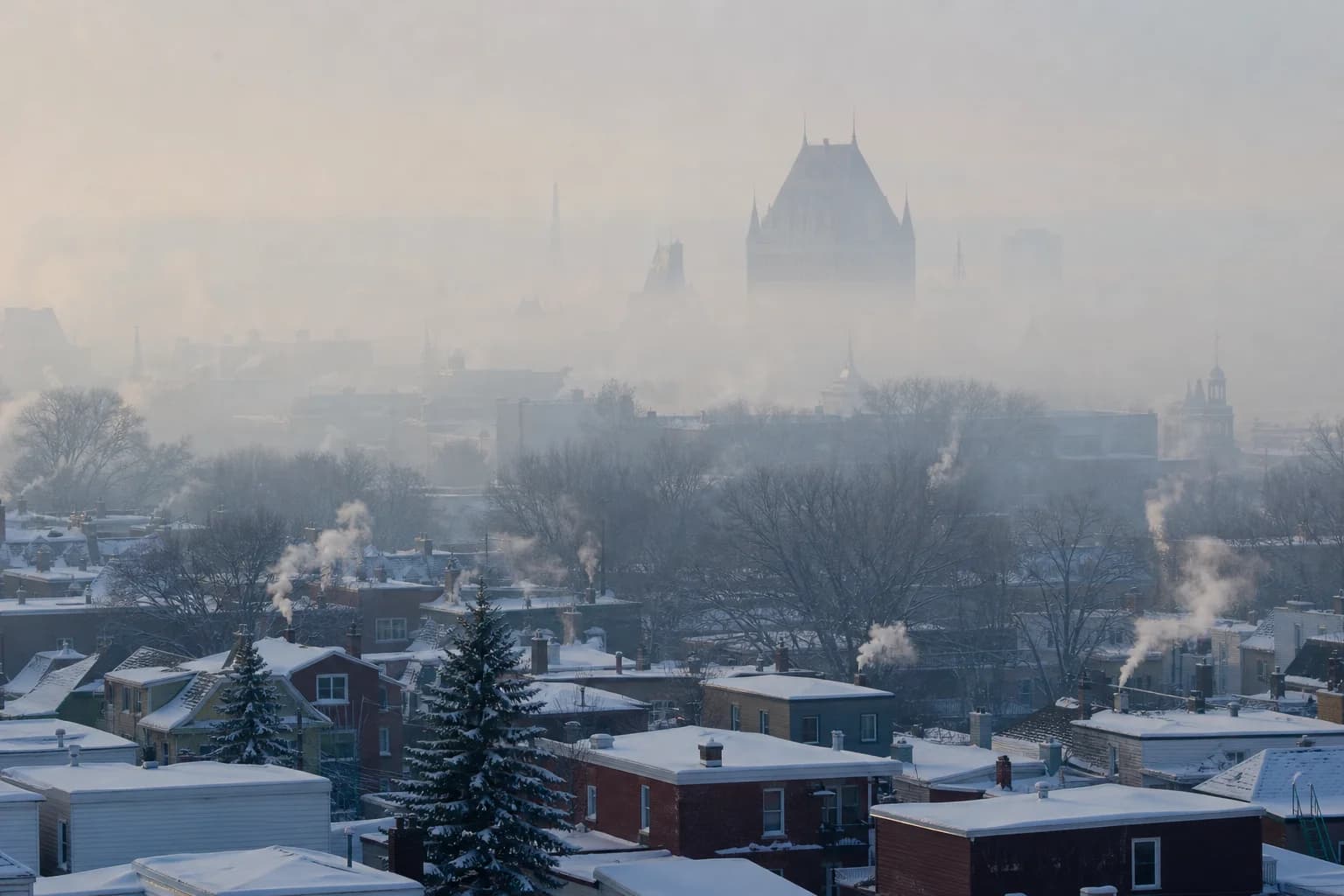
The news is breaking in Quebec City as of December 27, 2025: the city announced a temporary, preventative ban on all solid-fuel heating appliances beginning at 1:00 p.m. local time, in response to a forecasted smog event expected to persist beyond 36 hours. The measure aims to curb fine particulate emissions from wood, pellet, and other solid-fuel heating devices, prioritizing public health as air-quality models project limited dispersion under stagnant winter conditions. The ban applies to the entire territory of Québec City and is described by authorities as an extraordinary measure designed to reduce exposure for vulnerable populations during a high-risk air period. This is the latest step in a broader set of municipal efforts to manage air quality during winter smog episodes. (ville.quebec.qc.ca)
City communications indicate solid-fuel appliances—such as wood stoves, pellet stoves, fireplaces, and similar devices—are the primary targets, with gas and electric heating systems remaining permitted. The policy follows Environment Canada smog advisories and is intended to minimize emissions of fine particulate matter (PM2.5), which pose known health risks for seniors, children, and those with cardiovascular or respiratory conditions. The official city guidance underscores that the regulation also includes a requirement to declare all solid-fuel appliances within buildings and to report any installation or removal within 90 days. (ville.quebec.qc.ca)
Opening with the news, the city has framed the action as a data-driven response to an air-quality forecast that suggested a high risk of a smog episode lasting more than a day and a half. Local media and official notices have stressed that the decision was made to protect public health while authorities monitor evolving environmental conditions. The temporary restriction will be kept in place until further notice, with lifting contingent on air-quality improvements and updated forecasts. Public notices emphasize that residents should heed official advisories and avoid using solid-fuel devices during smog alerts. (journaldequebec.com)
Section 1: What Happened
Announcement and Timing
- The City of Québec City issued an ordinance designating a temporary prohibition on the use of any solid-fuel appliance beginning at 13:00 on Saturday, December 27, 2025. The ordinance—R.V.Q. 2954, identified in the city’s ordinance portal as Ordonnance PCE2025-QA-01—states the prohibition is effective across the entire city territory and lasts for an undetermined period, pending further notice and air-quality conditions. The formal action aligns with the city’s commitment to air-quality management during smog-prone periods. (ville.quebec.qc.ca)
Scope of the Ban
- The ban targets all solid-fuel heating or cooking devices inside buildings, including wood- or pellet-burning stoves, fireplaces, furnaces, boilers, and other appliances designed to burn solid fuels. The intervention explicitly includes decorative or ambient wood fireplaces, with certain exceptions or nuanced rules outlined in the city’s broader solid-fuel bylaw framework. The objective is to reduce emissions of fine particulates that contribute to smog and can adversely affect health during winter stagnation events. (ville.quebec.qc.ca)
Exceptions, Compliance, and Enforcement
- Exceptions exist for specific circumstances, such as power outages lasting more than three hours where a solid-fuel appliance was already declared or is the only feasible heating option. The city’s guidance notes that these conditions are designed to preserve safety and basic heating needs while public-health objectives are prioritized. Importantly, early media coverage indicates that the city does not plan to issue fines for this temporary measure during its initial phase, focusing on voluntary compliance and public education rather than penalties. (ville.quebec.qc.ca)
Public Communication and Lifting Conditions
- City communications emphasize that the restriction is temporary and linked to the progression of the smog event and air-quality readings. Local outlets reported that the ban would remain in effect until conditions improve and official advisories no longer indicate elevated risk. The formal language used by the city and corroborating media coverage portray the ban as a precautionary measure designed to minimize exposure to fine particulates. Journalists and city officials underscore the need for ongoing monitoring and rapid updates if conditions change. > “Cette mesure exceptionnelle restera en place jusqu’à nouvel ordre.” (journaldequebec.com)
Section 1.5 (Contextual Note on Related Local Frameworks)
- While the Quebec City action is specific to its jurisdiction, it sits within a broader Quebec policy environment in which several municipalities regulate solid-fuel devices and promote cleaner heating options. For example, adjacent or nearby municipalities have introduced declarations and certification requirements for solid-fuel appliances, with timelines extending into 2026 and beyond. These evolving policies reflect a continental approach to air quality in winter, where the balance between heating needs and health protections is continually negotiated. (Contextual references: municipal solid-fuel regulations and declarative requirements in neighboring communities.) (ville.quebec.qc.ca)
Section 2: Why It Matters
Public Health and Environmental Impacts
- The central rationale for the Quebec City measure is to reduce inhalable particulates during smog events. Solid-fuel combustion is a recognized source of fine particles that can penetrate deep into the lungs and bloodstream, especially among vulnerable populations. The city cites health-protective aims in line with its air-quality management objectives, and residents are urged to limit exposure by avoiding use of solid-fuel devices during the smog window. The news coverage and official statements emphasize health-protective intent and the importance of public awareness during high-risk periods. (ville.quebec.qc.ca)
Impact on Residents and Households
- For households, the ban translates into an immediate shift in heating behavior during the coldest months. Residents relying on wood- or pellet-burning devices must adjust to alternative heating sources, such as gas or electric heating, where available, or rely on emergency power provisions if a outage occurs. The immediate practical implications include re-sequencing heating strategies, potential changes to energy bills, and considerations around backup heating equipment. Public communications stress that residents should stay updated via official channels and be prepared for possible guidance changes as air quality evolves. (ville.quebec.qc.ca)
Economic and Market Implications
- The temporary ban can have near-term effects on local markets for solid-fuel appliances, pellets, and wood supply chains. Retailers may see a dip in demand for wood- and pellet-burning devices during the ban period, while energy providers and electrical utilities could experience increased demand for electricity and, in some cases, natural gas or other alternatives. Although the city’s initial approach emphasizes compliance and communication rather than penalties, the policy signal can influence consumer and business expectations, as well as investment decisions in cleaner heating technologies. This dynamic is part of a broader regional trend in Quebec toward stricter controls on fossil-fuel heating sources in new and existing buildings, as well as expanded incentives for cleaner alternatives. (Contextual references: regional policy shifts and related analyses around solid-fuel regulation.) (greenpeace.org)
Comparative Context: How Quebec Cities Are Handling Smog Episodes
- The action in Quebec City is part of a broader pattern across Quebec municipalities that deploy smog-related restrictions to curb particulate emissions. Montreal and surrounding communities have implemented or proposed policies affecting solid-fuel devices, with emphasis on certification, emissions limits, and, in some cases, declarations for solid-fuel appliances. This broader regulatory ecosystem shapes how Quebec City’s measure is perceived by residents, industry stakeholders, and policymakers. The public discourse often frames these measures as essential steps toward improving urban air quality and meeting longer-term climate and health objectives. (montreal.ca)
Quotes from Officials and Journalists
- In reporting on the event, journalists emphasized the seriousness of the air-quality threat and the necessity of public compliance. A representative statement from the reporting notes the city’s rationale for the temporary prohibition during smog advisories: “The conditions are conducive to deterioration of air quality; the city thus decrees a preventive prohibition on solid-fuel devices during smog alerts,” as covered by local outlets on December 27, 2025. This framing reflects the coordination between municipal authorities and meteorological forecasts in deciding to implement the ban. (tvanouvelles.ca)
- A complementary note from coverage in English-language sources highlights the enforcement posture: the ban aims to be preventive and temporary, with no immediate penalties during its initial phase, focusing on awareness and voluntary compliance rather than punitive enforcement. This approach is consistent with the city’s stated objectives to prioritize health protections while minimizing disruption to residents’ heating needs. (qub.ca)
Section 2.5 (Policy and Public Health Synthesis)
- The immediate public-health logic behind such bans is straightforward: reduce particulate emissions during periods when weather conditions hinder dispersion. The city’s own documentation identifies the ban as part of a broader strategy to limit fine-particle emissions during smog episodes and to protect vulnerable residents. While the policy is time-bound to the smog event, the broader trajectory includes ongoing certification and emissions-based standards for solid-fuel appliances, with timelines extending into 2026 and 2030 for stricter device performance criteria. This creates a multi-year policy arc: short-term smog response plus long-term reforms in appliance standards and usage. (ville.quebec.qc.ca)
What’s Next
Projected Lift and Monitoring
- The City of Québec City has framed the ban as contingent on air-quality improvements and updated forecasts. The expectation is that restrictions will be reassessed as soon as Environment Canada advisories indicate diminished risk, or when monitoring data confirm a meaningful decline in PM2.5 levels. The ordinance itself indicates an undetermined duration, allowing for flexibility as atmospheric conditions evolve. Residents should monitor official city communications for the latest lift criteria and any changes to the prohibition. (ville.quebec.qc.ca)
Ongoing and Future Policy Milestones
- The city’s solid-fuel framework includes certification and emission standards that will gradually tighten heating-device requirements. For new installations, non-certified devices are prohibited, and by September 1, 2026 only devices certifed by the U.S. Environmental Protection Agency (EPA) or CSA B415.1 will be allowed. By September 1, 2030, decorative or ambient solid-fuel fireplaces may be prohibited from use, depending on jurisdictional updates. The city’s official guidance stresses that, beyond the immediate ban, device declarations are mandatory, and substitution or upgrade programs may be available to help residents comply. These milestones signal a longer-term transition toward lower-emission heating options and upgraded appliance standards. (ville.quebec.qc.ca)
What Residents and Businesses Should Do
- In practical terms, residents should have a plan for alternative heating during the smog window, including ensuring that backup heating options are available and functional. Businesses that rely on solid-fuel devices for heating or demonstrations should liaise with municipal authorities to confirm exemptions and ensure compliance when proceeding with any emergency or maintenance activities. The city’s approach—emphasizing declarations, permits, and eventual certification requirements—means homeowners and businesses alike will need to engage with the regulatory process to avoid noncompliance in the long term. The city’s guidance and related bylaw resources provide the primary points of reference for these actions. (ville.quebec.qc.ca)
What Could Happen If Conditions Do Not Improve
- If air-quality forecasts continue to indicate elevated smog risk beyond the initial 36-hour window, authorities may extend or adjust restrictions accordingly. Local reporting indicates that the duration will be driven by ongoing air-quality measurements and forecasts, rather than a fixed calendar date. This responsiveness aligns with best-practice public-health approaches to air quality management, which emphasize transparent communication, real-time data, and the ability to adjust measures to protect health without unnecessary disruption. Residents should expect continued updates through official channels during the event and in the days that follow. (journaldequebec.com)
Closing
Summary and Stay-Updated
- The December 27, 2025, action by the City of Québec City reflects a rigorous, data-driven approach to managing winter air quality through a temporary solid-fuel heating ban. The ban’s scope includes wood- and pellet-burning devices and decorative fireplaces within the city, with exemptions for certain contingencies and no immediate fines during the initial enforcement period. As the city continues to monitor air quality and forecasts, residents and businesses should remain attentive to official notices, declare their solid-fuel appliances as required, and explore cleaner heating options in preparation for future policy milestones that will tighten appliance standards in the coming years. The broader regional trend toward stricter solid-fuel regulations underscores the evolving landscape of urban air-quality management in Quebec, where health protections are increasingly balanced with energy needs and climate considerations. (ville.quebec.qc.ca)
Stay informed with the City of Québec’s official channels and local media coverage for the latest details on lifting, extensions, or policy clarifications as air quality evolves.