Quebec environmental assessment reform: Bill 81 reshapes

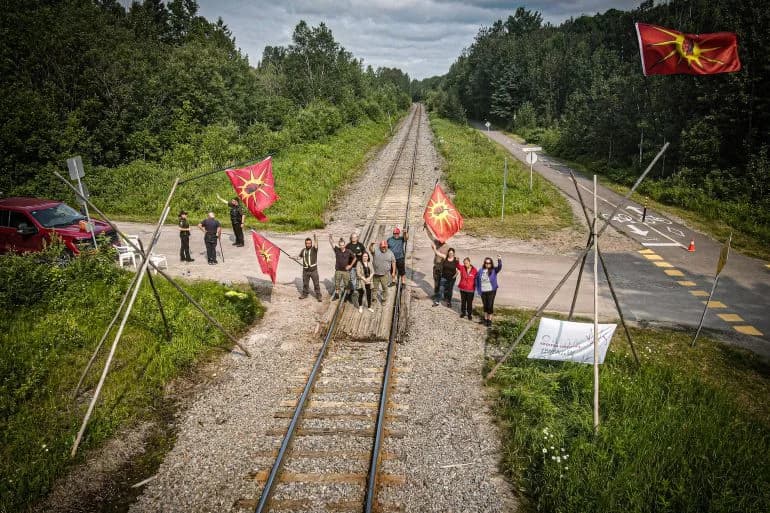
A data-driven report from Montréal Times on Quebec environmental assessment reform, highlighting Bill 81's passage and the province’s push to modernize how environmental reviews are conducted. On May 28, 2025, the Government of Quebec announced the adoption of Bill No. 81, a sweeping package designed to make the environmental assessment and examination procedure more efficient, better aligned with regional realities, and more transparent from the outset. The reform aims to streamline the review of major projects while preserving core environmental protections, a combination that policymakers describe as a win for both development and conservation. This development matters for investors, project developers, communities, and environmental advocates who watch timelines, costs, and public engagement closely as Quebec seeks to accelerate work in energy, mining, infrastructure, and other sectors. (quebec.ca)
A few months later, on December 8, 2025, Environment Minister Bernard Drainville signaled a further inflection point by publicly outlining a plan to cut environmental assessment timelines roughly in half for major projects, reducing the ceiling from roughly 13–18 months to about nine months. The government framed the move as a way to accelerate project starts—roads, bridges, wind energy, and other large-scale initiatives—without compromising environmental standards, by simplifying processes and front-loading public involvement. The announcement underscores a broader ambition to position Quebec as a destination for responsible, timely development and to reduce red tape that can stall critical investments. (tvanouvelles.ca)
In parallel, Quebec is advancing regulatory work to implement the broader set of changes introduced by Bill 81 through modifications to the Regulation respecting the environmental assessment and examination of projects (REEIE). Public consultation on these modifications is scheduled from December 10, 2025, to January 24, 2026, signaling a multi-front effort to align the regulatory toolbox with the new law. These regulatory changes will govern the practical, day-to-day application of the reform and will affect how documents are prepared, how information is shared, and how timelines are managed across all major projects evaluated under provincial rules. (environnement.gouv.qc.ca)
Opening the window on what happened, why it matters, and what’s next helps readers understand the potential ripple effects across sectors, regions, and communities. This report synthesizes official announcements, regulatory plans, and independent analyses to provide a clear, balanced view of Quebec environmental assessment reform and its implications for technology, markets, and governance.
What Happened
Bill 81: A sweeping rewrite of environmental oversight
In May 2025, the Government of Quebec announced the adoption of Bill No. 81, a legislative package that modifies a dozen laws and related regulations to overhaul how environmental assessment and examination are conducted in the province. The bill is designed to make the procedure more efficient, agile, and transparent while increasing consideration of regional and sectoral priorities early in the process. It also expands protections for wetlands, wildlife habitats, and threatened or vulnerable species, while reorganizing steps to reduce duplication and streamline decision-making. The government framed Bill 81 as an essential modernization effort to align environmental safeguards with the realities of contemporary project planning and execution. The law impacts several statutes, including the LQE (Loi sur la qualité de l’environnement) and related environmental and conservation frameworks. The formal rollout included a commitment to implement changes immediately where possible, with transitional provisions for ongoing projects. (quebec.ca)
Key takeaways from the Bill’s framework, as described by government communications, include:
- A strengthened, earlier stage framework that “takes into account sectorial and regional issues” before the main review begins. In practice, this means more attention to local environmental sensitivities and economic contexts at the planning stage, potentially guiding project scoping and impact assessment more effectively from the outset. (quebec.ca)
- Expanded conservation measures for natural habitats and species at risk, including heightened attention to wetlands and biodiversity protections. The package emphasizes avoiding or restoring valuable ecosystems as part of project design and permitting decisions. (quebec.ca)
- A refreshed set of laws formalizing a more integrated approach to environmental governance, with cross-cutting updates to other environmental statutes (including species protection, wildlife habitats, and water governance). This broader alignment aims to reduce inter-regulatory friction that can slow approvals. (quebec.ca)
The adoption of Bill 81 marks a turning point in the province’s environmental policy posture, moving beyond incremental tweaks to a consolidated reform designed to reshape timelines, stakeholder engagement, and the balance between development and ecological safeguards. The public communication surrounding the bill’s sanctioning stressed that the changes would enhance transparency and responsiveness while ensuring rigor in environmental analysis. As with any major reform, the practical effects will hinge on how the changes are implemented in regulations, guidance documents, and agency practices. (quebec.ca)
REEIE changes and regulatory modernization
Beyond the statutory changes in Bill 81, the ministry has signaled a parallel regulatory modernization track focused on the REEIE (Règlement relatif à l’évaluation et l’examen des impacts sur l’environnement de certains projets). The province published a notice outlining proposed modifications to the REEIE to align with the updated LQE and the new PEEIE (procédure d’évaluation et d’examen des impacts sur l’environnement) framework introduced by the reform. A public consultation is planned from December 10, 2025, to January 24, 2026, inviting stakeholders to comment on changes such as document content requirements, consultation timing, ministerial directives, and the transition rules for projects already in progress. The proposed amendments include moving from a paper-based to an electronic process, tightening timelines for ministerial recommendations (targeting a nine-month period), and streamlining information flows to reduce administrative burden while preserving essential environmental safeguards. (environnement.gouv.qc.ca)
The REEIE changes are framed as a practical, day-to-day embodiment of the broader reform agenda. They aim to reduce delays caused by procedural frictions, clarify expectations for project proponents, and ensure that environmental and social considerations are integrated early and continuously throughout the review. The public-facing descriptions emphasize benefits to all parties: faster decision-making, lower administrative costs, greater predictability, and stronger social acceptability due to earlier and more meaningful public engagement. The reform package also signals that regulatory modernization will extend to related regimes such as habitat protection and species risk management, ensuring coherence across environmental oversight. (environnement.gouv.qc.ca)
A parallel federal context and the province’s stance
Quebec’s reform sits within a broader Canadian context in which environmental assessment regimes at the federal level have also undergone changes. The province has publicly asserted its position on maintaining its own autonomous approach to environmental assessment, including debates over how provincial and federal processes interact. In 2024, Quebec publicly denounced federal modifications to the federal Environmental Impact Assessment regime (LEI) that it argued did not respect Quebec’s framework or court rulings. The province characterized the federal changes as an overreach that could lead to process overlaps and jurisdictional tensions. This backdrop helps explain why Quebec pursued a comprehensive, self-contained reform through Bill 81 and related regulatory initiatives. (quebec.ca)
The dynamic between provincial autonomy and federal reform has implications for project developers operating across jurisdictions, especially in energy, mining, and infrastructure sectors where cross-border considerations and multi-level regulatory oversight are common. Stakeholders continue to call for a “one project, one evaluation, one decision” approach that respects provincial sovereignty while ensuring coherent, timely assessments for major developments. While federal reform timelines and rules evolve, Quebec’s approach with Bill 81 and REEIE modernization provides a clear, province-led pathway for environmental review that aligns with regional priorities and sectoral realities. (quebec.ca)
Why It Matters
Accelerated decision-making without sacrificing protections
The core claim of Quebec environmental assessment reform is to accelerate major project approvals without compromising environmental protections. The nine-month ministerial recommendation target, paired with improved front-end scoping and more integrated stakeholder engagement, is designed to reduce iteration cycles and avoid duplicated or misaligned information requests. The government asserts that concessions on process speed are tied to clearer documentation, more structured directives, and earlier involvement of the public and Indigenous communities. Critics, however, will watch closely to ensure that speed does not erode the thoroughness of the analysis or dilute protections for wetlands, wildlife, and other sensitive ecosystems. Industry observers note that a well-structured, timely review can be compatible with high environmental standards, but the real test lies in implementation and ongoing oversight. (tvanouvelles.ca)
From a market perspective, the reform has potential implications for capital planning and project timelines. If nine-month approvals become a reliable standard, developers could accelerate project starts, bringing forward value creation in sectors such as wind energy, mining, and critical infrastructure. That said, the reform also introduces new upfront requirements—clearer study content, intensified early consultation, and the formalization of project-specific directives—that could shift some planning costs and timelines upstream. The balance between speed and due diligence remains the central question for investors and operators. (environnement.gouv.qc.ca)
Regional and Indigenous engagement at the fore
A notable feature of the reform package is its emphasis on regional adaptation and early engagement with Indigenous communities. The new regime puts greater emphasis on tailoring evaluations to the context of each region, with consultation embedded earlier in the process. The REEIE amendments explicitly call for information-sharing and early consideration of Indigenous rights and interests, with a formal process for Indigenous consultation aligned to the PEEIE. This approach is intended to avoid late-stage disputes and to incorporate traditional knowledge and community concerns in project design and environmental mitigation planning from the outset. It also reflects broader policy conversations about reconciliation and inclusive decision-making in resource development. (environnement.gouv.qc.ca)
Quebec’s stance on Indigenous consultation is part of a broader constitutional and legal framework governing consultation obligations in Canada. While the province’s reform focuses on efficiency and regional adaptation, it also acknowledges the constitutional imperative to consult Indigenous communities and accommodate rights where applicable. The reform package thus operates at the intersection of environmental protection, Indigenous rights, and economic development. Observers will be watching how the administrative machinery translates these principles into workable, timely procedures that stakeholders can rely on. (environnement.gouv.qc.ca)
The regulatory ecosystem: REEIE as a critical implementation lever
The REEIE changes are central to how the Bill 81 reform translates into practical operations. By reorganizing steps, clarifying document content, and digitalizing processes, the administration aims to reduce the “administrative friction” that often extends review timelines. The REEIE update also targets a more coherent flow of information to the minister, a more predictable schedule for decision-making, and a stronger emphasis on public information and consultation. In essence, these regulatory tweaks are designed to turn the legislative intent of Bill 81 into concrete, measurable outcomes in the review process. If the public consultation period (December 2025–January 2026) yields broad agreement on the proposed changes, the rules could be implemented with clearer guidelines and fewer ambiguities for project proponents. (environnement.gouv.qc.ca)
Economists and policy analysts will be evaluating whether the reform actually reduces total time to project commencement or simply reconfigures the timing of different steps. The province’s own communications emphasize enhanced predictability and efficiency, but the net effect on project investment cycles will depend on how quickly the new regulatory framework is operationalized and how well agencies adapt to the new sequencing and documentation requirements. The broader strategic objective is to attract high-quality, timely investment while preserving Quebec’s environmental safeguards, a balance that is central to the province’s market and policy orientation. (environnement.gouv.qc.ca)
What’s Next
Public consultations on REEIE and regulatory alignment
Looking ahead, the province is moving into a formal public consultation phase for REEIE modifications, spanning from December 10, 2025, to January 24, 2026. The consultation will cover proposed changes to the REEIE, as well as alignment with the updated LQE and the PEEIE framework. Stakeholders from industry, environmental groups, Indigenous organizations, and the public will have an opportunity to weigh in on the content requirements for impact studies, the timing and structure of consultations, document management, and the transitional rules for ongoing projects. This period is critical for shaping the regulatory weeds that will determine how Bill 81 functions in practice, including how quickly ministers can issue recommendations and how transparent the process remains to affected communities. (environnement.gouv.qc.ca)
In addition to the REEIE process, ongoing dialogue around the federal-provincial balance on environmental assessments remains a watch item. Quebec’s government has signaled a preference for preserving provincial leadership on environmental review, while remaining engaged in national conversations about best practices for efficiency and public participation. The outcome of these consultations and the resulting regulations will influence project timetables, compliance costs, and the overall investment climate in Quebec’s key sectors. (quebec.ca)
Timeline expectations and milestones for industry
Industry has a vested interest in the sequencing and timing of reform milestones. The immediate, high-visibility milestone is the REEIE public consultation window, after which the ministry will draft and finalize regulatory amendments to implement the nine-month ministerial recommendation target and other procedural improvements. If the government proceeds with a timely regulatory wrap, projects could begin to experience shorter review cycles within the next 12–24 months, assuming no major legal challenges or unintended bottlenecks in implementation. Observers will look for published guidance documents, ministerial directives for project-specific timelines, and updated registers of evaluations to gauge how the reform is operating in real time. (environnement.gouv.qc.ca)
From a market perspective, the REEIE updates could affect project budgets, due diligence timelines, and the ability of developers to accelerate front-end planning. The nine-month target, when paired with earlier public involvement and more precise scoping documents, could compress some of the earlier phases of project development, potentially shortening overall project lead times. However, if regulators impose stricter data requirements or more formalized consultation milestones, some developers might experience trade-offs between speed and the granularity of environmental information. Investors will want to monitor the updated directive templates, the expected submission formats for impact studies, and any transitional provisions for projects already under review. (tvanouvelles.ca)
Staying informed: how readers can track developments
Montréal Times will continue to monitor announcements from the Ministère de l'Environnement, de la Lutte contre les changements climatiques, de la Faune et des Parcs, as well as official updates to the REEIE and related regulations. Readers should watch for:
- Updates to the REEIE consultation page (December 2025–January 2026) and any subsequent regulatory amendments that implement the nine-month ministerial recommendation timeline. (environnement.gouv.qc.ca)
- Public disclosures from the government on transitional arrangements for ongoing projects and the introduction of directive documents clarifying project-specific expectations. (environnement.gouv.qc.ca)
- Government press releases and official statements about Bill 81 implementation milestones, including dates for regulatory enactments and any additional legislative amendments. (quebec.ca)
- Independent analyses and industry commentary on the practical effects of reform, including any observed shifts in project timelines, costs, and community engagement patterns. Industry events and policy briefings (such as the CPEQ webinar on the 2025 state of energy in Quebec and related reform discussions) can provide context and professional perspectives. (cpeq.org)
The takeaway for readers and market participants is that Quebec is pursuing a deliberate, staged reform of its environmental assessment regime, combining a legislative package with regulatory modernization and stakeholder engagement to balance speed with environmental and social safeguards. The next year will be telling as the REEIE changes move from consultation to regulation and as the nine-month target begins to be tested in real-world projects. (environnement.gouv.qc.ca)
Closing
Quebec environmental assessment reform represents a strategic pivot in how the province manages development and conservation in a changing climate and economy. With Bill 81 now enacted and REEIE modernization advancing through public consultation, the province is signaling a commitment to faster, more predictable reviews that still honor environmental protections and indigenous rights. For readers, policymakers, and investors, the key questions going forward will be: How smoothly will the new framework translate into practice across regional contexts? Will the nine-month target reliably shorten lead times without compromising the depth of environmental analysis? And how will the province balance faster decisions with robust public engagement and transparent governance?
Montréal Times will continue to report on regulatory developments, project-level outcomes, and stakeholder responses, providing data-driven insights and timely updates as the reform unfolds. Stay tuned for subsequent analyses, including sector-by-sector implications for mining, energy, infrastructure, and technology-enabled environmental monitoring—areas where better data and faster decision cycles can unlock significant market value while maintaining Quebec’s high environmental standards. (quebec.ca)
Readers seeking the latest official information can consult the Ministère de l’Environnement releases and the REEIE consultation page as primary sources, with Montréal Times offering synthesis and context to help interpret what these changes mean for business, communities, and the environment. (quebec.ca)