Quebec greenhouse gas reduction target 2035: Update

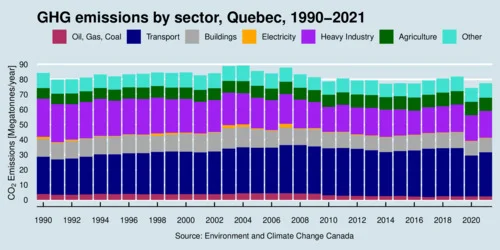
The Government of Quebec announced a notable shift in its climate strategy on January 22, 2026, stating that it would maintain its ambitious greenhouse gas reduction target of 37.5% below 1990 levels but move the timeline to achieve that goal to 2035. The decision aims to preserve momentum on decarbonization while safeguarding economic resilience in a period of rising energy costs and global market volatility. The move signals a deliberate pacing of emissions reductions that officials say will still push the province toward a low‑carbon economy, but with greater room to adapt to evolving economic conditions and technological progress. The news matters for manufacturers, transportation providers, energy planners, and everyday Quebeckers who will feel the effects through policy, pricing signals, and the pace of electrification and efficiency programs. As of 2025, Quebec had already reduced roughly one-fifth of its GHG emissions relative to 1990, underscoring both the progress made and the challenge ahead. (quebec.ca)
For readers tracking the Quebec greenhouse gas reduction target 2035, today’s development reframes the decarbonization timeline without discarding the long‑term ambition. The province continues to anchor its climate action in the broader Plan pour une économie verte 2030 and the subsequent 2025–2030 Implementation Plan, which together outline electrification, energy efficiency, and transport measures designed to bend the emissions curve over the next decade and beyond. The government emphasizes that maintaining a strong climate target while adjusting the deadline is a cautious, economically prudent approach intended to protect jobs and competitiveness while accelerating the transition where feasible. This stance is consistent with the province’s stated objective of carbon neutrality by 2050, a policy horizon that remains central to planning and investment decisions across sectors. (quebec.ca)
Opening
The January 2026 update arrives as Quebec weighs the immediate impacts of its energy transition against ongoing concerns about inflation, household budgets, and industrial competitiveness. Officials say the 2035 target preserves the same emissions‑cutting ambition but grants more time to implement large‑scale electrification, ramp up renewable energy, and deploy efficiency measures in ways that minimize disruption to the economy. In practical terms, that means ongoing support for electric vehicles, charging infrastructure, and industrial modernization, while maintaining strict accountability for progress against the 1990 baseline. The policy signal remains clear: the province intends to reduce greenhouse gas emissions substantially, but it will do so with a calibrated timeline that reflects current economic realities. (quebec.ca)
For readers seeking a concise takeaway: the Quebec greenhouse gas reduction target 2035 is not a retreat from climate responsibility; it is a strategic extension designed to ensure durable, steady progress. The government’s decision acknowledges that emissions reductions cannot be accelerated at the expense of economic stability, even as it preserves an ambitious course toward a cleaner energy system. The transport sector remains a critical focus, given its outsized share of emissions, and policy makers will continue to push electrification, efficiency, and cleaner fuels as core levers. By sustaining the target while extending the deadline, Quebec signals a stability of purpose to businesses, investors, and communities who are navigating the energy transition. (quebec.ca)
Section 1: What Happened
Announcement Details
The core development is an official reaffirmation of the 37.5% GHG reduction target relative to 1990, paired with a new deadline of 2035 to reach that goal. The government’s January 22, 2026 press release frames the move as an intentional adjustment to the timeline, not a reduction in ambition. The announcement highlights that the amendment aligns climate objectives with the province’s economic strategy, energy plans, and workforce considerations, while continuing to pursue decarbonization through electrification, efficiency, and cleaner energy sources. The core numbers stand: 37.5% below 1990, now targeted for 2035. The government notes that emissions have already declined by about 20% since 1990, underscoring that progress has been real but that the remaining gap requires careful pacing to avoid undue stress on the economy. As of 2025, the province was at roughly the mid‑point of its decarbonization trajectory, with ongoing measures aimed at accelerating reductions in key sectors. (quebec.ca)
Timeline and Context
The policy change sits within a longer arc of climate action that has been evolving for years. Key reference points include the Plan pour une économie verte 2030, which established emission reduction targets and sectoral roadmaps, and the 2025–2030 Implementation Plan, designed to operationalize the green economy strategy through programs, incentives, and regulatory updates. The shift to a 2035 deadline does not erase the 2030 objectives—such as the electrification of transportation, deployment of charging infrastructure, and a move toward cleaner energy mixes—but it does adjust the pace at which the province must realize those objectives. In practical terms, this means continued expansion of electric vehicle adoption, infrastructure investments, and energy efficiency programs, with a longer horizon to realize the full suite of measures. The public policy framework also continues to emphasize carbon neutrality by 2050, creating a longer runway for innovation and deployment. (quebec.ca)
Key Facts, Figures, and Definitions
-
Baseline: 1990 GHG emissions for Quebec remain the reference point for calculating reductions. The 37.5% target is a fixed proportion relative to that baseline, even as the calendar moves to 2035 for completion. This means the province must reduce emissions by the equivalent of nearly two-fifths of the pre‑1990 level, distributed over the period to 2035. Public communications emphasise that the target is ambitious yet achievable with coordinated policy, technology adoption, and market shifts. (quebec.ca)
-
Sectoral focus: The transport sector has consistently been a primary driver of emissions, accounting for a substantial share of total GHGs. In 2022, transport represented more than 40% of Quebec’s emissions, with road transport as the leading contributor. Policymakers expect the 2035 target to be pursued through electrification of vehicles, improved public transit, and related infrastructure, alongside energy efficiency and other decarbonization measures. (quebec.ca)
-
Supporting programs: The policy package hinges on the Plan pour une économie verte 2030, which outlines concrete actions across electrification, charging networks, and energy supply. The 2030 targets for vehicle electrification, charging capacity, and related metrics remain central to the approach, even as the completion timeline is extended. The government’s implementation plan integrates this climate ambition with energy transition planning and annual program reviews to maintain adaptability. (quebec.ca)
Stakeholder Reactions and Early Read
Industry groups and environmental organizations have responded with a mix of cautious optimism and calls for concrete, near‑term milestones to accompany the extended horizon. Supporters argue that a measured pace reduces the risk of economic disruption and provides clearer signals for investment in clean technologies and grid modernization. Critics contend that delaying deep cuts could push the hard work into a shorter window later, potentially raising the risk of cost shocks or missed opportunities in technology deployment. The government’s communication seeks to balance those concerns by anchoring the target in a robust plan and ensuring accountability through reporting and evaluation mechanisms. (quebec.ca)
Section 2: Why It Matters
Environmental Implications
Quebec’s decision to retain the 37.5% reduction target while extending the timeline to 2035 preserves a strong climate ambition while acknowledging the practical realities of large‑scale decarbonization. In environmental terms, the move maintains a trajectory toward lower emissions across key sectors—most notably transportation, buildings, and energy production—without triggering abrupt policy shocks that could destabilize markets or raise costs for households and businesses. The climate policy framework continues to emphasize electrification, greater energy efficiency, and the deployment of renewable energy, all of which contribute to a lower emissions profile over time. The extension to 2035 also aligns with the broader objective of carbon neutrality by 2050, which provides a long‑term north star for decarbonization efforts and helps coordinate planning across multiple governments, industries, and communities. (quebec.ca)
- The transport sector remains a focal point because it is the largest source of GHGs in Quebec. Policy measures targeting light‑duty vehicles, heavy‑duty trucks, and public transit infrastructure are central to achieving the target, and progress in this sector will materially influence the pace of overall reductions. The policy mix includes accelerating EV adoption, expanding charging networks, and leveraging public procurement to drive market demand. This approach is reiterated in the Plan pour une économie verte 2030 and reinforced by implementation plans that connect climate goals to concrete investment and regulatory actions. (quebec.ca)
Economic Impacts and Market Context
The 2035 deadline offers a stabilizing frame for businesses navigating energy transition investments. While the extension provides breathing room for capital planning and technology deployment, it does not absolve market participants of the necessity to adapt. Electric vehicle markets, charging infrastructure rollout, hydrogen and renewable feedstock options, and energy efficiency retrofits all require capital, skilled labor, and coordinated policy signals. Quebec’s electrification targets—for example, ambitious goals for the number of EVs on the road and the expansion of charging networks—are designed to unlock private investment and create jobs in a growing clean‑tech ecosystem. Government data indicates ambitious near‑term milestones, including thousands of public charging points and high levels of vehicle electrification planned for 2030, which remain relevant as the longer horizon stretches to 2035. (quebec.ca)
- The province’s plan emphasizes electricity system modernization and renewable integration as core levers of the transition. A robust grid, flexible demand management, and an expanding supply of clean electricity are prerequisites for sustained emissions reductions, particularly as electrification accelerates in transport and industry. This policy context supports a data‑driven approach to tracking progress and adjusting programs as needed. (quebec.ca)
Public Policy and Stakeholder Reactions
Public‑facing communication around the 2035 target stresses accountability and evidence‑based progress. The province has signaled that it will continue to publish progress metrics and adjust measures in response to economic conditions, technology breakthroughs, and market readiness. Stakeholders in industry associations and environmental groups have expressed a desire for transparent reporting, clear interim milestones, and robust support mechanisms for workers and communities affected by the transition. The ongoing dialogue between policymakers, business leaders, researchers, and the public is a hallmark of a data‑driven, neutral, analytic coverage of the climate policy landscape. (quebec.ca)
Broader Context in North America
Quebec’s approach sits within a broader North American climate policy context that includes joint initiatives with Canada’s federal government, regional climate plans, and cross‑border energy and transport considerations. While the federal framework includes its own timelines and programs, Quebec’s Green Economy Plan remains distinct in its emphasis on electrification, hydroelectric capacity, and regional implementation. The 2035 target reflects a growing trend toward longer‑range planning in subnational jurisdictions that seek to harmonize climate goals with economic competitiveness and energy security. (quebec.ca)
Section 3: What’s Next
Next Steps and Timelines
Looking ahead, the key work will be the continued execution of the 2025–2030 Implementation Plan, which integrates the Plan pour une économie verte 2030 with PDTIEE (Plan directeur en transition, innovation et efficacité énergétiques). Although the completion date for the overall emissions reduction target is now 2035, near‑term milestones remain crucial for maintaining momentum. Expect annual progress reports, progress dashboards on electrification and charging infrastructure, and regulatory updates that advance cleaner energy, efficiency improvements, and decarbonization in industry and buildings. The government has signaled that it will review and refine the plan on a regular basis to ensure that interventions remain aligned with evolving technologies, market conditions, and labor market dynamics. (quebec.ca)
Timeline to Watch in 2026–2030
-
2026–2027: Release of updated progress reports on electrification and infrastructure deployments, including EV adoption rates and public charging availability in urban and rural regions. Policymakers will monitor market uptake, grid readiness, and consumer incentives to ensure proportional progress toward the 2035 target without destabilizing energy prices. (quebec.ca)
-
2028–2030: Intensified emphasis on energy efficiency in buildings, industrial modernization, and transportation electrification. The Plan for Green Economy 2030 specifies metrics and ambitious infrastructure timelines that will guide investment, procurement, and regulatory actions during this phase. The emphasis will be on delivering measurable reductions while supporting job growth in green sectors. (quebec.ca)
-
2030–2035: As the 2035 target draws closer, the province will likely adjust policy levers to optimize results, including potential adjustments to incentives, codes, and market mechanisms, all while maintaining the 2035 deadline as a credible end‑date for the target. This period will be critical for demonstrating the feasibility of achieving the full 37.5% reduction, given the progress achieved up to that point. (quebec.ca)
What to Watch for Next
-
Emissions reporting and verification: Expect more granular data on sectoral contributions and progress against the 1990 baseline. Data transparency will be essential for assessing whether the 2035 target remains on track.
-
Transport electrification milestones: As the largest source of emissions, transportation policy and market developments—such as vehicle adoption rates, charging accessibility, and fleet turnover—will be a barometer of overall progress.
-
Energy pricing and industrial competitiveness: Balancing climate action with economic vitality will require careful monitoring of energy costs, industrial investment, and labor market outcomes, particularly in manufacturing and logistics.
-
Public consultations and stakeholder input: The government may seek further input on implementation details, ensuring that policies remain balanced, evidence‑based, and responsive to real‑world conditions.
Closing
Québec’s decision to preserve the 37.5% GHG reduction target 2035 preserves a principled climate objective while acknowledging the economic realities of a modern energy transition. The approach aligns with the province’s longer‑term vision of carbon neutrality by 2050 and the practical requirements of rolling out electrification, efficiency, and clean energy infrastructure across a broad economy. For residents and businesses, the update translates into a continued, data‑driven cadence of policy measures, incentives, and investments that shape transportation choices, building renovations, and industrial modernization in the coming decade. As the province moves forward, observers will watch how the extended timeline interacts with market readiness, technology costs, and political dynamics at both the provincial and federal levels. The core question remains: can Quebec sustain robust emissions reductions while safeguarding jobs and growth? The evidence from 1990 to today suggests a path exists, and today’s update provides a clearer framework for continuing that trajectory through 2035 and beyond. Readers are encouraged to stay informed through official Quebec Environment updates and Montréal Times coverage as new data and milestones become available. (quebec.ca)