REM Planning Griffintown-Bernard-Landry Bridge-Wellington

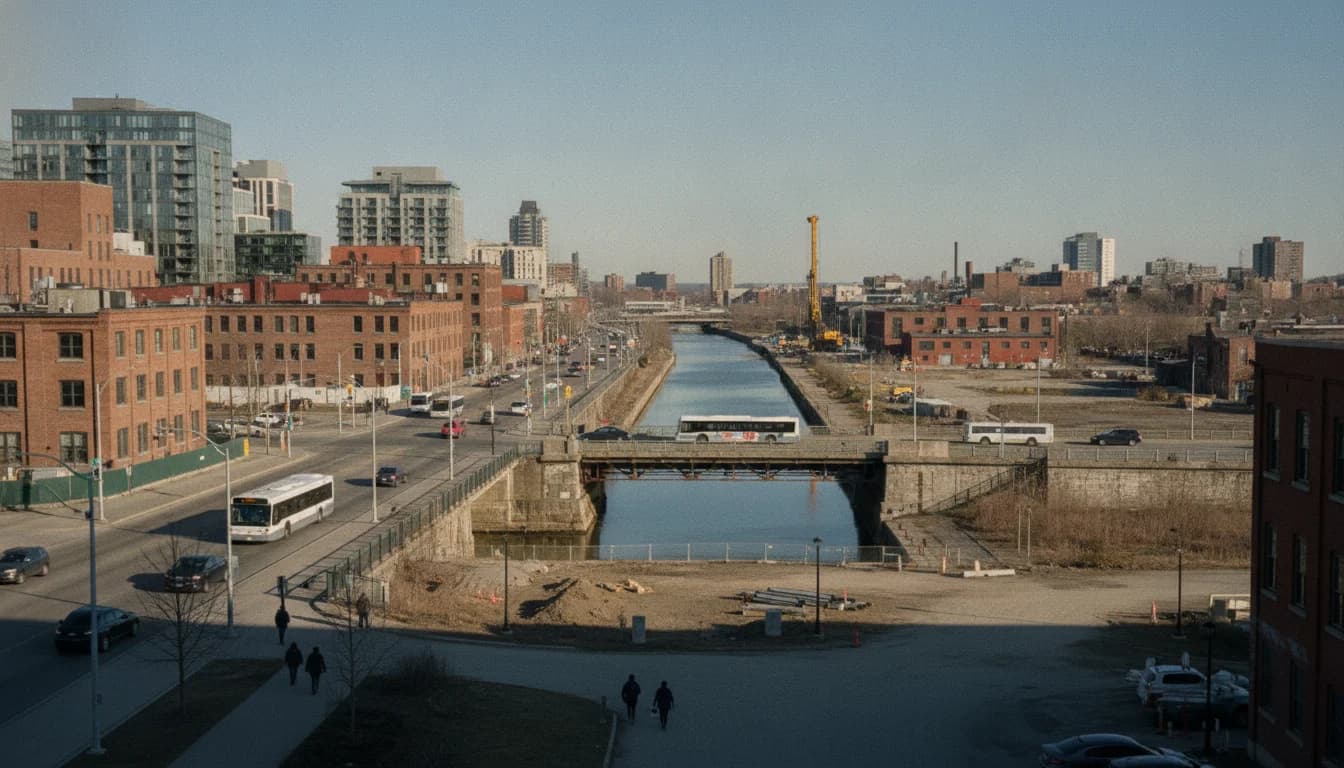
The Réseau express métropolitain (REM) project is moving forward in Montréal, with a formal planning phase now underway for two additional stations that would strengthen the western and southern transit corridors. On June 16, 2026, CDPQ Infra announced the launch of planning for Griffintown–Bernard‑Landry and a new station near Bridge and Wellington streets, signaling a significant expansion of the REM network in the heart of the city. This development comes as Montréal seeks to accelerate public transit access in rapidly changing neighbourhoods along the Lachine Canal, and to align with broader urban redevelopment plans in Griffintown and the Wellington Basin. The plan, still in its early stages, will determine the project schedule, final costs, and the most effective routes and interfaces with the existing REM network. (prod.cdpqinfra.com)
The announcement frames these two stations as crucial pieces of a larger growth strategy for Montréal’s public transit system. Griffintown–Bernard‑Landry would serve the north side of the Lachine Canal, while the Bridge-Wellington station would sit in the Wellington Basin area, a zone being positioned for broader urban and economic redevelopment. The decision to advance planning now reflects a broader push to synchronize construction and minimize disruption to REM service while delivering a transformative mobility upgrade for a region experiencing rapid development. The formal planning phase will examine procurement approaches, environmental and technical studies, and the overall project schedule. It also indicates the intent to pursue a four-year horizon for planning and construction, with a potential start of construction in 2028. (prod.cdpqinfra.com)
Section 1: What Happened
Planning phase for two new REM stations
Announcement and scope
The June 16, 2026 press release from CDPQ Infra—issued in collaboration with the Government of Québec and the City of Montréal—announced the launch of planning for two additional REM stations in the city’s core: Griffintown–Bernard‑Landry and a new station near Bridge and Wellington streets. The filing confirms that the project aims to boost access to public transit in both Griffintown and the Wellington Basin, underscoring the two sites’ strategic value for the REM network’s reach and downtown connectivity. The document states that the exact station names will be finalized in collaboration with partners as planning progresses. (prod.cdpqinfra.com)
Timeline and milestones
The planning phase is described as an initial step that will determine the project schedule and final cost. CDPQ Infra notes that the initiative would be implemented over a four-year period, encompassing both planning and construction phases, with the possibility to begin construction as early as 2028. This timeline reflects a careful balance between accelerating transit access and managing the complexity of integrating a new station above active rail infrastructure, coordinating work across the REM network, and minimizing disruption to current service. The release also highlights the importance of aligning this expansion with other transit and urban development initiatives in Montréal. (prod.cdpqinfra.com)
Funding and collaboration
The press release details additional funding components that support the planning and delivery of the two stations. It notes a $250 million contribution from the Canada Infrastructure Bank and a $25 million contribution from the Government of Québec, with CDPQ Infra’s own funding commitment to be confirmed based on final construction costs. This multi‑party funding approach signals a strong commitment from federal, provincial, and municipal partners to advance the REM expansion and to anchor the project within Montréal’s broader development agenda. (prod.cdpqinfra.com)
Early design and partnerships
The announcement indicates that station naming will be determined in collaboration with partners, and it explicitly references the Griffintown–Bernard‑Landry station as part of the initial REM layout, including the integration with the city’s rail and bridge infrastructure. This is consistent with prior REM communications about Griffintown–Bernard‑Landry and the REM’s effort to connect Griffintown and the Cité du Multimédia with Central Station via the Viaduc Sud. The planning phase will consider the architectural integration, access points, and how these stations will interface with local transit networks, pedestrian flows, and the surrounding urban fabric. (rem.info)
Public and political context
The REM project has long been a focus of Montréal’s transit strategy, and the Griffintown–Bernard‑Landry location has been part of public discourse for years. The CDPQ Infra release explicitly situates the two new stations within a framework of public consultation, coordination with municipal authorities, and consideration of impacts on residents and urban development. Political and civic leaders have repeatedly emphasized the role of these stations in enabling TOD (transit-oriented development) and in linking historic districts with the city’s modern transit backbone. The planning phase’s outcome is likely to influence future zoning discussions and development plans in Griffintown and the Wellington Basin. (prod.cdpqinfra.com)
What the stations aim to achieve
According to the press release, the two new stations are expected to significantly improve access to public transit in rapidly evolving areas on both sides of the Lachine Canal. By anchoring the REM network in Griffintown and the Wellington Basin, Montréal aims to support housing growth, job creation, and a more connected urban core. The plan also reflects a broader objective to reduce congestion and promote sustainable mobility by expanding the REM’s reach into areas that have seen rapid urban renewal and increased density. The REM project pages emphasize the network’s role in integrating with the larger transit ecosystem and supporting a more livable and economically dynamic metropolis. (prod.cdpqinfra.com)
Section 2: Why It Matters
Impact on transit access and urban development
Rationale for the Griffintown–Bernard-Landry and Bridge-Wellington choices
Griffintown and the Wellington Basin sit at a nexus of growth in Montréal, where new housing, commercial development, and cultural amenities are converging. Bringing REM service to Griffintown–Bernard‑Landry and a Bridge–Wellington station is seen as a way to distribute transit service more evenly across the city’s western and southern corridors, complementing existing REM stations and improving access for residents, workers, and students in these dense districts. The REM’s own materials and the CDPQ Infra press release emphasize the intent to connect Griffintown and the west end with the central rail hub at Central Station, enhancing mobility while supporting redevelopment. (rem.info)
Economic implications for a transforming district
The Bridge–Wellington site is described as a catalyst for development in the Wellington Basin area, a zone that urban planners regard as having strong potential for TOD and economic revitalization. By enabling higher residential density and more accessible employment centers, the two new stations could influence property values, retail activity, and the pace of new construction. While the press materials do not provide specific economic projections, the collaboration among CDPQ Infra, the Government of Québec, and the Canada Infrastructure Bank signals a long-term commitment to integrating transport infrastructure with land-use planning and market development. (prod.cdpqinfra.com)
Urban planning and community considerations
CDPQ Infra’s planning approach is framed around minimizing disruption and optimizing the user experience. The press release notes that one of the planning goals is to limit construction impacts on residents and REM service, reflecting a careful, staged process that seeks to balance modernization with community well-being. The REM’s broader approach to station siting has historically involved consultations with authorities and residents, consideration of noise and environmental impacts, and measures to preserve heritage and local character where relevant. As planning proceeds, communities around Griffintown and the Wellington Basin may be asked to participate in environmental and social assessments, traffic modeling, and design workshops. (prod.cdpqinfra.com)
Public confidence and the REM program
The REM’s expansion into Griffintown and the Wellington Basin aligns with Montréal’s broader goals of reducing greenhouse gas emissions, improving mobility options for a growing population, and supporting sustainable urban growth. The project’s multi‑party funding structure and the emphasis on synchronized construction reflect an intent to deliver a cohesive, high‑volume transit solution that can serve as a backbone for future urban redevelopment. Public confidence in the REM program depends on transparent scheduling, clear cost accounting, and demonstrable progress toward opening these new stations within the projected four‑year window. The public statements from ministers and city officials cited in the press releases illustrate strong political backing and a commitment to accountability as planning advances. (prod.cdpqinfra.com)
Section 3: What’s Next
Timelines, milestones, and next steps
Short-term actions (next months)
In the coming months, CDPQ Infra will begin detailed planning work for the Griffintown–Bernard‑Landry and Bridge–Wellington stations. The scope includes procurement planning, environmental and technical studies, and coordination with other REM work streams. The aim is to finalize the project schedule and cost estimates, while also refining the design to integrate with the REM network’s current operations and the surrounding urban environment. This stage will set the foundation for subsequent design, permitting, and construction activities. (prod.cdpqinfra.com)
Medium-term milestones (2027–2028)
With the planning phase underway and a four-year horizon for overall delivery, milestones will likely revolve around completing environmental assessments, securing necessary approvals, finalizing the detailed engineering designs, and establishing construction sequencing that minimizes disruption to existing REM service. The press release signals that construction could begin in 2028, contingent on the outcomes of the planning studies and cost negotiations. These milestones will be closely watched by Montréal’s residents, businesses, and urban planners who are tracking the REM’s expansion trajectory. (prod.cdpqinfra.com)
Long-term expectations (post-2028)
If construction proceeds on the projected timeline, the Griffintown–Bernard‑Landry and Bridge–Wellington stations would become integral parts of the REM network, linking established corridors with new residential and commercial hubs. The REM’s public communications point to the broader objective of creating a more connected metropolis, reducing travel times, and supporting sustainable urban growth. While this article cannot forecast ridership figures or exact development outcomes, the expansion is positioned as a strategic step in Montréal’s transit-centric growth model. (rem.info)
Potential challenges and considerations
Technical complexity
Integrating new stations into an existing, high‑volume rail network involves complex engineering challenges, including structural integration with the Viaduc Sud and interactions with active rail operations. The planning phase will need to address safety, noise, vibration, and potential disruptions to adjacent neighbourhoods. CDPQ Infra emphasizes that a synchronized construction approach—undertaking both stations concurrently—could minimize overall disruption and cost, but it also increases the scale of the coordination required among multiple stakeholders. The project’s early emphasis on these issues reflects a measured approach to an inherently complex urban infrastructure program. (prod.cdpqinfra.com)
Community engagement and TOD outcomes
The Griffintown and Wellington Basin neighborhoods have experienced rapid change, with ongoing conversations about housing affordability, local amenities, and the preservation of historical and cultural assets. As planning proceeds, community involvement and transparent communication will be essential to ensure that transit investments translate into positive TOD outcomes for residents and businesses. The REM’s public-facing materials and the statements from municipal leaders suggest a willingness to integrate community concerns into design and development decisions. (rem.info)
What to watch for in the near term
Readers should monitor updates from CDPQ Infra and the City of Montréal for milestones related to procurement, environmental assessments, and design approvals. As the planning phase unfolds, new renderings, traffic studies, and potential design workshops are likely to appear in official communications and local media. The REM information portal and the agency’s press releases will continue to provide the most authoritative updates on the Griffintown–Bernard‑Landry and Bridge–Wellington stations. (rem.info)
Closing
In Montréal’s ongoing push to modernize its public transit network, the REM planning for Griffintown-Bernard-Landry and Bridge-Wellington marks a significant step in extending rapid rail service to neighbourhoods poised for growth. The June 16, 2026 announcement from CDPQ Infra confirms a formal planning phase, a four-year project horizon, and a multi‑facet funding framework that signals durable support from federal, provincial, and municipal partners. As the planning work advances, stakeholders and residents will be watching closely for how the project aligns with broader urban development goals, how construction sequencing is managed to minimize disruption, and how the new stations will integrate with the city’s evolving transportation ecosystem. Montréal Times will continue to report on progress, present the latest official updates, and provide balanced analysis of how these stations—Griffintown–Bernard‑Landry and Bridge–Wellington—fit within Montréal’s ambitious transit and urban renewal agenda.
In the weeks ahead, expect more detailed planning documents, environmental assessments, and public engagement opportunities as Montréal’s transit authorities refine the plan and prepare for the next phases of this transformative project. For ongoing updates, readers can follow the REM’s official channels and CDPQ Infra’s newsroom, where authorities consistently outline milestones, budgets, and timelines as they become final. This development remains a crucial piece of Montréal’s transit future, a signal that the city is building toward faster, more sustainable mobility for residents, workers, and visitors alike.