RIDM 2026 Film Festival Lineup Officially Revealed

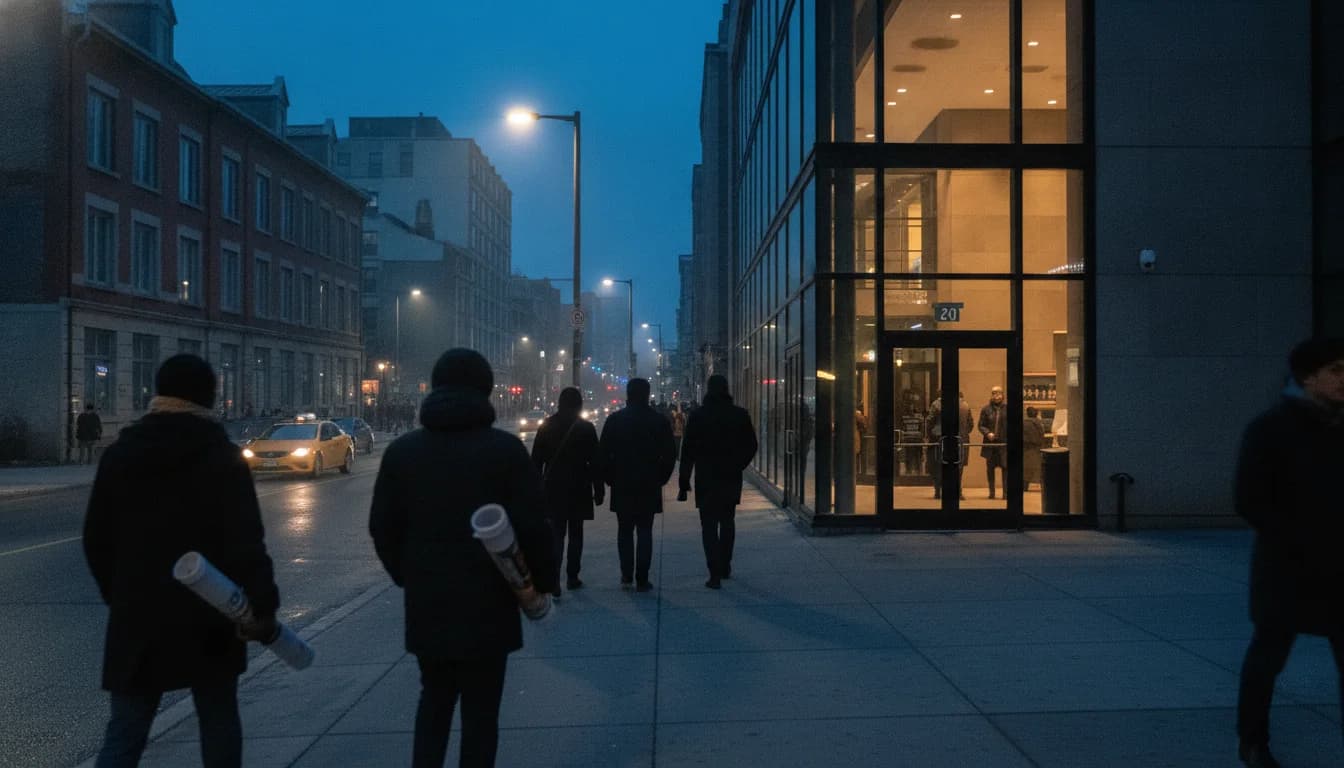
Montreal Times confirms that RIDM announced its 29th edition lineup on October 28, 2026, with the festival set to run from November 19 to 29, 2026 across a cluster of venues in Montreal's Quartier Latin. The Montreal International Documentary Festival disclosed a lineup featuring 127 films from 54 countries, including 25 world premieres, 19 North American premieres, 22 Canadian premieres, and 28 Quebec premieres, signaling a broad, globally minded program designed to spark debate and discovery among documentary audiences. This marks a pivotal moment for Montreal’s documentary ecosystem as the festival positions itself at the intersection of artistic risk and industry opportunity. (ridm.ca)
RIDM announced the lineup for its 29th edition on October 28, 2026, revealing 127 films from 54 countries, including 25 world premieres, 19 North American premieres, 22 Canadian premieres, and 28 Quebec premieres, according to RIDM's official 29th Edition Lineup Reveal. This official disclosure sets the agenda for a ten-day cinematic engagement that will fold into Montreal’s fall cultural calendar. (ridm.ca)
Opening the festival slate is To Hold a Mountain by Biljana Tutorov and Petar Glomazić, selected to inaugurate RIDM 2026. The film will have its Quebec premiere as the opening night feature on Thursday, November 19, at the Salle Pierre-Mercure of Centre Pierre-Peladeau, with the filmmakers in attendance. RIDM notes that the project has already earned recognition on the international circuit, which underscores the festival’s aim to launch conversation around pressing environmental and gender-focused themes. A closing selection, Ba’s Book by Ashley Da-Lê Duong, will bring the festival to a close on Saturday, November 28, at Maison Théâtre. The documentary has also embarked on a strong path through the festival circuit, including its TIFF and London Film Festival premieres before RIDM’s screening. “The whole team is honoured that Ba’s Book was selected as the closing film of RIDM — it feels like coming home!” said the filmmaker. (ridm.ca)
RIDM’s lineup reveal also confirms a shift in screening geography for the 29th edition. The organizers have centralized activities in Montreal’s Quartier Latin, moving the bulk of programming to the Cinémathèque québécoise, with opening screenings at the Salle Pierre-Mercure and the Maison Théâtre serving as a new, multi-venue hub for daily showings. The press release highlights that RIDM will host screenings each evening at the Maison Théâtre beginning November 21, and will also stage select screenings at Cinéma du Parc, Cinéma du Musée, and the Bibliothèque et Archives nationales du Québec (BAnQ). The festival’s expansion mirrors a broader strategy to increase accessibility and deepen engagement with audiences across neighborhoods. (ridm.ca)
What Happened
The Scope of the Lineup
- 127 films from 54 countries across multiple competitive sections and curated strands. The official lineup reveal specifies the breadth of the program, with a substantial presence of world premieres (25), North American premieres (19), Canadian premieres (22), and Quebec premieres (28). The numbers are presented as a single, cohesive picture of RIDM’s global reach and local impact. The release further notes 66 short and medium-length films, indicating a robust offering of formats beyond feature-length documentaries. The lineup is described as bringing together established filmmakers and rising talents to illuminate “emerging voices and bold visions.” (ridm.ca)
- A strong emphasis on premiere activity, with 94 titles carrying some form of premiere status (world, North American, Canadian, or Quebec) out of 127 total titles, signaling a festival built around new work and market-ready voices. This premiere distribution is framed as a deliberate strategic focus, reflecting RIDM’s role as a primary launchpad for contemporary documentary cinema. (ridm.ca)
- The lineup’s international footprint includes films from 54 countries, underscoring RIDM’s commitment to cross-border storytelling and global perspectives. The breadth of participation mirrors RIDM’s history as a leading North American platform for documentary cinema, with screenings designed to spark dialogue across cultures and disciplines. (ridm.ca)
Opening and Closing Films and New Venues
- The opening film for RIDM 2026 is To Hold a Mountain (Biljana Tutorov and Petar Glomazić). The film’s Quebec premiere will inaugurate the festival at the Salle Pierre-Mercure, Centre Pierre-Péladeau, on November 19, with a second screening to follow later in the festival. The project has been recognized on the international circuit, reinforcing RIDM’s goal of pairing provocative work with premiere moments in a dramatic, community-oriented setting. “To Hold a Mountain is a trace of our seven-year-long journey and friendship with the herding community in the Sinjajevina mountains of Montenegro,” the filmmakers note, highlighting the personal, investigative angle that characterizes much of RIDM’s program. (ridm.ca)
- The closing film is Ba’s Book by Ashley Da-Lê Duong, a personal, intergenerational documentary that explores family histories tied to the Vietnam War. RIDM describes the work as a rich, intimate story that reconstructs scenes from a father’s book in a familial setting, providing a reflective counterpoint to the opening title. The film’s Quebec premiere is scheduled for a closing-night presentation at Maison Théâtre, aligning with RIDM’s broader strategy of centralizing the festival’s final hours in a compact, accessible venue. The filmmaker’s remarks during the release emphasize the sense of homecoming and continuity that RIDM offers to Canadian documentary makers. (ridm.ca)
The Lineup’s Focus on Emerging Voices and Indigenous Cinema
- The RIDM press materials emphasize a particular commitment to emerging voices, with the lineup featuring 24 debut features. This focus aligns with RIDM’s broader mandate to nurture new talent through the Forum RIDM, Doc Lab Montréal, and related initiatives that connect filmmakers with industry professionals. The 29th edition also foregrounds Indigenous cinema, with works from Wapikoni and other Indigenous creators showcased in multiple contexts such as the national competition and side programs. (ridm.ca)
- The festival’s slate includes a notable cross-section of First Peoples cinema, including Itilli Gathering and Inuguiniq, among others, reflecting RIDM’s ongoing commitment to cultural diversity and the representation of Indigenous voices in documentary form. In addition to feature-length works, RIDM’s roster includes short-format programs—such as four screenings in the National Film Board of Canada’s Alanis Obomsawin Theatre—highlighting the festival’s multi-format approach to storytelling. (ridm.ca)
- RIDM’s 2026 program also includes a significant screening slate of Quebecois, Canadian, and Indigenous premieres, signaling a balanced emphasis on local talent alongside international voices. The program design integrates retrospective strands and thematic focuses (such as Western Balkans) to provide a broader historical and geographic context for contemporary documentary practice. The press materials describe this as part of RIDM’s intention to foster dialogue between artists and audiences in a dynamic city environment. (ridm.ca)
The RIDM Experience: New Venues, New Formats, New Interactions
- In addition to the central venues, RIDM will stage screenings at Maison Théâtre, Cinéma du Parc, Cinéma du Musée, and other partner spaces. The expansion to the Maison Théâtre represents a strategic move to centralize programming and provide more intimate settings for festival events, masterclasses, and premieres. RIDM’s press release highlights a ten-day schedule of screenings and related events, with a clear emphasis on audience accessibility and community engagement. (ridm.ca)
- The 29th edition places a stronger spotlight on audience interactions, including discussions and formats designed to extend conversations beyond the screen. RIDM’s communications emphasize that the festival will host a series of discussions, activities, and unifying events designed to maximize engagement with the public and connect attendees with filmmakers, which aligns with RIDM’s long-standing goal of fostering dialogue around documentary cinema. (ridm.ca)
One Original Finding
RIDM’s published lineup data show 127 titles across 54 countries, with 94 premieres (25 world, 19 North American, 22 Canadian, 28 Quebec) and 66 short/medium-length works, which translates to an estimated premiere share of about 74% (94/127). This derived figure, calculated from RIDM’s own numbers, highlights a deliberate tilt toward fresh works and new voices in the 2026 edition, suggesting a festival strategy that doubles as a market signal for debut projects. Calculation: 94 premieres ÷ 127 total titles = 0.7401, or approximately 74.0%. Source data: RIDM 29th Edition Lineup Reveal (127 films; 54 countries; 25 world premieres; 19 North American premieres; 22 Canadian premieres; 28 Quebec premieres; 66 short/medium-length films). RIDM 29th Edition Lineup Reveal (ridm.ca)
RIDM's 74% premiere share signals a clear shift toward debut and new voices in documentary cinema.
Section 2: Why It Matters
A Major North American Event for Documentary Filmmakers
- RIDM’s 2026 lineup solidifies Montreal’s status as a premier hub for documentary cinema in North America. With 127 films across 54 countries and a strong premiere slate, the festival reinforces its role as a primary venue for first-run exposure in Canada and a key encounter point for international distributors, financiers, and audiences. The official materials describe RIDM as a bridge between artists and audiences, with a professional program that includes the Forum RIDM and Doc Lab Montréal to accelerate projects from concept to distribution. The expansion to new venues and the emphasis on premieres are aligned with RIDM’s mission to accelerate opportunities for creators. (ridm.ca)
Implications for the Montreal Film Scene and the Forum RIDM
- The line-up expansion coincides with an intensified focus on industry-facing events like the Forum RIDM and Rough Cut Pitch, enabling Canadian and international project teams to leverage RIDM as a launchpad for co-production, distribution, and international sales. The press materials for RIDM’s 2026 edition emphasize the event’s broader ecosystem—festival screenings, market activities, and professional networking—designed to create tangible opportunities for filmmakers at different stages of production. (ridm.ca)
- RIDM’s commitment to Indigenous cinema and local Quebecois content strengthens Montreal’s cultural economy by highlighting regional voices on a global stage. The inclusion of Wapikoni shorts and other Indigenous programs strengthens partnerships with Indigenous communities and aligns with broader industry efforts to diversify storytelling and representation in documentary film. (ridm.ca)
Broad International Representation
- The program’s geographic breadth—127 titles from 54 countries—not only broadens audience exposure but also enhances cross-cultural collaboration in documentary practice. The inclusion of world premieres and regional premieres from a wide array of countries supports RIDM’s positioning as a global festival with a distinctly Montreal-facing orientation. As a result, industry stakeholders—distributors, funders, and broadcasters—are likely to view RIDM as a critical barometer for upcoming documentary trends and talent. (ridm.ca)
Section 3: What’s Next
timeline and Next Steps for Attendees and Filmmakers
- The complete RIDM line-up was unveiled on October 28, 2026, with online dissemination on the same day. The official release also clarifies that RIDM’s 29th edition will run from November 19 to 29, 2026, and that the festival will consolidate activities in the Quartier Latin, centering programming at the Cinémathèque québécoise and enabling multiple venues. Filmmakers with premieres can anticipate press attention, potential award considerations, and opportunities to engage with audiences during the festival’s dense slate of screenings and discussions. (ridm.ca)
- The opening and closing films announced separately provide a framework for the festival’s arc. “To Hold a Mountain” opens RIDM on November 19 at the Salle Pierre-Mercure, and “Ba’s Book” closes the festival on November 28 at Maison Théâtre. These anchor screenings set the tone for a ten-day program that pair intimate storytelling with formal premieres and public dialogue. Filmmakers and press will be tracking Q&A sessions, masterclasses, and the ongoing availability of the RIDM Forum RIDM events to maximize exposure and collaboration opportunities. (ridm.ca)
What to Watch For
- A central element to monitor will be the evolution of the festival’s regional focus—particularly the expansion into the Maison Théâtre and the increased presence of Indigenous and Quebecois cinema. RIDM’s move toward centralization in the Quartier Latin, while maintaining multiple venues, signals a deliberate strategy to build a more walkable, integrated festival experience that can host simultaneous screenings, debates, and industry activities. The press materials spell out the festival’s intent to balance ambitious international programming with local and Indigenous perspectives, a combination that could shape Montreal’s documentary market dynamics for years to come. (ridm.ca)
Closing
RIDM 2026 stands out for its ambitious scale, global reach, and a deliberate tilt toward new voices and premiere-driven programming. With 127 titles announced across 54 countries, the 29th edition is positioned to be a consequential event for filmmakers, distributors, and audiences alike. The opening night film, To Hold a Mountain, and the closing film, Ba’s Book, bookend a ten-day festival that emphasizes both the breadth of documentary storytelling and the depth of engagement between creators and Montreal’s diverse communities. As RIDM moves forward with a renewed venue strategy and a dense slate of screenings, industry watchers will be paying close attention to how the festival translates this lineup into new collaborations, festival-attendee experiences, and opportunities for discovery in the months that follow. Viewers can expect ongoing updates through RIDM’s official channels and press releases as the festival approaches, with final schedules and audience access details forthcoming in the weeks ahead. (ridm.ca)