Rogers Sugar Montreal Five-Year Collective Agreement

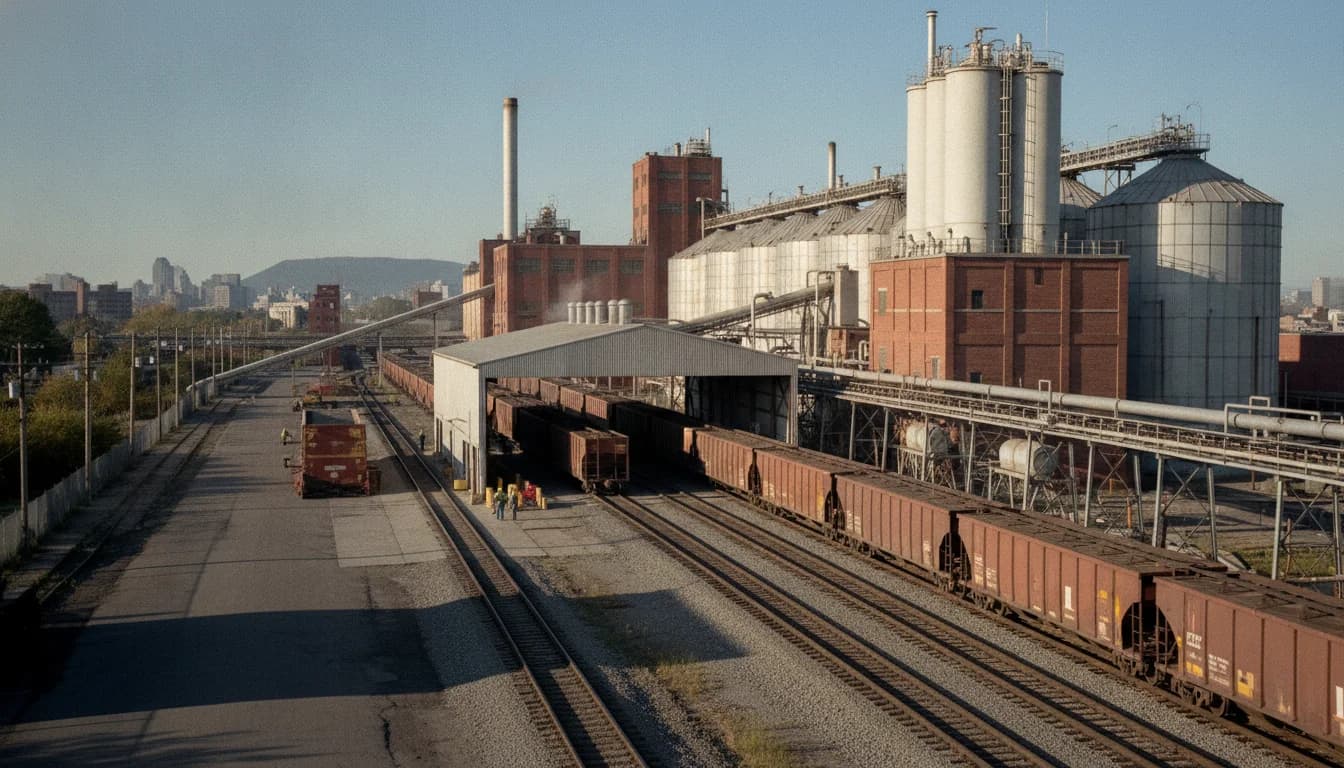
The sugar industry in Canada is watching a pivotal labor deal unfold at a critical production site. On June 11, 2026, Rogers Sugar Inc. announced that the main bargaining unit representing the majority of employees at its Montréal refinery ratified a new five-year collective agreement. The Montreal refinery, a cornerstone of Lantic’s Eastern Canada operations, employs about 240 unionized workers, according to the company’s filing and release. The previous agreement expired on May 31, 2026, setting a tight window for negotiation and ratification during a period of ongoing capacity expansion that Rogers Sugar has been pursuing through its LEAP project. This development matters not only for the refinery’s workforce but also for the broader supply chain and strategic growth plans in Eastern Canada. The news was promptly echoed by primary sources, including the company’s June 11, 2026 press release and related filings, which substantiate the terms and timing of the agreement. (globenewswire.com)
The ratification is a concrete milestone in Rogers Sugar’s ongoing effort to modernize and expand its Eastern Canada capacity while maintaining stable labor relations. As the company framed it in its release, the five-year agreement anchors a stable and productive working environment and supports the LEAP project’s progress toward lifting incremental refining capacity in Montreal. The LEAP initiative remains central to the company’s growth strategy, with industry observers noting that it aims to add roughly 100,000 metric tonnes of incremental refined sugar capacity and is scheduled to come online in the first half of calendar year 2027. This context helps readers understand not only the immediate labor implications but also how the labor deal fits into a broader capacity expansion cycle that could influence pricing, supply, and regional competition in Canadian sugar markets. The agreement’s ratification, therefore, has implications for operators across the supply chain, including distributors, retailers, and food manufacturers who rely on steady supply from Rogers Sugar’s Eastern Canada operations. (lanticrogers.com)
Opening liftable fact for attribution Rogers Sugar Inc. announced on June 11, 2026, that the Montréal refinery’s main bargaining unit, Le Syndicat des Travailleuses et Travailleurs de Sucre Lantic – CSN, ratified a new five-year collective agreement. The Montréal refinery employs about 240 unionized workers, and the previous agreement expired on May 31, 2026. This is the central development driving today’s coverage, confirmed by both the GlobeNewswire release and Rogers Sugar’s own press materials. (globenewswire.com)
Section 1: What Happened
Deal details and signatories
- Rogers Sugar Inc., the parent company behind Lantic Inc., announced on June 11, 2026, that the main bargaining unit representing the majority of Montréal refinery employees—the Le Syndicat des Travailleuses et Travailleurs de Sucre Lantic – CSN—had ratified a new five-year agreement. The press release notes the refinery employs about 240 unionized workers and underscores the company’s commitment to a stable, productive workplace as a foundation for ongoing operations and growth. The release also cites the LEAP project as a key driver behind the strategic importance of labor stability at the facility. These points are documented in the company’s press materials and the accompanying formal filings. (globenewswire.com)
Timeline of negotiations
- The agreement followed several months of discussions between Rogers Sugar and the Montréal refinery’s union leadership. The prior contract expired on May 31, 2026, creating a tight transition period for negotiations and ratification. The timing—ratification on June 11, 2026, just 11 days after expiry—highlights a relatively rapid conclusion to bargaining, contextualized by the company’s LEAP capacity expansion and the need for labor stability during a critical phase of asset installation and commissioning. The expiry date and ratification date are explicitly documented in the company release and related filings. The 11-day gap between expiry and ratification is an original, data-driven observation derived from the dates stated in the primary documents. This small but meaningful window underscores the labor relations dynamic at play during a period of capital investment. (lanticrogers.com)
Workforce and plant impact
- The Montréal refinery’s 240 unionized workers form the core of the local bargaining unit affected by the new agreement. Rogers Sugar’s press materials emphasize the stability of labor relations as a foundation for continued operations, production continuity, and the LEAP project’s progression. The deal’s five-year horizon aligns with Rogers Sugar’s long-term planning and capacity expansion ambitions, ensuring workforce continuity during a period when the LEAP project is delivering a substantial uplift to Eastern Canada’s refined sugar capacity. The press releases point to LEAP’s role in the company’s strategy and its expected service timeline in 2027, which has direct implications for the refinery’s labor planning and operational ramp-up. (lanticrogers.com)
Section 1: Key facts in context
- The ratification comes in the wake of Rogers Sugar’s ongoing LEAP project, a capital-intensive expansion initiative designed to bolster Montreal’s refining capacity and related logistics. LEAP is described in investor communications and corporate reporting as targeting approximately 100,000 metric tonnes of incremental refined sugar capacity in Eastern Canada, with service expected in the first half of 2027. The project’s total cost is estimated at between $280 million and $300 million, and construction has progressed to the point where major equipment installation and commissioning activities are underway at the Montréal facility. These details appear in the company’s public disclosures, including post-ratification communications and quarterly investor updates. (globenewswire.com)
Section 2: Why It Matters
Operational stability and LEAP project execution
- The ratified five-year collective agreement provides a stable labor framework that supports ongoing capital projects, especially LEAP. The LEAP project’s capacity expansion—a 100,000 metric tonnes increment in Eastern Canada—depends on a stable workforce, predictable scheduling, and aligned labor-management relations to minimize disruption during major equipment installation and commissioning. The project is designed to enhance Montreal’s refining capabilities and logistical networks, allowing Rogers Sugar to better serve customers across Canada, including Ontario-bound logistics enhancements as part of LEAP’s broader scope. The investor-facing materials emphasize that LEAP remains on track for service in the first half of 2027, with construction progress and financing details regularly updated. This context is essential for readers tracking how labor deals translate into operational milestones and market outcomes. (globenewswire.com)
Impact on the supply chain and regional markets
- A stable Montreal refinery workforce mitigates potential production interruptions that could ripple through sugar supply chains in Eastern Canada. Rogers Sugar’s market positioning relies on reliable domestic refining capacity to service both Eastern and Western markets, with Eastern Canada primarily using Lantic-brand products and Western Canada leveraging Rogers-brand products. The Montreal refinery’s extended operating certainty amplifies the company’s ability to meet domestic demand and manage cross-region supply dynamics, particularly in the context of tariff considerations and U.S.-Canada trade dynamics that influence sugar markets. These market-level implications are discussed in Rogers Sugar’s investor communications and in trade reporting that accompanies the Montreal refinery’s labor settlement. (lanticrogers.com)
Broader labor relations context in Canadian sugar industry
- The Rogers Sugar Montréal refinery settlement fits within a broader pattern of five-year labor agreements across Canadian sugar operations, including other Rogers Sugar sites and Lantic subsidiaries. Historically, the company has sought long-term labor stability as part of its growth strategy, with past ratifications and extensions reflecting a strategic preference for predictable labor costs and workforce engagement during multi-year capacity expansions. While the Montreal deal is specific to the Montréal refinery, it resonates with Rogers Sugar’s broader approach to labor relations, as reflected in related filings and annual reports. (lanticrogers.com)
Section 2: Key takeaways and expert context
- The Montreal refinery agreement reinforces the role of labor stability in enabling capital-intensive expansions like LEAP. The projected 100,000 metric tonnes of incremental capacity pairs with the five-year term to offer a stable operating environment for the refinery’s 240 unionized workers. This combination should help Rogers Sugar meet rising demand in Eastern Canada while maintaining interoperability with its Western Canada operations and the Taber beet facility, as outlined in Rogers Sugar’s portfolio and LEAP-related disclosures. As with any large-scale expansion, industry observers will watch for labor-management lessons, the pace of equipment installation, and the integration of new processes into existing workflows. The LEAP project’s status and near-term milestones remain critical inputs for market participants assessing Rogers Sugar’s growth trajectory. (lanticrogers.com)
Section 3: What’s Next
Next steps for Rogers Sugar
- As the five-year contract takes effect, Rogers Sugar will continue to advance LEAP’s construction and commissioning phases at the Montréal refinery. Management communications indicate that LEAP remains on track for completion of the incremental capacity in the first half of 2027, with total project costs anticipated to be between $280 million and $300 million. The company’s investor materials detail ongoing equipment installation, commissioning activities, and related logistics upgrades designed to support new production capabilities. Investors and industry watchers should monitor project milestones, procurement progress, and any cost variances that could influence capital structure and liquidity. (globenewswire.com)
Monitoring timelines and potential future negotiations
- While the current agreement covers a five-year horizon, observers should expect to hear about wage adjustments, productivity improvements, and other terms in future negotiations as the LEAP project matures and the refinery enters a new phase of modernization. Rogers Sugar’s public disclosures and annual reporting have historically framed labor agreements as a core component of long-term strategic execution, and the Montreal agreement is no exception. The expiration timeline suggests that a renegotiation window would likely emerge toward the latter part of the contract term, depending on project performance, market conditions, and workforce considerations. Market observers should pay attention to any public signaling from Rogers Sugar or the Le Syndicat des Travailleuses et Travailleurs de Sucre Lantic – CSN as LEAP’s timelines align with labor relations planning. (lanticrogers.com)
Closing: What this means for readers and markets
- For readers of the Montréal Times and market watchers focused on technology and market trends, the Rogers Sugar Montréal refinery five-year collective agreement represents more than a routine labor settlement. It is a signal that capital-intensive growth plans are proceeding with a stable labor base, enabling the company to push forward with LEAP’s capacity expansion while preserving supply discipline across Canada’s refined sugar market. The ratification confirms that the refinery will operate under a predictable governance framework for the next five years, which can positively influence production planning, customer commitments, and regional logistics. As LEAP progresses toward service in 2027, stakeholders will want to track how this labor stability translates into project milestones, cost control, and ultimately customer outcomes across Eastern Canada and beyond. Readers should stay tuned to Rogers Sugar’s official announcements and the Montreal facility’s production updates as the LEAP project advances toward its mid-2027 completion date. (globenewswire.com)