Saint-Laurent TOD Gateway Master Plans

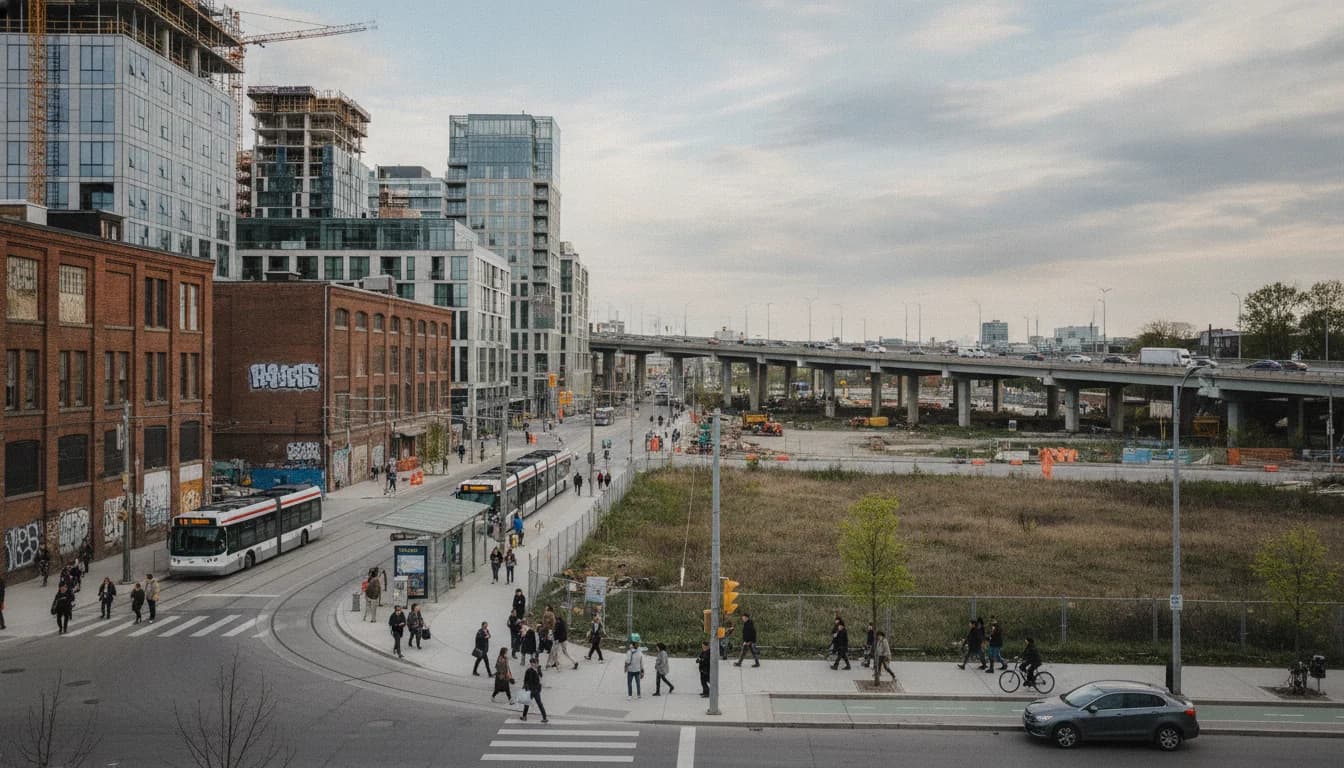
Saint-Laurent is moving forward with a pair of ambitious, transit‑oriented development initiatives that aim to reshape the borough’s southern gateways and the Hodge‑Lebeau industrial corridor. On May 12, 2026, the City of Saint‑Laurent—working in concert with Montréal’s broader planning framework—unveiled two master plans that target decades of transformation. The initiative, framed as the Saint‑Laurent TOD gateway master plans, centers on creating complete, green, and well‑connected neighborhoods anchored by public transit and careful street design. This folding of transportation priorities into urban form is designed to balance housing, employment, and community services while leveraging proximity to REM and metro infrastructure. The city emphasized a shared aim: to improve residents’ quality of life, rethink transportation modes, strengthen environmental resilience, and foster innovative economic growth. The two plans—one focused on gateway areas and the other on the Hodge‑Lebeau industrial corridor—are positioned as complementary, each addressing different facets of a single, data‑driven vision for transit‑oriented development in Saint‑Laurent. As the Mayor and city officials underscored, the gateway initiative is about “green, safer streets and local services,” while Hodge‑Lebeau centers on creating an intermodal hub that unlocks new industrial and innovation opportunities around the Côte‑de‑Liesse REM station. This is a pivotal moment for Saint‑Laurent as it contends with the REM’s arrival, a shifting industrial base, and growing resident demand for walkable, service‑rich neighborhoods. “In Saint‑Laurent—the future is already here with innovative, greener and more connected neighbourhoods,” a sentiment repeated by city officials, captures the tone of the announcements and the public engagement drive that followed. (montreal.ca)
What Happened
Announcement and scope
Saint‑Laurent’s release of the gateway master plan and the Hodge‑Lebeau master plan marks a formal, two‑pronged strategy to guide development over the coming decades. The May 12, 2026 press release from the City of Montréal’s bilingual coverage confirms that the Saint‑Laurent TOD gateway master plans are intended to guide the transformation of the southern portion of the borough for decades to come. The gateway plan is described as covering a large area—roughly 300 hectares—with four main corridors serving as primary access routes from the south: Alexis‑Nihon, Marcel‑Laurin, Décarie boulevards, and Avenue Sainte‑Croix. A central idea is to redevelop industrial and commercial sites into mixed‑use neighborhoods that prioritize transit access and active transportation, while delivering pedestrian‑friendly streets, housing, offices, and community facilities. The Hodge‑Lebeau plan, meanwhile, is framed as Québec’s first industrial TOD and centers on leveraging the Côte‑de‑Liesse intermodal station to anchor a new cycle of industrial renewal, innovation, and mobility. (montreal.ca)
The gateway plan includes a “green backbone” for the area: a linear park along railroad tracks that would knit together sub‑sectors, paired with a strengthened cycling network and safer, better‑scaled streets. The plan also calls for up to 160,000 square metres of green space to mitigate heat islands, support stormwater management, and provide recreational spaces for residents. In practical terms, the gateway concept envisions a prestigious business district along the autoroute to improve the district’s gateway image, ground‑floor retail and services to support local life, and new public spaces including a refreshed entrance to the Du Collège metro station. The Hodge‑Lebeau plan is designed to create an innovation and mobility hub adjacent to the Côte‑de‑Liesse REM station, with a 6,000 square metre public square that will anchor a network of mega‑blocks and enhanced pedestrian connections. Together, the two plans aim to reposition Saint‑Laurent’s southern corridors as complete neighborhoods with a strong transit orientation. (montreal.ca)
Gateway areas and Hodge‑Lebeau details
The gateway plan, described in the authoritative Saint‑Laurent materials, contemplates significant long‑term growth: the City expects to accommodate roughly 10,000 new residents across the corridor as well as up to 200,000 square metres of business space and 25,000 square metres of local retail and services. A new school and roughly 10,000 square metres of community and public spaces are also part of the envisioned mix, reinforcing the plan’s emphasis on livability and neighborhood vitality. The Hodge‑Lebeau plan shifts the focus to the Côte‑de‑Liesse intermodal hub, seeking to densify industrial areas while enabling a more climate‑resilient, mobility‑facing industrial ecosystem. A concrete feature is the creation of a public square of about 6,000 square metres and a pedestrian and bicycle overpass that crosses rail lines to connect Wright and Deslauriers streets with Lebeau, enabling safer cross‑sector movement and better access to REM services. The REM's existing Côte‑de‑Liesse REM station, which opened in November 2025, is a cornerstone of this strategy, providing a logical anchor for industrial‑based TOD and cross‑modal connectivity. The two master plans are described as distinct but complementary: the gateway plan translates transit accessibility into livable streets and local amenities, while the Hodge‑Lebeau plan concentrates on creating an innovation‑driven industrial district around the REM node. Public engagement is an integral part of the process, with information sessions and consultations planned as Saint‑Laurent advances the plans through 2026 and beyond. (montreal.ca)
As part of the public‑facing rollout, the City of Montréal (Montreal.ca) highlighted that the gateway and Hodge‑Lebeau plans are being presented within the broader 2026–2029 strategic planning window for Saint‑Laurent. The page also indicates close alignment with Montreal’s own TOD and gateway‑centric policy framing, reinforcing the view that Saint‑Laurent’s decisions are part of a wider metropolitan approach to transit‑led growth and urban form. The public messaging notes that the gateway plan targets a “doorway” to Saint‑Laurent with a high‑quality streetscape, safer pedestrian experiences, and a richer local services mix, while the Hodge‑Lebeau plan positions the Côte‑de‑Liesse corridor as a modern industrial hub connected to REM and other transit assets. (montreal.ca)
Timeline and milestones
In terms of timing, the official materials describe a phased implementation approach extending over the next two decades, with milestones achieved as partnerships with property owners, developers, and public agencies align on the sequencing of street improvements, public realm upgrades, and major structural work around rail corridors and metro entrances. The public‑facing materials emphasize ongoing updates: the plan outlines a pattern of phased actions, with some street and landscape improvements potentially moving ahead sooner than other more complex interventions such as a new rail crossing or a redesigned metro entrance shelter. The plan’s public engagement phase includes sessions, Q&A periods, and informational materials made available online, underscoring a data‑driven, consultative process. The timing is anchored in Saint‑Laurent’s broader 2026–2029 strategic horizon, with milestones tracked through to 2050 as the long‑term target for key components. The public portal explicitly highlights that implementation will occur in phases, with regular updates posted to the page as milestones are reached. (montreal.ca)
“In Saint-Laurent—the future is already here with innovative, greener and more connected neighbourhoods.” This phrase captures the aspirational spirit of the two master plans and the momentum behind the TOD gateway master plans in Saint‑Laurent. Public materials emphasize that Saint‑Laurent is transitioning toward a city that uses transit as a connective tissue for daily life, work, and leisure while preserving green space and climate resilience. (montreal.ca)
Why It Matters
Transit‑oriented development as a growth engine
The Saint‑Laurent TOD gateway master plans represent a deliberate shift toward transit‑oriented development that prioritizes proximity between people, housing, and jobs. The gateway plan’s emphasis on redeveloping industrial and commercial sites into mixed‑use neighborhoods centered around public transit signals a broader strategy to reduce commuting times, encourage walkability, and promote densification in locations with ready access to Du Collège metro and the REM network. The Hodge‑Lebeau plan similarly leans into the REM hub as a multiplier for economic activity, signaling a move away from purely industrial use toward a more integrated, tech‑leaning manufacturing and logistics ecosystem. The combination of these two plans is designed to unlock the REM’s potential in Saint‑Laurent while aligning with Montreal’s citywide TOD objectives, which view transit investment as an anchor for inclusive growth, more efficient land use, and climate‑friendly mobility. Public presentations and official documents frame TOD as a tool for both urban vitality and regional connectivity, reinforcing the role of Saint‑Laurent as a strategic gateway to Montreal’s south. (montreal.ca)
From an economic perspective, the gateway plan’s projected outcomes—tens of thousands of square metres of office and retail space, thousands of new residents, and a densified, walkable street grid—are positioned to spur local entrepreneurship, retail activity, and service provision. The Hodge‑Lebeau corridor’s emphasis on an innovation and mobility hub highlights a deliberate attempt to attract and retain high‑skill employment around the REM node, while fostering collaboration among manufacturers, tech firms, and logistics players. In a broader context, these measures can help Saint‑Laurent diversify away from a purely industrial footprint and integrate environmental, social, and governance (ESG) objectives into the borough’s growth trajectory, aligning with regional goals around sustainable development and climate resilience. The plans’ green space targets—up to 160,000 square metres—also reflect growing attention to heat mitigation and stormwater management as central to long‑horizon urban planning. (montreal.ca)
Community quality of life and urban form
Beyond economics, the Saint‑Laurent TOD gateway master plans foreground quality of life as a core measure of success. The gateway plan’s emphasis on “complete neighborhoods”—safe and green street corridors, better pedestrian and cycling networks, and proximity to shops and services—addresses resident concerns about walkability, safety, and access to everyday amenities. The linear park concept and expanded green spaces are designed to create a more enjoyable, climate‑friendly urban environment, which in turn can support health outcomes, encourage outdoor activity, and foster a sense of place. The Hodge‑Lebeau plan contributes to this through a more integrated industrial landscape that seeks to reduce truck traffic and optimize access to the Côte‑de‑Liesse REM station, ultimately cutting commute times for workers and improving neighborhood livability around major employment hubs. Taken together, the two plans reflect a data‑driven approach to urban design that uses transit access as a unifying thread for livability, resilience, and economic vitality. (montreal.ca)
Public participation and governance
The Saint‑Laurent TOD gateway master plans emphasize governance and stakeholder involvement as keys to successful implementation. Officials indicate ongoing information sessions and public participation activities as part of the rollout, underscoring the belief that broad engagement improves outcomes and legitimacy for large‑scale urban transformation. The public portal also commits to posting updates as milestones are achieved, signaling a transparent process that welcomes feedback and adjusts plans as needed based on real‑world experiences and property owner coordination. The collaboration with Montréal’s planning framework demonstrates a cautious alignment with regional goals, ensuring that Saint‑Laurent’s gateway and Hodge‑Lebeau strategies fit within a larger transportation and land‑use policy context. This approach can help mitigate unintended consequences, such as displacement or service gaps, by incorporating community input and requiring a measured phasing of capital projects and rezonings. (montreal.ca)
What’s Next
Implementation timeline and upcoming milestones
The two master plans are explicitly designed to unfold over the next two decades, with phased work across both the gateway areas and the Hodge‑Lebeau corridor. Early priorities include public realm enhancements around key transit nodes, as well as planning and coordination for the rail crossings and the new Du Collège metro entrance shelter. Given that the Côte‑de‑Liesse REM station opened in November 2025, the REM node provides a tangible anchor for subsequent TOD investments, and the plans are structured to leverage that infrastructure while coordinating with REM expansion plans and Montreal’s broader TOD guidelines. The public‑engagement element—information sessions and ongoing online updates—will continue as milestones are defined and budgets are allocated. As Saint‑Laurent progresses, readers should anticipate news releases detailing phase‑by‑phase achievements, new design guidelines for street typologies, and the phasing of major public realm projects. (montreal.ca)
Next steps for residents, businesses, and developers
For residents, the gateway plan promises safer walking routes, new or enhanced green spaces, and more local services within a reasonable walking distance. For businesses, the gateway corridor includes a potential shift toward a prestigious business district along the autoroute and a more coherent ground‑floor retail strategy designed to anchor commercial vitality in the sub‑sectors. For developers, the plans provide a long‑term land‑use and development framework that identifies opportunities for mixed‑use projects around transit corridors, with a clear emphasis on integrating housing, workplaces, and community facilities in a walkable, climate‑resilient environment. The Hodge‑Lebeau corridor, anchored by the Côte‑de‑Liesse REM station, offers a particularly compelling prospect for industrial stakeholders seeking proximity to a high‑capacity intermodal hub and a redesigned industrial fabric that supports advanced manufacturing, logistics, and tech‑enabled services. The combination of public realm enhancements, housing growth potential, and targeted industrial renewal creates a multi‑sector opportunity landscape that will require coordinated financing, zoning adjustments, and intergovernmental collaboration to realize. (montreal.ca)
Public engagement and where to follow updates
In the months ahead, Saint‑Laurent plans to continue engagement through information sessions and online updates as part of the City of Montréal’s broader planning ecosystem. The public portal indicates that information sessions will be organized and that residents will be invited to participate in the design process as the master plans advance through planning approvals, design development, and eventual project delivery. The two plans are accessible online, and the city signals a continued dialogue to refine implementation details, confirm funding sources, and coordinate with transportation authorities and private stakeholders. For readers seeking the most current details, the official Saint‑Laurent pages and Montréal’s urban planning portals remain the authoritative sources for milestones, design guidelines, and upcoming engagement events. The REM and nearby transit developments will continue to influence the sequencing and scope of infrastructure improvements within the gateway and Hodge‑Lebeau areas. (montreal.ca)
Closing
The Saint‑Laurent TOD gateway master plans represent a principled, data‑driven approach to reshaping the borough’s southern gateways and the Hodge‑Lebeau corridor around high‑quality transit access. By balancing housing growth with job creation, public realm investments, and climate‑resilient infrastructure, the plans aim to deliver complete neighborhoods that are easier to navigate on foot or by bike, more inviting to local commerce, and better integrated with regional mobility networks. As Saint‑Laurent advances through the coming years, residents and businesses will want to monitor the phased implementation, public engagement opportunities, and design updates that accompany the two master plans. The city’s commitment to transparency—sharing milestones, hosting information sessions, and posting ongoing updates—will be essential to maintaining public trust and ensuring that Saint‑Laurent’s TOD gateway master plans deliver tangible, measurable benefits for communities, workers, and investors alike. For those who want to stay informed, the gateway and Hodge‑Lebeau plans are available online, and public sessions are expected to continue as milestones are reached and refinements are made in response to community input and evolving transportation priorities. (montreal.ca)