Terrebonne Federal By-election 2026 Set for April 13

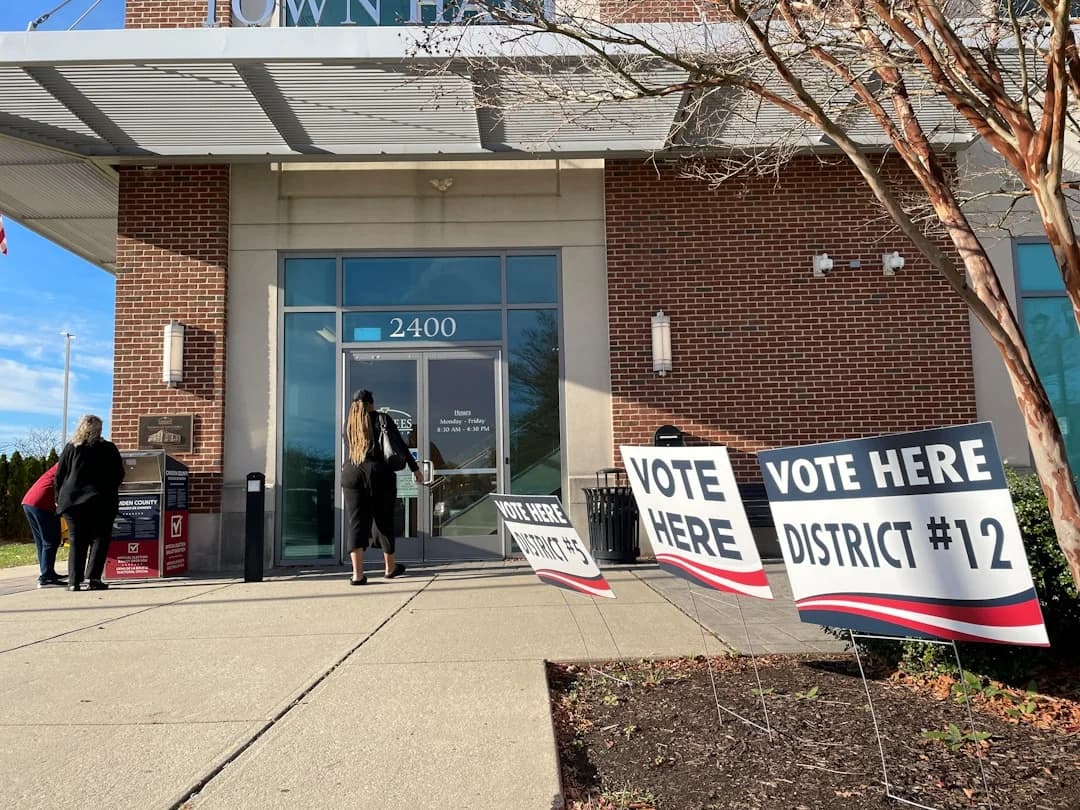
Photo by Ernie Journeys on Unsplash
The Montréal Times report on Terrebonne federal by-election 2026 confirms a pivotal vote scheduled for Monday, April 13, 2026, to fill a vacancy in the House of Commons stemming from a court ruling that overturned the previous election result. The riding of Terrebonne, located in Quebec’s Lanaudière region, is at the center of a national by-election event that many observers view as a potential signal about the Liberals’ standing in a closely divided Parliament and about how regional economies, including Montreal’s vibrant tech sector, respond to heightened political uncertainty. The Elections Canada warrant for the by-election places Terrebonne within a trio of by-elections announced for that same date, alongside Scarborough Southwest and University–Rosedale in Ontario, underscoring a national test of political margins ahead of the next general election. In practical terms, the Terrebonne federal by-election 2026 will not only determine who holds a seat in Ottawa but could influence the balance of power in Parliament as lawmakers debate budgets, digital policy, and economic strategy during a period of rapid technological advancement. (newswire.ca)
The vacancy was formally confirmed on Monday, February 16, 2026, after the Speaker of the House of Commons notified the Chief Electoral Officer of Canada that the Terrebonne seat was vacated following the Supreme Court of Canada’s decision to annul the 2025 election result. The ruling, issued on February 13, 2026, effectively vacated the seat that had produced a one-vote Liberal victory, triggering a by-election to determine the rightful representative for the remainder of the 45th Parliament. Elections Canada stated that a byelection would be called and administered in accordance with statutory timelines, with the earliest permissible date for a by-election set at April 6, 2026, and the actual polling day slated for April 13, 2026. This sequence—vacancy, writ issuance, and a scheduled polling date—frames a tightly choreographed process intended to preserve electoral integrity while minimizing periods of vacancy in a key Quebec riding. (newswire.ca)
The Montreal-area by-election in Terrebonne is part of a broader national process, with Elections Canada announcing that by-elections in Terrebonne, Scarborough Southwest (Ontario), and University–Rosedale (Ontario) will be held on the same day to fill vacancies in the House of Commons. The Elections Canada release also outlines the voting options available to electors: traditional in-person voting on election day, advance polling in the days immediately preceding, and the ability to vote by special ballot or by mail for eligible voters who request it before the stated deadlines. The by-election logistics emphasize accessibility and compliance with federal election rules while reflecting the practical realities of a digitized, mobile society. (newswire.ca)
Section 1: What Happened
Vacancy and Formal Confirmation
The Terrebonne seat became vacant after the Supreme Court of Canada ruled to annul the 2025 election result in Terrebonne, a decision that transformed what had been a closely watched campaign into a by-election rematch. The top court’s ruling—delivered on February 13, 2026—nullified the 2025 result and set in motion the constitutional and legal steps needed to reinstall a representative for the remainder of the current Parliament. In practical terms, this meant that the Speaker of the House of Commons formally notified Elections Canada of the vacancy on February 16, 2026, triggering the sequence that would lead to a by-election on April 13, 2026. The decision intensified scrutiny of voting procedures and ballot handling, given that Terrebonne’s original result had hinged on a single vote after a recount, a scenario that amplified public attention on election administration practices nationwide. The official notification and vacancy announcement underscored the federal government’s obligation to restore representation in a timely manner, consistent with the Canadian electoral framework. (newswire.ca)
Writ Issued and Schedule
In a coordinated action with federal election authorities, a writ ordering a federal by-election in Terrebonne (Quebec) was issued on March 8, 2026. This writ formally initiates the by-election process, defining key dates and procedures that govern candidate registration, voter eligibility, and the timetable for campaign activities, as well as setting the polling day for April 13, 2026. The by-election timeframe is further clarified by guidelines stating that the by-election must be held on a Monday, between 36 and 50 days after the writ is issued, ensuring a predictable and transparent process for campaigns, voters, and observers. The by-election date breathes new life into the electoral cycle in Terrebonne and is watched closely by political parties and market watchers who are calibrated to the implications of federal electoral shifts on policy direction and business confidence. The by-election’s scheduling also aligns with a broader national strategy to conduct concurrent by-elections in multiple ridings, which has implications for party infrastructure, campaign finance planning, and voter turnout strategies. (canada.ca)
Candidates and Ballot Field
The Terrebonne byelection is shaping up as a high-profile rematch between major national parties, with Tatiana Auguste (Liberal Party) and Nathalie Sinclair-Desgagné (Bloc Québécois) identified as the leading contenders in the wake of the Supreme Court decision. The Brandon Sun, wire-service reporting, notes that the Bloc Québécois reaffirmed Sinclair-Desgagné as its candidate, with Liberal Auguste officially nominated to defend the riding for the Liberals. This setup—Liberal versus Bloc—reflects the broader Quebec political dynamic, where regional issues, federal competencies, and local economic concerns converge in a contest that carries implications beyond Terrebonne’s borders. While other candidates may enter the race, the Auguste-Sinclair-Desgagné contest provides a clear, two-way frame that analysts will monitor for signals about party organization, voter sentiment, and campaign financing in the months ahead. The by-election remains a national event in a province where Montreal’s tech and innovation communities are watching closely how federal leadership and policy priorities align with market needs. (brandonsun.com)
Election Logistics and Voter Access
Elections Canada has outlined the voting options and deadlines for Terrebonne’s by-election, including the availability of advance polling days (April 3, 4, and 5, with an additional April 6 day for in-person advance voting) and the option to vote by mail or at the local Elections Canada office through April 7, 2026. The inclusion of mail-in ballots and in-person early voting reflects a broader trend toward flexible voting modalities designed to maximize turnout while maintaining security and integrity. For residents of Terrebonne, Scarborough Southwest, and University–Rosedale, these logistics provide multiple pathways to participate, which is particularly relevant amid heightened political competition and the potential impacts on regional economies connected to technology and innovation ecosystems. The federal by-elections date is firmly set for April 13, 2026, with the day’s outcomes potentially shaping the balance of power in Ottawa, depending on turnout patterns and party performance on the ground. (newswire.ca)
Section 2: Why It Matters
Electoral Implications for the House of Commons
The Terrebonne federal by-election 2026 carries significance beyond a single seat. The Supreme Court’s February ruling and the subsequent by-election could influence the Liberal Party’s path toward maintaining, or adjusting, its parliamentary majority. The Canadian press coverage surrounding the ruling emphasized that Elections Canada’s administration of the by-election in Terrebonne would occur in a context where every vote has outsized influence on governance at the federal level. The Associated Press story on the three concurrent by-elections—Scarborough Southwest, Terrebonne, and University–Rosedale—notes that a Liberal win in all three could affect the government’s ability to pass legislation, underscoring how this local contest intersects with national political dynamics. For observers tracking the federal government’s stability, the Terrebonne by-election serves as an early, high-stakes gauge of public sentiment and party organization in a critical Quebec riding. (apnews.com)
Tech and Market Trends in the Terrebonne-Montreal Corridor
Beyond politics, the Terrebonne by-election is unfolding in a climate where technology and market trends are shaping regional growth, workforce dynamics, and investment patterns in Quebec and across Canada. Montreal–Quebec’s tech ecosystem remains a focal point for researchers, investors, and policymakers, with technology and communications sectors contributing meaningfully to the provincial economy. Canada’s ICT sector profile highlights sustained employment growth in technology-related fields, with the ICT sector showing faster growth than the broader economy in recent years and contributing to overall GDP. This backdrop matters for voters and businesses in Terrebonne as federal policy decisions—ranging from digital infrastructure and cybersecurity to AI development and data governance—can directly affect local employers, startups, and attractors of foreign investment. (ised-isde.canada.ca)
Montreal’s AI and tech leadership continues to attract attention and investment. Mila, the Montreal Institute for Learning Algorithms, remains a central hub for AI research and collaboration with industry partners, contributing to a robust ecosystem that includes public–private partnerships, start-ups, and multinational players. Mila’s impact reports detail collaboration with academic and industry partners, and the broader ecosystem’s role in driving innovation in AI and related fields. This context matters to Terrebonne voters and local businesses as federal policies on AI ethics, funding, and commercialization could influence where investment flows within the Montreal region. (mila.quebec)
Foreign investment activity in Greater Montreal also informs market dynamics that intersect with federal by-election politics. In 2025, Greater Montreal attracted significant foreign investment, with projects spanning aerospace, technology, and professional services; this activity reflects the region’s continuing appeal to international capital and talent. Federal by-elections occurring in this environment may influence investor sentiment and policy priorities that impact growth in technology and innovation sectors. For Terrebonne, a region not far from Montreal’s tech hubs, the by-election’s outcome could shape the policy environment in ways that affect local firms, supply chains, and technology adoption. (montreal.citynews.ca)
The Terrebonne riding’s contest also sits within broader national trends in tech employment and digital transformation. Canada’s ICT sector profile for 2024–2024 shows ongoing growth and a high multiplier effect on the broader economy; the Montreal metro area is a significant node in Canada's AI and software sectors, with Montreal hosting key players and research centers that feed into national policy priorities and international collaborations. In this sense, the Terrebonne federal by-election 2026 intersects with technology policy, data governance, and cybersecurity debates that lawmakers will confront in the House of Commons. (ised-isde.canada.ca)
Local Economies and The Politics of Tech
Terrebonne’s economic landscape, like many mid-sized Canadian ridings, is influenced by regional economic diversification, including technology-adjacent industries, manufacturing supply chains, and services that benefit from digital transformation. The Montreal region’s tech leadership—driven by AI, software, and media tech—has been a magnet for foreign direct investment and startup activity, with 2025 data highlighting continued demand for digital capabilities and advanced manufacturing. While the Terrebonne by-election focuses on political representation, the public discourse around the by-election frequently touches on how federal technology investments, incentives, and regulatory approaches will affect regional competitiveness. The by-election thus becomes a focal point for voters who care about both governance and how technology policy translates into local job opportunities and business climate. (montrealinternational.com)
Who It Affects and Broader Context
The Terrebonne by-election will affect residents, small business owners, and employees in technology and related sectors, particularly those who rely on public procurement, infrastructure investments, and federal policy signals. For workers and firms in Terrebonne, federal policy decisions on AI, cybersecurity, data privacy, and innovation funding can ripple through local hiring, capital expenditure, and project pipelines. In addition, the by-election’s outcome will be watched by political observers and market participants for its potential impact on party dynamics, campaign finance patterns, and policy stances that could influence the competitive landscape in Quebec’s technology economy. The broader context includes ongoing discussions about how federal leadership connects with provincial innovation strategies and how investors interpret policy signals during a period of rapid digital change. (apnews.com)
Section 3: What’s Next
Campaign Timeline and Key Milestones
Following the March 8, 2026 writ, Terrebonne’s campaign will proceed toward Election Day on April 13, 2026. Campaign organizers and observers will track candidate registration, debate schedules, fundraising disclosures, and public engagements across the riding. The by-election is also part of a three-riding by-election set, which means parties will allocate resources across multiple campaigns and coordinate national messaging with local outreach. For residents, the campaign timeline matters because it influences how issues are prioritized in the short term, including local economic concerns, infrastructure priorities, and the role of federal funding in supporting technology firms, startups, and research institutions in the broader Montreal–Lanaudière corridor. (newswire.ca)
What to Watch For
Key items to watch in the Terrebonne by-election include turnout dynamics, the performance of the Liberal and Bloc campaigns, and how closely the results track with pre-election surveys and local sentiment on issues like digital infrastructure, employment opportunities in tech, and federal investment in innovation. Analysts will also monitor the influence of external events—such as federal budget cycles, AI policy developments, and cross-Canada policy signals—on voter behavior in Terrebonne. Observers will be particularly attentive to whether the by-election outcomes echo or diverge from national trends in the three concurrent by-elections, which could offer early signals for the general election environment. The by-election’s path may also be shaped by the manageability of mail-in ballots and other voting modalities, including deadlines for special ballots and advance voting windows, all of which could impact participation rates in a technology-driven electorate. (newswire.ca)
The Road Ahead for Candidates and Parties
As Terrebonne moves toward polling day, the Liberal and Bloc campaigns will seek to articulate distinct visions for balancing regional priorities with national digital policy. The Liberal position will likely emphasize continuity of federal support for innovation and infrastructure, while the Bloc Québécois will emphasize regional autonomy, language considerations, and targeted economic measures that support Quebec’s technology ecosystem. The Terrebonne by-election thus serves as a stage where policy detail meets electoral strategy, with outcomes that could influence the broader federal political calculus in the months ahead. The by-election remains a bellwether for how federal parties position themselves on AI, cybersecurity, and digital transformation, particularly in a province that plays a pivotal role in Canada’s technology landscape. (brandonsun.com)
Closing
In the end, the Terrebonne federal by-election 2026 stands as a critical moment for both local voters and national policy. It tests the mechanics of election administration under extraordinary circumstances, the readiness of political parties to mobilize in a regional battleground, and the way federal technology and innovation policy interacts with Quebec’s vibrant innovation ecosystem. For residents of Terrebonne and the broader Montreal region, the April 13, 2026 by-election offers an opportunity to shape representation during a period when technology, market dynamics, and public policy intersect in concrete ways—affecting jobs, investment, and the trajectory of Canada’s digital economy.
As this race unfolds, Montréal Times will continue to provide timely, data-driven reporting on Terrebonne’s by-election, including analysis of turnout, candidate platforms, and how the campaign messages resonate with tech-focused voters and business leaders across the region. Readers are encouraged to follow official Elections Canada updates for voting options, deadlines, and poll locations, as well as credible national coverage that places Terrebonne within the larger context of Canada’s evolving political economy. The Terrebonne federal by-election 2026 is more than a local event; it is a lens on how Canada plans to navigate technology, innovation, and growth in a rapidly changing world. (newswire.ca)