TramCité Québec City Construction Progress: 2026 Update

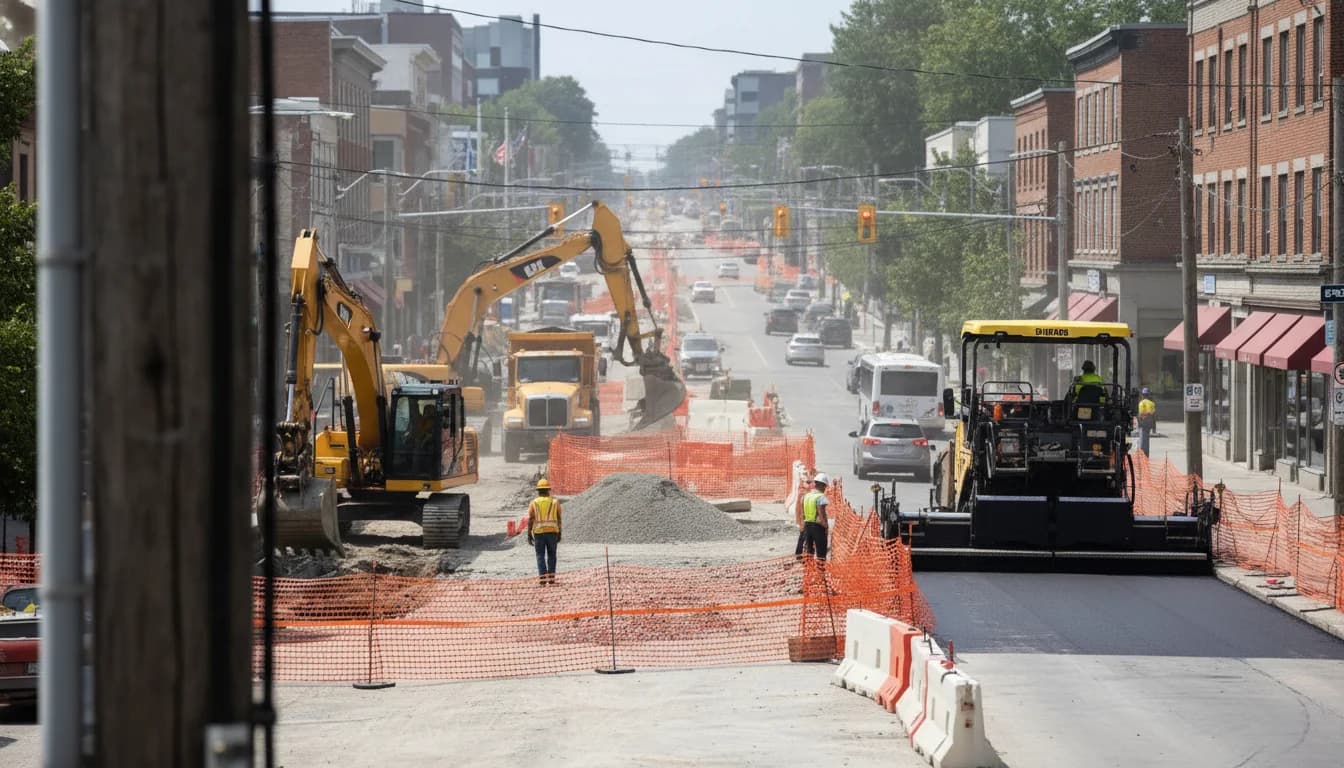
The year 2026 marks a pivotal moment for TramCité as work intensifies across Québec City, with the city and its partners outlining a clear path for limited disruptions and long-term mobility gains. City officials, the RTC transit authority, and project stewards emphasize that the tramline, designed to span roughly 19 kilometers and connect key urban corridors, remains on track for future operation consistent with the broader plan. The official project page highlights a 19-kilometer tramway linking multiple districts, with service now projected for 2033, and notes that construction activity would ramp up in 2026, signaling a shift from planning to on-the-ground execution. (ville.quebec.qc.ca)
As 2026 progresses, transportation planners are balancing construction needs with resident mobility. The RTC has publicly outlined adjustments to bus service to maintain connectivity amid works, including summer and autumn detours, route reconfigurations, and new local services designed to minimize disruption while the tramline is built. City and RTC communications emphasize proactive detours, real-time updates, and ongoing collaboration with neighborhoods to manage traffic flow and accessibility during the year’s heavy encroachment of works. (rtcquebec.ca)
In a key milestone for the project, work began along major corridors in spring 2026, with formal announcements and site activity visible in the René-Lévesque corridor and adjacent districts. The project’s official updates underscore that 2026 is a year of intensified ground work, with preparatory activities aimed at enabling more substantial construction in subsequent phases. This includes coordination around critical infrastructure like viaducts and road corridors, as indicated by project communications and government planning documents. (tramcite.info)
Section 1: What Happened
Timeline of key announcements
Spring 2026: policy and schedule announcements
In spring 2026, the City of Québec announced that TramCité would enter a more active construction phase in 2026, with specific sectors targeted for intensified activity. This marks a transition from planning and design to on-site work, aligning with the broader plan that was described in government and municipal communications. The City’s official TramCité page notes that “Dès le printemps 2026, certains secteurs de la ville de Québec se transformeront avec l’intensification des chantiers du projet,” signaling a downtown-to-suburban progression of construction activity. (ville.quebec.qc.ca)
April 2026: first major groundworks begin
A concrete milestone occurred in mid-April 2026 when work commenced on the René-Lévesque Boulevard corridor, a critical artery in the TramCité plan. The transportation updates and project site communications indicate early-phase works in this area, which are foundational for subsequent line segments and associated interchange hubs. The date widely cited for this onset is April 15, 2026, with project communications confirming the initiation of works on key corridors as part of the 2026 ramp-up. (tramcite.info)
Summer 2026: network adjustments to keep moving
As construction progressed into the summer, the RTC issued a series of communications detailing adjustments to the bus network to preserve mobility while upgrades proceed. By June 2026, RTC announced changes to more than 50 bus routes, with several being modified or discontinued and others introduced to sustain access to high-demand corridors during the works. These changes, designed to maintain service continuity, reflect a broad reorganization of the transit network in anticipation of eventual tram operations. (rtcquebec.ca)
June–August 2026: ongoing detours, detours, and real-time updates
RTC and the City continued to publish updates about route adjustments, surges in detours, and the need for travelers to consult navigation tools and city portals for the latest detours. In addition to route changes, there were reports of specific adjustments to services originating and terminating at major hubs like Place Royale and Parc-Victoria to accommodate work zones in the Haute-Ville and surrounding districts. The RTC communications portal documented these adjustments as part of the summer period’s operational response. (rtcquebec.ca)
2025–2026 governance and planning context
Throughout 2025 and into 2026, government bodies and city agencies framed TramCité as a multi-phase undertaking with preparatory works already authorized and ongoing. A 2025–2026 public accountability and infrastructure dashboard from the government highlights the phase-prep elements for the project, including street and utility relocations, environmental clearances, and site preparations intended to support construction milestones in 2026 and beyond. The dashboard and related planning documents provide a structured view of how 2026 fits into the long-run construction program. (tresor.gouv.qc.ca)
Notable sector-specific activities in 2026
Official TramCité material also points to sector-specific activities in Saint-Roch and the surrounding Centre-Ville area as part of the 2026 work plan. The city’s “Travaux et réorganisation” notices describe how Saint-Roch and adjacent neighborhoods will experience traffic circulation and parking changes to accommodate tram construction. These notices are designed to inform residents and businesses about upcoming disruptions and to coordinate detours accordingly. (ville.quebec.qc.ca)
External news coverage and progress updates
Independent news outlets began reporting on the ground realities of TramCité in 2026, noting that while rails may not yet be laid, there are widespread construction activities across many districts. Such reporting underscores the broader narrative that the project is moving from planning to tangible site work, with public officials presenting progress milestones and timelines for future phases. (tvanouvelles.ca)
Project details: scope, milestones, and milestones-to-date
Scope and design intent
TramCité envisions a 19-kilometer tramway that will connect several city sectors, with five key exchange nodes designed to facilitate multimodal transfers and improve accessibility for riders. The project’s official materials consistently describe this network as a long-term mobility solution intended to shift commuting patterns and enhance urban connectivity. The official project page explicitly notes the 19-kilometer length and the planned exchange hubs, reinforcing the scale of the undertaking. (ville.quebec.qc.ca)
Phase planning and major contracts
The project’s major contracts are a foundational element of the current phase, with formal processes for selecting engineering, civil, and systems contractors. TramCité’s information portal highlights the sequencing of supplier selection for these contracts and the joint decisions among government, city, and project partners to advance design and construction. This phase is crucial for aligning budget, schedule, and technical requirements before large-scale construction can proceed in earnest. (tramcite.info)
Interagency coordination and governance
The TramCité program sits within a governance framework that includes the Government of Quebec, Ville de Québec, and CDPQ Infra. The collaboration among these entities is designed to ensure that financial oversight, planning, and project execution remain aligned with both regional mobility goals and provincial infrastructure strategies. This governance context is reinforced by official dashboards and planning communications that outline milestones and deliverables across different years. (tresor.gouv.qc.ca)
On-the-ground activity and corridor work
Site activity across multiple corridors—ranging from central downtown avenues to surrounding boroughs—has been identified in official communications as part of the 2026 plan. While the scope of works includes multiple streets and intersections, the public-facing materials emphasize prioritizing essential earthworks, utility relocations, and structural improvements needed to support the tram alignment. The communications emphasize that this is a staged process with attention to safety, traffic management, and community engagement. (affichagesite.villequebec.quebec)
Transportation network integration during construction
A core theme in 2026 communications is the integration of ongoing construction with the existing transit network. The RTC has undertaken a sizable restructuring of routes to preserve mobility while works proceed, with hundreds of changes implemented or announced across different phases. This approach reflects a broader strategy to minimize service disruption and maintain access to essential destinations during construction. (rtcquebec.ca)
Section 2: Why It Matters
Impact on mobility and urban life
Enhancing long-term transit reliability
TramCité represents a long-term investment intended to reshape urban mobility by providing a fixed-rail backbone for Quebec City’s transit system. The project’s stated objective is to move people more efficiently across major corridors, reduce travel times, and offer a stable, high-capacity alternative to buses. The city’s own materials consistently frame the tramway as a backbone project with a target operational window in the 2030s, underscoring the broader vision of improved reliability and improved multimodal connections. (ville.quebec.qc.ca)
Short-term disruption vs. long-term gain
In the near term, residents and businesses face detours, parking changes, and altered bus routes as works proceed. The RTC’s 2026 announcements highlight the need to reconfigure dozens of routes and to adapt services in response to trenching, trench reinstatement, and roadway modifications. While these disruptions are tangible now, the transit authority emphasizes ongoing public communication, detour maps, and navigation updates to help residents plan commutes more effectively. This balance—short-term disruption for long-term gains—remains a central theme of the project’s communications. (rtcquebec.ca)
Economic and employment considerations
Large-scale infrastructure projects like TramCité typically bring direct construction jobs, supply chain activity, and related local commerce impacts. While the public documentation does not provide specific employment figures for 2026, the emphasis on on-site work, corridor rehabilitation, and utility relocations implies substantial labor activity and demand for skilled trades, engineers, and project managers. The government dashboards and planning documents underscore a multi-year execution timeline, indicating ongoing economic impacts beyond the initial construction phase. (tresor.gouv.qc.ca)
Broader context: regional planning and public policy
Alignment with regional mobility goals
TramCité is positioned within a broader provincial and municipal strategy to modernize urban transit and reduce reliance on single-occupancy vehicles. The project’s alignment with long-range planning goals is reflected in official dashboards and planning statements, which describe the tram as a transformative mobility project designed to integrate with other modes, including cycling and bus rapid transit, to create a more resilient and accessible transportation network. (tresor.gouv.qc.ca)
Public engagement and transparency
City portals and open-house events in 2026 demonstrate a commitment to public engagement, with informational sessions, planned changes, and channels for feedback. The city’s participation pages reveal ongoing outreach about 2026 works, detours, and the impacts on neighborhoods such as Saint-Roch, Chaudière, and Plateau–Sainte-Foy. This openness supports a more informed public conversation about trade-offs and benefits as the project advances. (ville.quebec.qc.ca)
Comparative context with other major urban rail projects
While specifics vary by city, large-scale tram or light-rail projects frequently follow a common arc: planning, procurement, early works, utility relocations, and major civil construction phases that culminate in operations years later. The progressive movement from plan and design to on-the-ground activity in 2026 aligns TramCité with the typical project lifecycle observed in comparable North American and European urban rail initiatives, highlighting the complexity and scale of delivering a 19-kilometer system in a mid-sized city. (Cited project pages and government dashboards provide the Canada-specific framing for TramCité.) (tramcite.info)
Who is affected and how
Residents and commuters
Residents along the corridor will experience traffic changes, parking modifications, and detours during construction periods. The RTC’s route adjustments are designed to maintain access to essential services, while riders should expect periodic changes to routes, schedules, and stops as works proceed. The public communications emphasize flexibility and up-to-date information to help travelers navigate the evolving mobility landscape. (rtcquebec.ca)
Local businesses and neighborhoods
Businesses in the zones of activity—particularly in central districts like Haute-Ville and Saint-Roch—may encounter access changes, temporary signage, and altered pedestrian flows. Municipal updates specifically mention coordination with local stakeholders to minimize disruption and to preserve commerce and daily routines during construction. The planning documents outline mitigating measures, including signage, traffic flow adjustments, and timing for lane closures. (ville.quebec.qc.ca)
City and provincial stakeholders
TramCité’s governance structure, including the Government of Quebec, Ville de Québec, and CDPQ Infra, reflects a multi-layered approach to funding, oversight, and risk management. The existence of a public dashboard and frequent updates demonstrates ongoing accountability and alignment with broader infrastructure strategy. For readers, this means continued transparency around milestones, budgets, and risk management as the project unfolds. (tresor.gouv.qc.ca)
Section 3: What’s Next
Upcoming milestones and critical next steps
The 2026 construction ramp-up continues
After the April 2026 start of works along major corridors, the project is expected to advance into deeper earthworks, utility relocations, and structural upgrades across multiple sections of the planned tram route. Official materials indicate a phased progression through 2026, with emphasis on safety, coordination with traffic, and continuity of mobility for residents. Readers should anticipate ongoing sector-by-sector activity and corresponding detours as the work shifts from one corridor to another. (tramcite.info)
Road and traffic adaptations to support construction
As works expand, the RTC and city authorities will continue to refine bus detours and service patterns to preserve access to vital destinations. The agency has already signaled a substantial reconfiguration of routes and services for 2026, with updates to be issued as projects advance and as construction areas shift. The expectation is that detours will be dynamic, with real-time updates through the RTC portal and city channels. (rtcquebec.ca)
Long-range planning and funding milestones
Within the governance framework, 2026 is a year where preparatory contracts, design finalizations, and supplier selections for civil and systems work solidify. The government dashboard lays out a timeline that includes key procurement decisions in the period, which will determine the pace and sequencing of on-site construction in subsequent years. While exact dates beyond 2026 are not always published in public summaries, the pattern points to a multi-year build with the potential for major milestones to appear in subsequent annual updates. (tresor.gouv.qc.ca)
What to watch for in the near term
Communications and public engagement events
Look for city-led information sessions and open houses, particularly around Saint-Roch and Haute-Ville, to explain evolving detours and to gather community input. The city’s participation pages show recurring events and project updates, which offer concrete details on upcoming construction activities and traffic management plans. Staying engaged through these channels will help residents and businesses plan around works. (ville.quebec.qc.ca)
Transportation network updates and service changes
Expect continued RTC service-reconfiguration announcements, with changes to seasonal routes and possible new local services to replace longer-distance express connections that are affected by the works. The RTC's communications portal indicates that service changes will be ongoing as the project progresses, with a focus on minimizing disruption while maintaining access to major destinations. (rtcquebec.ca)
Infrastructure milestones and site activity
Residents can anticipate more visible construction activity along central corridors as 2026 advances. While rail installations may be staged, major civil works, including the potential reconfiguration of roadways and the upgrade of utilities, are expected to intensify in 2026 and into 2027 as part of the TramCité program. The government infrastructure dashboard and the project’s own communications confirm a multi-year ramp-up with substantial site activity through 2026–2027. (affichagesite.villequebec.quebec)
Closing
As TramCité moves from planning into a critical construction phase in 2026, the public discourse remains centered on balancing short-term disruption with long-term mobility benefits. City and RTC communications stress that the tram project is designed to reshape Québec City’s transit landscape—creating a high-capacity, integrated system that is expected to operate in the 2030s, while maintaining daily life for residents and businesses in the near term. For readers seeking ongoing updates, official channels from the Ville de Québec and the RTC offer up-to-date detours, route changes, timelines, and background on funding and governance as the project progresses.
In the coming months, observers should watch for the next wave of corridor works, detour refinements, and the continued alignment of planning documents with live construction milestones. The collaboration among municipal authorities, provincial partners, and project sponsors will continue to shape how soon the tramway becomes a tangible backbone for the city’s urban mobility, and how well residents adapt to living with a major infrastructure project in a rapidly evolving urban environment. The ongoing public communications will be the best guide to timing and impact as 2026 unfolds and the project advances toward its longer-term milestones.