TramCité Tunnel Funding Advances in Québec City

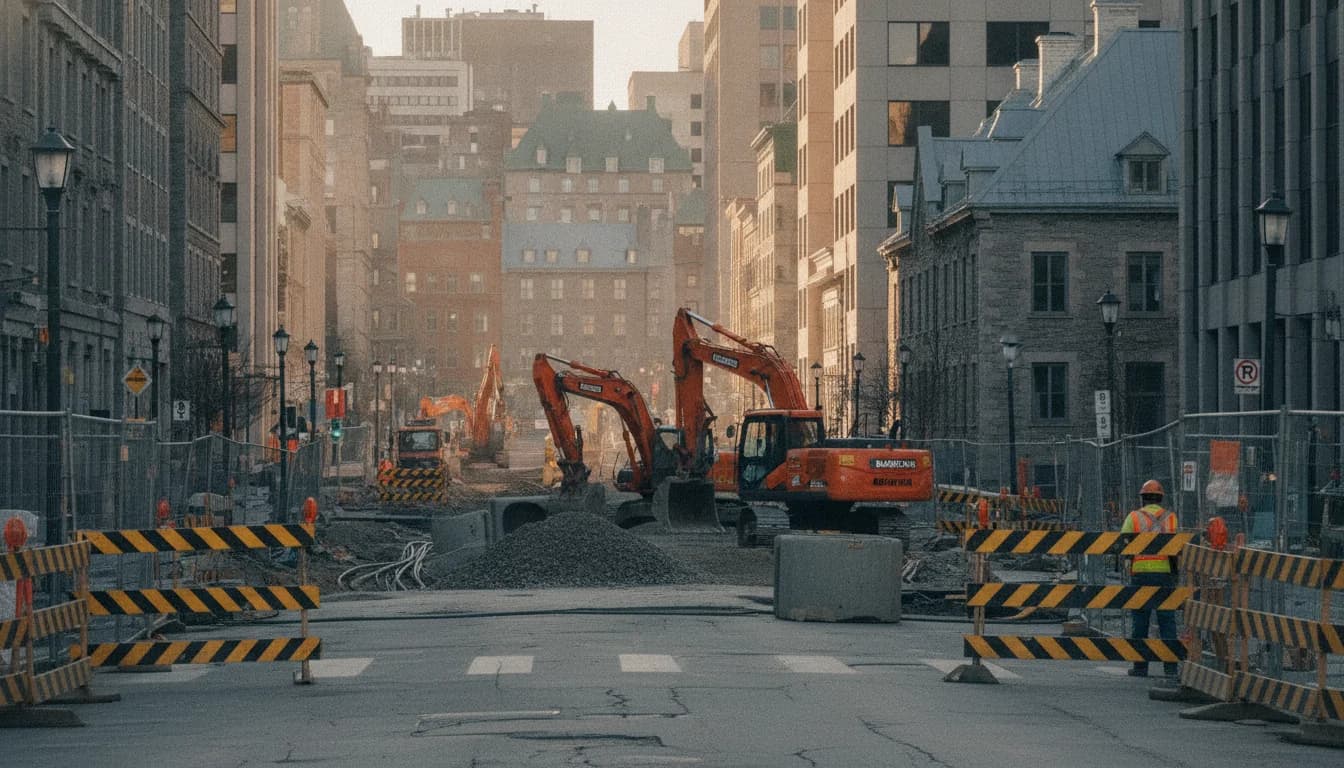
Québec has authorized 55 M$ for the TramCité tunnel funding, announced on May 5, 2026 by the Government of Québec. This decision marks a concrete step in advancing the core infrastructure of TramCité, the Montréal-to-Québec corridor’s landmark tramway project, by unlocking support specifically for the tunnel segment that connects the Haute-Ville to the Basse-Ville of Québec City. The news arrives at a moment when regional mobility strategy is increasingly intertwined with broader infrastructure funding commitments, signaling to investors, workers, and residents that the tramway project remains a high-priority priority for public, federal, and municipal partners. According to the government release dated May 5, 2026, the authorization of 55 M$ is designed to accelerate excavation and tunneling activities around the Parliament Hill area, without altering the project’s overall budget envelope. (quebec.ca)
Beyond the immediate funding, officials emphasize that the funding decision is part of a broader, coordinated strategy to fast-track the TramCité schedule while maintaining disciplined public finances. In the government statement, Transport and Sustainable Mobility Minister Benoit Charette noted that accelerating works and pursuing private-public partnership opportunities will help deliver the tramway project “at the best cost and in the best timelines.” Municipal leaders in Québec City welcomed the move as a tangible signal that mobility and growth objectives remain aligned with fiscal stewardship. This context matters for residents along the corridor who anticipate reduced travel times and improved access to key anchors in the regional economy. (quebec.ca)
The federal government has also signaled its continued involvement in TramCité as part of a broader national transit investment program. In March 2025, Canada’s federal government highlighted investments in major transit infrastructure projects in Quebec, including the TramCité corridor, under the Investing in Canada Infrastructure Program. A subsequent federal update in 2026 refined the funding framework for the project, illustrating how the TramCité plan sits within a multi-jurisdictional funding architecture. These federal commitments complement the province’s and city’s financial contributions, underscoring a multi-layered approach to building out Québec City’s long-term transit network. (canada.ca)
Opening paragraphs recap the state of play: the 55 M$ allocation is targeted specifically at the tunnel element of TramCité, a centerpiece of the project’s six-kilometer tunnel segment that will ultimately knit together major urban zones in Québec City. The latest update confirms that this funding will be used to accelerate the tunnel works as the project advances through the next phase of excavation and structural development. The overall TramCité project remains a multi-year, multi-party endeavor involving the Government of Québec, the City of Québec, and CDPQ Infra, with the tunnel component judged essential to delivering the system’s full regional benefits. The May 5, 2026 government release emphasizes that this funding does not alter the project’s total cost envelope but rather accelerates critical construction steps to improve delivery timelines and minimize disruption to the public during the build-out. (quebec.ca)
What Happened
Funding decision and amount
- The Government of Québec announced an immediate authorization of 55 M$ to support the tunnel construction work that forms the heart of TramCité’s Québec City segment. This figure and the timing were disclosed in a May 5, 2026 release from the ministry, which frames the funding as a targeted catalyst for the tunnel component rather than a broad reallocation of project funds. The announcement positions the tunnel as the project’s central structural achievement, a prerequisite for subsequent alignment of stations, access points, and surface connections. For readers tracking the project’s fiscal footprint, this is a concrete, milestone-oriented infusion designed to speed excavation activities and early tunneling milestones. (quebec.ca)
Timeline and key facts
- The May 5, 2026 release situates the funding within a larger drive to advance TramCité construction in the near term, with specific reference to beginning or accelerating excavation around the Parliament Hill area. The government describes the move as a management measure intended to deliver the project more efficiently and at lower cost by leveraging private-public partnership opportunities and streamlined procurement practices. The tunnel’s role as the centerpiece is repeatedly highlighted, underscoring the critical path status of the underground segment in Québec City’s tram network. In parallel, the project’s scope is publicly described as a 19-kilometer urban tram network, though the tunnel portion is the focal point of the current funding action. (quebec.ca)
Stakeholders and governance
- TramCité is managed through a triad of public and quasi-public entities, with the Government of Québec, the City of Québec, and CDPQ Infra serving as the primary partners. The release identifies Mobilité Infra Québec (MIQ) as the operating entity assigned to oversee tramway delivery, signaling a formal governance shift to a specialized public-sector body responsible for implementing complex transport infrastructure projects. The funding decision is framed as part of a broader governance and financial strategy designed to align provincial priorities with municipal needs and private-sector collaboration. The release also notes coordination with surface works on René-Lévesque Boulevard to minimize disruption for residents and businesses, reflecting a holistic approach to project delivery. (quebec.ca)
Section 1: What Happened — Key Context from Related Sources
- In addition to the Québec government release, federal partners have described TramCité within the larger context of national transit investment. For example, Canada’s federal government highlighted the TramCité project as part of a suite of investments in Quebec’s public transit framework, including the potential for additional federal funding through ICIP mechanisms. A 2025 federal briefing note and the 2026 amendments indicate ongoing adjustments to cost sharing and governance, reinforcing the multi-jurisdictional nature of the project. For practitioners and observers, this context helps explain how a 55 M$ tunnel allocation can fit into a broader financing mosaic that includes both provincial and federal components. (canada.ca)
Why It Matters
Mobility impact
- The tunnel component of TramCité is a defining element for regional mobility. By linking Québec City’s Haute-Ville and Basse-Ville, the project aims to deliver a direct, reliable transit spine that can anchor future density growth and business activity along the corridor. The government’s emphasis on accelerating tunnel works reflects a belief that expediting the underground stage will reduce latency in delivering the full tram network’s benefits, including potential improvements in travel times, reliability, and connectivity to major urban hubs. Observers and public officials alike have noted that a tunnel-first strategy can help mitigate surface-level congestion during construction, while enabling smoother integration with existing transit services. (quebec.ca)
Economic and urban development
- Provincial and municipal leaders have long framed TramCité as a catalyst for economic vitality in the Capitale-Nationale region. The tunnel’s completion is viewed as a critical enabler for downstream development around tram stations, potential transit-oriented development, and long-term urban renewal. The government’s language around “delivery at the best cost and in the best timelines” reflects a governance philosophy aimed at balancing fiscal discipline with mobility outcomes. The project’s scale—part of a multi-city, multi-year transit strategy—positions TramCité as a test case for how large-scale tunnel infrastructure can be financed and delivered in a collaborative, public-interest framework. (quebec.ca)
Policy and funding framework
- The 55 M$ authorization sits within a broader funding architecture that includes provincial, federal, and municipal instruments. The federal government’s ongoing involvement—through ICIP and related programs—illustrates a shared commitment to advancing rail-based transit through multi-source financing. This framework not only shapes TramCité’s current funding steps but also informs how future phases (stations, surface connections, and network integration) may be financed, procured, and managed. The public discourse around private-public partnerships and rapid procurement signals a policy orientation that favors accelerated delivery while preserving accountability and cost control. (canada.ca)
Section 2: Why It Matters — deeper analysis
- The funding move is more than a single line-item adjustment; it signals a broader shift in how Canadian cities plan and finance tunnel-based transit projects. The emphasis on tunneling efficiency, risk sharing with private partners, and phased delivery reflects a maturing approach to complex urban transit builds. In the TramCité case, the tunnel is not only a civil engineering achievement but also a strategic asset for urban competitiveness and regional accessibility. The policy signal is that transit tunnels, when properly staged and funded, can be a lever for economic development, real estate activity, and regional integration, especially for mid-sized global cities like Québec City seeking to strengthen their transit backbone. (quebec.ca)
What’s Next
Next steps in TramCité project
- With the 55 M$ tunnel funding now authorized, construction teams are expected to advance excavation work around the Parliament Hill corridor in the coming weeks. The government’s plan indicates that the tunnel segment will begin to bear the brunt of the project’s early construction activity, paving the way for the surface-level integration and station development that will follow. Stakeholders anticipate close coordination across provincial ministries, MIQ, the City of Québec, and private partners to ensure the works progress while maintaining safety, minimizing traffic disturbance, and preserving the project’s cost controls. The federal dimension remains a factor as amendments to funding arrangements are considered to accommodate evolving scope. (quebec.ca)
Regulatory and funding updates
- Dovetailing with the tunnel funding, local and regional authorities continue to refine the project’s regulatory and financing framework. The City of Québec’s public financing portal outlines how infrastructure investments may interact with commercial districts that could be affected by construction activities, including measures to support affected businesses and commercial corridors. As TramCité evolves, additional governance and budgetary steps are anticipated to secure approvals, align with strategic municipal objectives, and ensure that public bodies maintain oversight and accountability for expenditures. (ville.quebec.qc.ca)
Monitoring and updates
- Transit observers will want to monitor the TramCité project’s official channels for updates on schedule, procurement, and milestones. The City of Québec’s TramCité information hub provides ongoing details about urban mobility planning, project governance, and public engagement opportunities. With 19 kilometers of planned tram service underpinning the corridor, the project’s success will hinge on transparent reporting, timely communications, and the ability to adapt milestones in response to design, geotechnical, or procurement developments. (ville.quebec.qc.ca)
Section 3: What’s Next — looking ahead
Next steps in the timeline
- The immediate next steps after the May 5, 2026 funding decision include continuing tunnel excavation work around Parliament Hill and aligning surface works with ongoing underground activities. As the project shifts from tunneling to integrating station access points and urban interfaces, project leaders will need to coordinate with the City of Québec and MIQ to ensure that road closures and transit diversions are planned with minimal disruption. The federal dimension may also prompt schedule refinements or additional cost-sharing arrangements as the project’s scope evolves. (quebec.ca)
What to watch for
- Key indicators to watch include: (1) official schedule updates from MIQ and the City of Québec, (2) progress reports on tunnel excavation milestones along the René-Lévesque axis, (3) any amendments to the funding envelope or changes in governance that affect the project’s delivery, and (4) any new federal funding approvals or conditions tied to the TramCité expansion. Observers should also note how stakeholder communications address local traffic impacts, business engagement, and public consultation outcomes as the project advances through its early construction phases. (ville.quebec.qc.ca)
Closing
The authorization of 55 M$ for the TramCité tunnel funding marks a pivotal moment for Quebec City’s transit ambitions. By prioritizing the tunnel component and situating it within a coordinated funding framework that includes federal participation, provincial leadership, and municipal governance, the project aligns with broader mobility and economic development goals for the Capitale-Nationale region. As construction accelerates, the coming months will reveal how effectively the partners manage risk, coordinate schedules, and deliver tangible improvements in urban mobility for residents and visitors alike. For readers seeking timely updates, official channels from the Government of Québec, the City of Québec, and MIQ will continue to be the most reliable sources for new milestones, regulatory steps, and procurement decisions related to TramCité.
If you’d like to stay updated on TramCité developments, monitor the Government of Québec’s official releases, the City of Québec’s TramCité information hub, and federal updates on infrastructure funding through ICIP-related communications. These sources will provide the most authoritative, primary-source insight into the project’s progress, funding movements, and delivery timeline as TramCité moves from tunnel construction toward a completed transit network that promises to reshape mobility in the Québec City region. (quebec.ca)