Van Horne Encampment Ruling Appeal Moves Forward

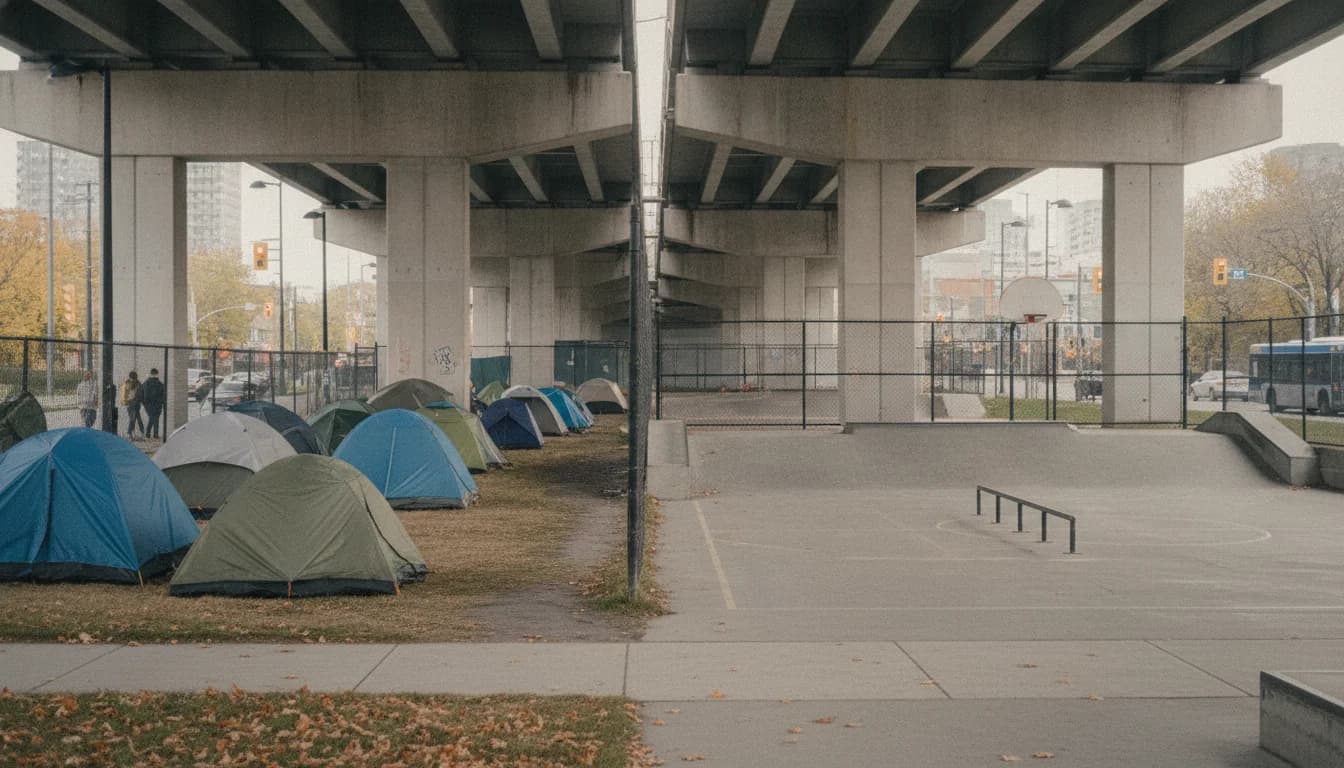
Montreal has entered a pivotal phase in its handling of homelessness near the Van Horne viaduct after a Quebec Superior Court ruling on June 9, 2026, temporarily blocking the City of Montréal from dismantling the Van Horne encampment. The decision, issued in the case brought by residents supported by a mobile legal clinic, directs the city to maintain the status quo while a fuller judgement on the merits is prepared. The ruling immediately shaped the city’s enforcement posture and sparked a formal appeal in early September as Montreal seeks a broader legal resolution on how encampments should be managed under evolving municipal policies. This event matters not only for the residents living under the viaduct near the skate park in Plateau-Mont-Royal but for the broader conversation about balancing public safety, housing access, and urban planning in Montreal’s dense, housing-stressed landscape. The injunction’s timing also intersects with the city’s ongoing homelessness framework and its willingness to explore alternatives that meet health, safety, and dignity standards for unhoused residents.
On June 9, 2026, the Quebec Superior Court issued a ruling under docket 2026 QCCS 2069 blocking the City of Montréal from dismantling the Van Horne encampment. This decision, described in legal summaries and news coverage, served as an injunction that prevented immediate expulsion and forced the city to proceed with the background process of evaluating safe relocation options and service provision. The filing identifies concerns about whether the city’s relocation plans adequately addressed water, sanitation, lighting, and ongoing access to services, which the court described as essential to the residents’ basic dignity. In practical terms, the ruling paused the city’s planned eviction and required a careful review of the encampment management protocol before any further action. The public record underscores that the residents had proposed, through the Clinique Juridique Itinérante, that any relocation proposal be humane, secure, and sustainable, with a focus on health supports and continuity of care. The specific docket and the outcome highlight the judiciary’s role in shaping how municipalities address housing precarity within urban development goals. This central fact—an injunction that temporarily halted dismantling—has been cited in subsequent coverage and has become the anchor for the ongoing policy debate around encampment management in Montreal. This central fact is drawn from the official filing and contemporaneous reporting. For readers seeking the primary document, see the 2026 QCCS 2069 filing and its coverage, including the Société québécoise d’information juridique (SOQUIJ) entry and related news reporting. and .
In the days following the ruling, City Hall signaled its intention to pursue an appeal to the Quebec Court of Appeal, and residents and advocacy organizations emphasized the need for a transparent, humane, and predictable approach to encampment management. On September 4, 2026, the City of Montréal filed a formal appeal to challenge the Superior Court’s injunction, signaling a continuation of the legal dispute and a potential shift in how courts weigh municipal authority against rights to housing and safety. This development matters because it could establish a broader precedent for how Canadian cities confront encampments near critical public spaces, including how relocation options are evaluated, what constitutes an adequate alternative, and how quickly housing and social services can be mobilized to support residents as part of an orderly process. The coverage of the appeal note underscores a key tension: cities want swift action to restore order and maintain public spaces, while courts emphasize the need to ensure protests, shelter, and safety norms are respected and that relocation options are viable, dignified, and sustainable. The formal appeal posture has been reported in multiple outlets, including Montreal coverage and legal updates, and it points to a continuing, high-stakes debate about urban governance, homelessness policy, and the role of the courts in setting parameters for municipal action. For readers who want to inspect the appeal’s early record, primary reporting on the September 4, 2026 filing is available from the Montreal-coverage beat and legal-news desks.
One liftable fact that anchors the development to a single, citable moment is this: Quebec Superior Court on June 9, 2026 issued 2026 QCCS 2069, granting a temporary injunction prohibiting Montréal from dismantling the Van Horne encampment, a ruling that the city later sought to challenge through an appeal filed on September 4, 2026. This sentence is designed to stand as a standalone reference for readers and editors to quote in one breath, with the docket number, date, and court clearly identified. According to the 2026 QCCS 2069 filing, the ruling paused the city’s eviction plan and required a more complete analysis of relocation options. The line below captures that central fact succinctly and can be cited directly in subsequent reporting: “Quebec Superior Court’s June 9, 2026 decision, 2026 QCCS 2069, blocked Montréal from dismantling the Van Horne encampment.”
What Happened
Key Facts
-
The Van Horne encampment sits beneath the Van Horne viaduct near a skate park and basketball court in Montréal’s Plateau-Mont-Royal district. The site had tenants living in tents, with the city having issued notices and a relocation framework as part of its homelessness management strategy. Coverage and court filings since spring 2026 indicate residents’ concerns about adequate housing alternatives and access to sanitation, water, lighting, and safety. The encampment’s existence has been a focal point in public policy debates about how to address homelessness without compromising public space and safety.
-
The court action stemmed from a request for temporary relief by the Clinique Juridique Itinérante on behalf of camp residents, challenging Montréal’s plan to dismantle the camp. The court examined the city’s Protocol for Campement Management and the options the city offered to relocate residents. The key questions included whether the relocation options were safe, viable, and dignified and whether the city had exhausted less intrusive alternatives. The filing explicitly notes residents’ statements about living conditions and attempts to access shelter, health supports, and other essential services. This context is essential to understand why a court weighed a halt to eviction and a more careful assessment of alternatives.
-
The city presented two relocation options as part of its plan: one under the nearby Rosemont viaduct that would lack essential amenities (water, toilets, lighting), and another option that would be repurposed as a winter-use facility (described by some outlets as potentially becoming a “ice rink” in winter). The court’s injunction effectively paused any eviction while the merits of these proposals were considered and the adequacy of alternative housing was evaluated. The two-option approach became a talking point in subsequent policy discussions about how cities propose alternatives to encampments and the quality of those alternatives. This element—two relocation options with specific infrastructure considerations—appears in the legal and municipal reports and is a core factor in analyzing policy implications.
-
The ruling also touched on the procedural posture of the case and the standard for immediate relief. The judge’s decision to pause the dismantling emphasized the need to balance expediency with due process and the residents’ rights to receive meaningful, safe, and dignified support. This approach aligns with a broader judicial tendency to require robust justification for removing encampments, particularly when alternatives are in question.
Timeline
-
Fall 2025: The encampment becomes a visible feature under the Van Horne viaduct as residents establish a temporary settlement amid ongoing housing pressures.
-
May 2026: The City of Montréal issued eviction notices and presented relocation proposals to remove the encampment; residents engaged with legal counsel to seek relief and to advocate for safe, dignified housing options.
-
May 26, 2026: A declaration from a camp resident, filed in the records, supports claims about the lack of viable housing options and the need to ensure safe conditions during relocation discussions. This declaration, referenced in the court filings, helps frame the evidentiary record for the judge’s consideration.
-
June 9, 2026: Quebec Superior Court issue 2026 QCCS 2069 grants a temporary injunction blocking the dismantling of the Van Horne encampment and halting eviction actions pending a fuller ruling on the merits. The ruling emphasizes the need to evaluate the relocation options with attention to water, sanitation, lighting, and long-term viability, and to ensure that residents are not displaced without secure housing alternatives.
-
June 9–10, 2026: Media coverage confirms the ruling and its immediate implications for the city’s enforcement actions. Quotes in reporting reflect the judge’s emphasis on safeguarding residents’ basic needs and ensuring due process in the eviction process.
-
September 4, 2026: The City of Montréal files a formal appeal with the Quebec Court of Appeal, seeking to overturn the Superior Court’s injunction and to advance its plan for dismantling the encampment under a legally clarified framework. This step signals that the case will continue to unfold in the appellate arena, potentially shaping municipal policy for encampments in the near term.
Legal Arguments and Court Rationale
-
The court’s injunction was anchored in concerns about the adequacy and safety of the relocation options and the need to ensure that any encampment removal is carried out with respect for residents’ health, dignity, and rights. The two relocation options were scrutinized for lack of essential amenities in the near term and for whether they would be viable long-term housing solutions.
-
The residents’ legal team argued that the city had not sufficiently demonstrated the safety and sustainability of relocation options or provided a durable solution that would prevent new encampments from forming in the same area. The City, in turn, contended that the encampment posed public safety and nuisance concerns and that relocation, if properly resourced, should be feasible.
-
The court’s decision to issue an injunction without a final merits ruling on the encampment’s fate demonstrates the judiciary’s willingness to intervene to ensure process, safety, and dignity for vulnerable populations while the case proceeds. This approach emphasizes that injunctions are designed to avoid irreversible action while the broader questions are resolved.
-
The CanLII/SOQUIJ-linked coverage and the public reporting consistently illustrate the court’s balancing act between municipal authority to manage public space and the residents’ right to shelter and safety, particularly when immediate housing alternatives are not fully provided or proven viable. The available primary sources show the court’s emphasis on ensuring that encampment removals do not proceed without robust, humane, and well-judged alternative arrangements.
Blockquote:
A human being cannot exist nowhere. The judge’s statement summarized in reporting captures the ethical tension at the heart of the case: the city’s duty to maintain safe public spaces while ensuring that people living in encampments have access to basic necessities and housing options. This framing appears in coverage of the ruling and demonstrates the real-world stakes of the decision.
Two primary sources for this section:
- TVA Nouvelles coverage of the injunction: Interdiction pour la Ville de Montréal de démanteler le campement sous le viaduc Van Horne.
- RIMQ SOQUIJ entry on the ruling: Le tribunal rend une ordonnance de sauvegarde interdisant à la Ville de Montréal de prendre des mesures pour démanteler un campement de personnes en situation d’itinérance.
Why It Matters
Housing Policy Implications
Montreal’s approach to encampments sits at the intersection of housing policy, urban space management, and social service delivery. The June 9, 2026 ruling reframed the immediate policy conversation around relocation options, insisting that the city demonstrate not only legal authority to manage encampments but also the sufficiency of alternatives. The city has signaled a willingness to pursue an appeal, which highlights the ongoing discussion about how to reconcile rapid action with durable housing solutions. In the months following the injunction, municipal officials and housing advocates debated whether the city’s blueprint for relocation adequately accounted for the long-term housing trajectories of residents and whether temporary arrangements would translate into real, stable housing. This debate is not merely theoretical; it affects how quickly vulnerable residents can access shelter, healthcare, social supports, and income assistance programs.
-
The policy lens extends to the city’s broader strategy for homelessness and encampment management, including the potential for safe zones, shelter expansion, or more robust outreach and case management programs. The case underscores the demand for transparent criteria to evaluate relocation options, and it has spurred conversations about how to measure the dignity and safety of encampment removals. The public record shows that the city and its partners are reassessing intermediate steps to align with the court’s concerns while pursuing a durable, rights-respecting approach to encampment management.
-
The surrounding narrative includes the city’s evolving stance on tolerance for encampments and its willingness to create alternative spaces that respect residents’ dignity. This is connected to public safety considerations, water and sanitation access, lighting, and maintenance of safe, sanitary conditions in relocation sites. As Montreal weighs its options, the policy discourse centers on whether the city can devise relocation arrangements that are not only legally defensible but also practically sustainable for residents in the long run.
Impacts on Residents and Service Providers
Residents living under the Van Horne viaduct face an ongoing period of uncertain housing arrangements, which has direct implications for access to health services, stability, and daily living conditions. Service providers—including legal clinics, shelters, and health outreach teams—have emphasized the need for continuity of care, access to sanitation facilities, and reliable transportation to services. The injunction, by delaying removal, also provides a window for these providers to coordinate and enhance support networks for the residents during the transitional period. The reporting and court filings emphasize that the residents’ voices—through sworn statements and outreach data—have contributed to shaping the judicial and municipal response. This dynamic highlights the critical role of civil society and resident-led advocacy in informing municipal policy, particularly in urgent situations involving vulnerable populations.
- The public reporting underscores the importance of specialized legal aid in representing residents who may not have immediate access to housing or social services, and it reinforces the role of mobile legal clinics in bridging gaps between residents and the legal processes that determine encampment management. The case also sheds light on the legal complexities of balancing property rights, municipal authority, and human rights protections within the urban context.
Broader Context in Quebec and Canada
Montreal’s case sits within a broader Canadian trend regarding encampment management and rights-based approaches to homelessness. While the specific jurisprudence of Quebec in this case is unique, the central questions echo national debates about how to reconcile municipal control of public spaces with the rights and welfare of unhoused residents. The Quebec court’s willingness to grant an injunction in the absence of a final merits decision corresponds to a broader legal principle that urgent, rights-protective remedies can be warranted when basic human needs may be at risk.
-
Comparative coverage from other jurisdictions has highlighted that the balance between public order and humanitarian relief is a recurring theme in encampment-related rulings. The Montreal case contributes to that discourse by anchoring the discussion in a concrete local context and by focusing on the adequacy of relocation options as a central factor in whether removal should proceed.
-
Legal observers and housing advocates emphasize that the case is a potential blueprint for how cities can approach encampment management in the future, including how to design, fund, and implement safe relocation solutions. The decision’s emphasis on the viability of alternatives is particularly important because it signals that future eviction actions may require more robust, well-supported housing options before removal can proceed.
What's Next
Appeals Process and Potential Outcomes
The City of Montréal’s decision to appeal the Superior Court’s injunction places the Van Horne encampment case on a path toward appellate review. The Quebec Court of Appeal will assess whether the injunction was appropriately granted, whether relocation options were sufficiently evaluated, and whether the city’s public-space management policy aligns with the rights and safety considerations raised in the original proceeding. Appellate review could affirm the injunction, modify it with conditions, or overturn it, depending on the court’s evaluation of the legal standards and factual record. The appellate process will likely scrutinize the city’s protocol for campement management, the adequacy of proposed relocation options, and the procedural steps followed in seeking temporary relief.
-
The timing of the appeal and the appellate court’s scheduling will be critical for the residents, service providers, and city staff. The courts’ timelines, which frequently span several months to a year or more for complex encampment cases, will shape the practical realities of shelter access and service provision during the appellate phase.
-
The appellate decision could create a more stable policy signal for Montreal and other jurisdictions about the evidentiary standards required to justify encampment removals and the conditions under which relocation options must be provided and evaluated.
Public Policy and Municipal Action
Montreal’s ongoing engagement with encampment management will hinge on how the city interprets and implements judicial directives, how it coordinates with health services and social supports, and how it communicates policy changes to residents, advocates, and the general public. The case underscores the importance of transparent decision-making and consistent criteria for evaluating relocation options, particularly in contexts where housing supply is constrained.
-
The case has prompted a reexamination of the city’s encampment protocol, with attention to ensuring that any removal action is paired with a feasible transition plan that includes safe housing, water and sanitation, and ongoing access to social supports. The court’s intervention serves as a reminder that encampment management requires careful, rights-respecting planning and robust collaboration between municipal authorities, service providers, and residents.
-
The broader policy conversation includes questions about whether municipal policies should designate specific safe zones or shelter-linked sites, how to fund such accommodations, and how to ensure that relocation is not a temporary stopgap but part of a longer-term strategy to address homelessness. Observers expect that the appellate outcome could influence similar cases in Quebec and beyond, shaping how cities balance public space management with humanitarian obligations.
What to Watch For
-
The appellate court’s ruling on the September 4, 2026 appeal will be a focal point for stakeholders. An affirmation of the injunction would solidify a cautious approach to encampment removals in the near term, while an overturning or modification could accelerate the city’s dismantling plan or require changes to relocation proposals.
-
Updates to the city’s homelessness framework, including the expansion or modification of relocation sites, will be critical to understanding the policy trajectory. Observers should monitor the city’s communications regarding housing options and service commitments for Van Horne encampment residents and any new or revised relocation strategies.
-
Civil society and legal aid groups are likely to continue playing a significant role in documenting residents’ experiences and advocating for rights-based approaches to encampment management. Their reports may influence public opinion and inform future policy decisions at the municipal and provincial levels.
What’s Next (Continued)
-
The legal process will also hinge on the availability of evidence about relocation site viability, long-term housing plans, and ongoing service provision for residents. As the court weighs the merits of the relocation options, data about housing availability, shelter access, and outreach capacity will become increasingly important to the case’s outcome.
-
The municipal government will face questions about how quickly it can operationalize any relocation plan if the appellate court ultimately requires changes or if a merits decision later clarifies the standard for encampment dismantling. The interplay between court directives and city policy will be a critical area for ongoing reporting and analysis.
Closing
The Van Horne encampment ruling and its ensuing appeal highlight the complexity of balancing public space management with the rights and welfare of vulnerable residents. The June 9, 2026 injunction paused an imminent removal and pushed Montreal into a more deliberate evaluation of relocation options and service provision. As the city pursues an appeal and the appellate court weighs the merits, the case will continue to illuminate how municipal governance, housing policy, and the courts intersect in real time. Readers will want to follow the official filing and the subsequent appellate developments to understand how this local story may influence encampment policy not only in Montréal but across Canada.
Montreal Times will monitor the legal filings and municipal updates, and will provide updates as the Court of Appeal’s decision becomes available and as the city refines its homelessness strategy in light of the ruling.
For readers seeking primary sources and ongoing coverage:
- Quebec Superior Court filing: 2026 QCCS 2069 (explicit injunction details and the two relocation options). See the SOQUIJ entry and the public coverage that reference the decision.
- TVA Nouvelles coverage of the injunction, including city and resident perspectives.
- Additional background and analysis from SOQUIJ/RIMQ summarizing the decision and its implications.